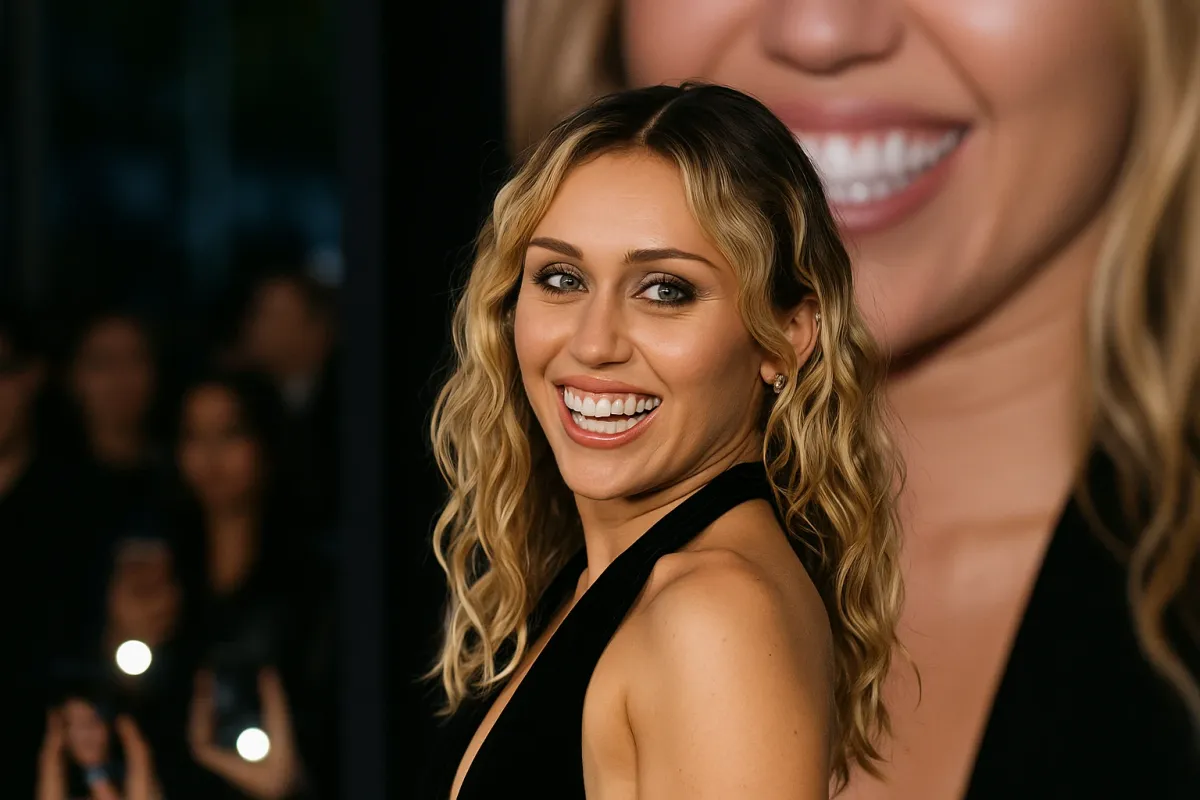
In recent days, Miley Cyrus’s “new” smile has been quietly dominating social feeds, with fans celebrating that she “finally looks like herself again.” Comment threads dissect every millimeter of enamel, debating veneers, orthodontics, and the delicate balance between enhancement and authenticity. Behind the celebrity gloss lies a conversation that matters deeply to denture wearers: what does it mean, in 2025, to have a smile that looks truly like you?
While Miley’s transformation isn’t about dentures, the public reaction to her updated smile reflects a broader shift in expectations—away from the uniformly “perfect,” blindingly white look and toward something more nuanced, natural, and personal. For discerning denture wearers, this cultural moment is a powerful reminder: your replacement teeth are no longer expected to look like a generic row of piano keys. They can, and should, be crafted with the same level of intention and individuality we’re now applauding on red carpets.
Below, we translate the viral fascination with Miley Cyrus’s new smile into five exclusive, timely insights for anyone considering or refining their denture type—especially those who expect a premium, made-just-for-you result.
1. The Era of the “Copy-Paste” Smile Is Over
The online reaction to Miley’s updated teeth has been telling: fans aren’t praising her for a blindingly uniform Hollywood grin—they’re noting that she “looks like herself again.” That language should matter profoundly to denture wearers. For years, many prosthetic teeth—whether traditional dentures, implant-supported hybrids, or high-end partials—pursued a single aesthetic ideal: ultra-white, ultra-straight, ultra-symmetrical. Today, that approach is quietly becoming outdated.
Modern premium dentures increasingly mirror the principles used in top-tier cosmetic dentistry and bespoke veneers: microscopic irregularities, natural translucency at the edges, and shading that respects your age, skin tone, and facial structure. This means that when choosing between denture types—conventional acrylic, flexible options, or fixed implant solutions—you’re not simply choosing a mechanism; you’re choosing a design philosophy.
Discuss with your prosthodontist or cosmetic dentist where you land on the spectrum from “polished perfection” to “lived-in elegance.” The most successful modern smiles, as the Miley discourse reveals, don’t erase personality—they refine it. For many high-end denture wearers, that means requesting custom tooth libraries, multi-layered ceramics, and even subtle “imperfections” that echo their original teeth.
2. Different Denture Types Now Offer Different Levels of “Camera-Ready” Realism
Miley’s latest appearance sparked the familiar speculation about veneers versus orthodontic refinement, but the underlying point is broader: the materials and methods you choose directly shape how your smile performs—not just in person, but under harsh lighting, high-resolution cameras, and social media filters.
For denture wearers, the key types to consider through this lens are:
- Conventional removable dentures (acrylic-based)
Once the default, these can now be elevated with high-density acrylic teeth, nuanced gingival shading, and precision milling. In the right hands, they no longer have to read as “dentures” in photos.
- Partial dentures (metal framework or flexible base)
These allow you to preserve natural teeth while replacing select missing ones. When crafted with high-quality composite or porcelain teeth blended to your existing dentition, they can be nearly undetectable, even in ultra-close images.
- Implant-supported overdentures
Think of these as the elegant bridge between removable and fixed. The implants anchor your denture for stability, while modern materials allow a level of realism—subtle translucency, layered color—that holds up beautifully on screen.
- Full-arch fixed implant bridges (“All-on-X”-style)
Often crafted in zirconia or layered ceramics, these are the closest analogue to what many celebrities pursue: a permanently fixed, custom-designed arch capable of astonishingly lifelike effects in both motion and still photography.
The public response to Miley’s new smile underscores a crucial truth: high-definition scrutiny is now an everyday reality, not just a red-carpet problem. When deciding on a denture type, ask explicitly how each option performs under strong lighting, in video calls, and in photographs. A premium provider should be able to show you case photos, explain gloss levels, and tailor materials to your lifestyle—whether your “spotlight” is a nightly dinner party or a 4K camera.
3. “Looking Like Yourself Again” Should Be a Design Brief, Not a Lucky Accident
The phrase echoing through entertainment outlets—“she finally looks like herself again”—is precisely the sentiment many denture wearers crave after tooth loss or extensive dental work. The most sophisticated denture designs today treat this as a deliberate objective rather than a hopeful outcome.
This is where the type of denture intersects with the process of design:
- Digital Smile Design (DSD) and facial scanning
Clinics at the forefront use high-resolution facial scans, videos of your natural expressions, and archival photos to map how your lips, cheeks, and eyes move when you laugh, speak, or rest. This guides tooth length, contour, and even how much tooth shows when your lips are at rest—a key detail in restoring your recognizable face.
- Pre-extraction records and “memory mapping”
If extractions are planned, a premium team may photograph and scan your existing teeth beforehand. Even if they’re worn or damaged, these records become a template for your new prosthetics. For many, this is the difference between “a nice smile” and “my smile, restored.”
- Refined try-in stages based on your chosen denture type
Traditional dentures and implant-supported options both benefit from wax or digital try-ins where tooth shape and arrangement can be adjusted before final fabrication. Insist on this iterative approach. Being able to say, “This feels more like me” at the try-in stage is your best insurance against regret.
Miley’s current buzz isn’t about an aggressively new, unrecognizable look—it’s about a return to alignment with her perceived identity. For denture wearers, that alignment is not a luxury; it is the essence of premium care.
4. The Subtle Art of “Age-Appropriate” Elegance in Denture Types
One of the quieter undercurrents in discussions about celebrity smiles—Miley’s included—is the tension between youthfulness and authenticity. Ultra-blocky, ultra-white teeth often read as artificial, especially on camera. The trend now, visible in cosmetic dentistry circles from Los Angeles to London, is toward age-appropriate sophistication: bright, healthy, but not theatrically flawless.
Denture types influence your ability to achieve this level of nuance:
- Conventional dentures can incorporate graded translucency and multi-tonal shading that emulate enamel’s natural depth, avoiding that “opaque white wall” effect.
- Premium partials can be designed with careful attention to cervical shading (near the gumline) and inter-tooth character, so they harmonize with your existing teeth rather than overpowering them.
- Fixed implant bridges in high-end zirconia or layered ceramics allow ceramists to build in highly individualized features: faint incisal translucency, slight rotation of certain teeth, and sophisticated surface textures that catch light like natural enamel.
The insight here is subtle but powerful: chasing a teen-like whiteness with any denture type can paradoxically age your face, making your smile look disconnected from your skin tone and overall aesthetics. As the conversation around Miley’s “more natural” look suggests, a slightly softer, more organic smile often reads as more luxurious, more believable, and ultimately more flattering.
A refined request for your dental team might sound like this: “I want my smile to look naturally well-cared for—fresh, healthy, and elegant—but not obviously ‘done.’” That single sentence can significantly influence the recommendations you receive across different denture types.
5. Social Media Is Quietly Redefining What Counts as a “Successful” Denture
The viral interest in Miley’s new smile is part of a larger trend: dentistry—and by extension, prosthetic solutions like dentures and implants—now lives under the lens of instantaneous public feedback. On TikTok, Instagram, and YouTube, patients candidly review their experiences with snap-in dentures, All-on-4-style arches, flexible partials, and more. Hashtags dedicated to “denture transformations” and “implant journeys” are filled with real-time commentary: how teeth look in motion, how speech changes, how confident someone feels at a dinner party or on a video call.
For the discerning denture wearer, this crowd-sourced scrutiny offers several practical advantages:
- You can see how different denture types behave in real life, not just in studio-perfect before-and-after photos. Pay attention to how lips move, how teeth catch the light, how natural the transitions look between teeth and gums.
- You can gauge which aesthetic outcomes resonate with you: some patients adore the ultra-polished, uniform implant look; others gravitate toward more understated, “I’d never guess those were dentures” results.
- You can better understand the adjustment period associated with each type—how long it takes to speak comfortably, smile confidently, and feel that your new teeth belong to you.
This real-world, real-time feedback loop mirrors what we’re seeing with celebrity smiles: the public reaction is swift, unfiltered, and intense. The sophisticated way to leverage it is not to chase trends blindly, but to refine your own brief. Use these online narratives to clarify what you value: invisibility versus glamour, subtlety versus statement, convenience versus permanence.
In conversation with your dentist or prosthodontist, bring specific examples: “When I see this kind of denture on video, it feels too uniform; I prefer this other one that looks more natural when the person laughs.” The more precise your aesthetic language, the more successfully your chosen denture type can be tailored to your life.
Conclusion
The fascination with Miley Cyrus’s updated smile is more than celebrity gossip; it is a mirror reflecting our evolving expectations of what a modern, beautiful smile should be. We are moving away from a single, rigid ideal and toward something more intelligent, more individualized, and more deeply connected to personal identity.
For discerning denture wearers, this is an extraordinarily empowering moment. Today’s denture types—whether removable, partial, implant-supported, or fully fixed—can deliver not just function, but an aesthetic outcome that feels unmistakably your own. By insisting on natural realism over artificial perfection, age-appropriate elegance over extreme whiteness, and personalized design over generic templates, you align yourself with the very best of contemporary smile aesthetics.
In a world where every smile may find its way onto a screen, the true mark of a premium denture is simple: it doesn’t look “good for dentures.” It looks like you—confident, composed, and entirely at ease in your own, beautifully curated smile.
Key Takeaway
The most important thing to remember from this article is that this information can change how you think about Denture Types.