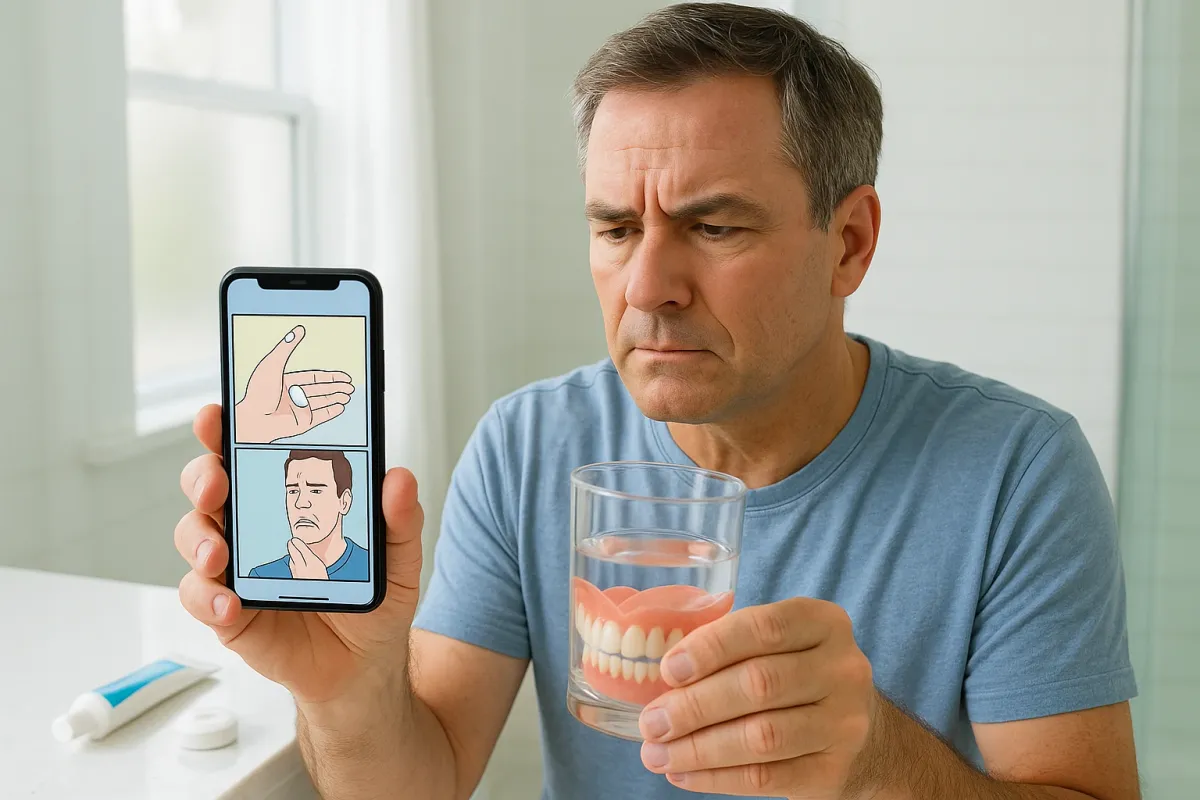
There is something unexpectedly honest about the internet’s current obsession with the “Hard to Swallow Pill” meme. People are using a simple image—an ordinary pill bottle— to confess uncomfortable truths about everything from relationships to careers. But beneath the humor lies a revelation that applies exquisitely to dentistry: some realities are hard to swallow until you finally face them, and only then can you choose better solutions.
For many adults quietly living with missing, damaged, or failing teeth, the hardest pill to swallow is this: avoiding treatment often feels safer than confronting the world of modern prosthetics. Yet just as the meme invites people to state the truth plainly, today’s advances in denture types invite you to acknowledge what you really want—comfort, aesthetics, discretion—and select a prosthetic that matches your lifestyle, not your fears.
In that spirit, let’s take today’s cultural moment—millions sharing “hard truths” online—and translate it into something truly practical: five refined, rarely discussed insights about denture types that sophisticated wearers genuinely appreciate once they finally “swallow the pill” and step into modern care.
Insight 1: “One Size Fits All” Is the Real Hard-to-Swallow Myth
In the same way the “Hard to Swallow Pill” meme has become a template for countless brutally honest statements, many people still treat “dentures” as a single, generic category. In reality, modern prosthetics form a carefully graded spectrum—from ultra-discreet partials to implant-retained hybrids—each designed for a specific lifestyle, anatomy, and aesthetic expectation.
Traditional full dentures remain a reliable solution for complete tooth loss, but they are no longer the default for everyone. Precision partial dentures can elegantly preserve healthy teeth while replacing only what is missing, often with near-invisible clasps or even tooth-colored attachments. For those seeking an anchored, non-removable experience, implant-supported overdentures and fixed implant bridges deliver a stability that would have been unthinkable a generation ago. The sophisticated truth: “just getting dentures” is about as vague as “just buying a car.” The decisions behind materials, anchorage, and design dramatically shape how your prosthetic will feel, function, and age with you.
Insight 2: The Most Luxurious Denture Type Is Often the Most Invisible
If the internet has taught us anything in 2025, it’s that people crave authenticity—but quietly. Viral memes about difficult truths let people be honest without overexposing themselves. Modern denture wearers often feel the same: they want their solution to be real, robust, and functional, yet virtually undetectable.
Implant-retained dentures and sleek, flexible partials embody this ethos. Implant overdentures can click securely into place, allowing you to speak, laugh, and dine with an ease that feels less like “wearing a device” and more like reclaiming a forgotten part of yourself. Flexible partials—crafted from translucent, gum-toned materials—can slip elegantly around your remaining teeth, avoiding the metal shine of older designs. The result is a prosthetic that is not merely beautiful in photographs, but sophisticated in motion and conversation. Just as the most compelling posts are often the ones that don’t scream for attention, the most exquisite denture types are designed to disappear into your natural expression.
Insight 3: Comfort Is Engineered, Not Assumed
Online, people are learning that emotional comfort usually requires effort—self-reflection, boundaries, therapy—rather than wishful thinking. In prosthetic dentistry, physical comfort follows the same principle: it is engineered through meticulous design choices, not guaranteed by default.
Different denture types distribute bite forces in profoundly different ways. A conventional full lower denture, for instance, rests entirely on the gum tissue and jawbone, which can lead to pressure points and gradual bone resorption. By contrast, an implant-retained lower denture transfers chewing forces more directly into the bone via the implants, often offering dramatically improved stability and chewing confidence. Even within removable options, high-impact acrylic bases, advanced cushioning liners, and carefully contoured borders can transform a “tolerable” denture into one that feels like a tailored garment. Sophisticated wearers quickly learn that comfort is not a vague hope; it is the outcome of selecting the right type, materials, and design details from the outset.
Insight 4: Partial vs. Full vs. Hybrid: The Architecture of Your Smile Matters
Just as the “Hard to Swallow Pill” meme exposes structural truths about how we live, choosing between denture types is really about understanding the architecture of your own mouth. The pattern of what you have—and what you’ve lost—should drive the type of prosthetic you choose, not the other way around.
If you still have a stable foundation of healthy teeth, high-end partial dentures can function as precise architectural infills rather than wholesale reconstruction. They protect remaining teeth from drifting, maintain your bite, and subtly reinforce facial proportions. When most or all teeth in an arch are failing, immediate dentures can provide an interim aesthetic solution after extractions, followed later by more refined permanent full dentures or implant restorations. Hybrid solutions, such as an implant-retained denture on the lower arch and a well-crafted conventional denture on the upper, can create a balance of cost, comfort, and stability that suits your specific needs. The refined approach is not “upper and lower dentures, full stop,” but a carefully composed plan that respects the structural reality of your bone, soft tissue, and remaining teeth.
Insight 5: The True Luxury Is Future-Proofing Your Choice
The appeal of the “Hard to Swallow Pill” meme lies in its clear-eyed look at reality—today and tomorrow. The same forward-thinking mindset can make all the difference when choosing a denture type. A sophisticated solution is not just about how it looks the week you receive it; it is about how gracefully it can adapt to the inevitable changes in your mouth over the next decade.
Jawbone remodels subtly over time, particularly after extractions. Traditional dentures may require periodic relines or remakes to maintain a precise fit as your bone reshapes. Implant-based solutions, while an initial investment, can slow bone loss around the implant sites and make future prosthetic updates more predictable. Even within removable dentures, choosing high-quality teeth and premium acrylic can preserve the luster and shape of your smile longer, avoiding the flattened, artificial look that can occur with lower-grade materials. The true mark of a premium denture is not simply how it looks on delivery, but how well it accommodates maintenance, upgrades, and refinements in the years ahead.
Conclusion
In today’s culture of viral honesty, the “Hard to Swallow Pill” meme has become a shorthand for truths we can no longer ignore. For many adults living with compromised teeth, that truth is simple: postponing a decision is, in itself, a decision—often the least comfortable one of all.
Modern denture types offer far more than a basic replacement for missing teeth. They present a nuanced palette of options that can be tailored to your anatomy, your aesthetic standards, your appetite for stability, and your long-term plans. When you finally allow yourself to confront what you really need—discretion, comfort, security, longevity—the path forward becomes clearer, not harsher.
The most elegant step you can take now is not to settle for “a denture,” but to design a prosthetic strategy. In a world sharing difficult truths through images and memes, reclaiming your smile with intention may be the most refined, quietly revolutionary choice you make this year.
Key Takeaway
The most important thing to remember from this article is that this information can change how you think about Denture Types.