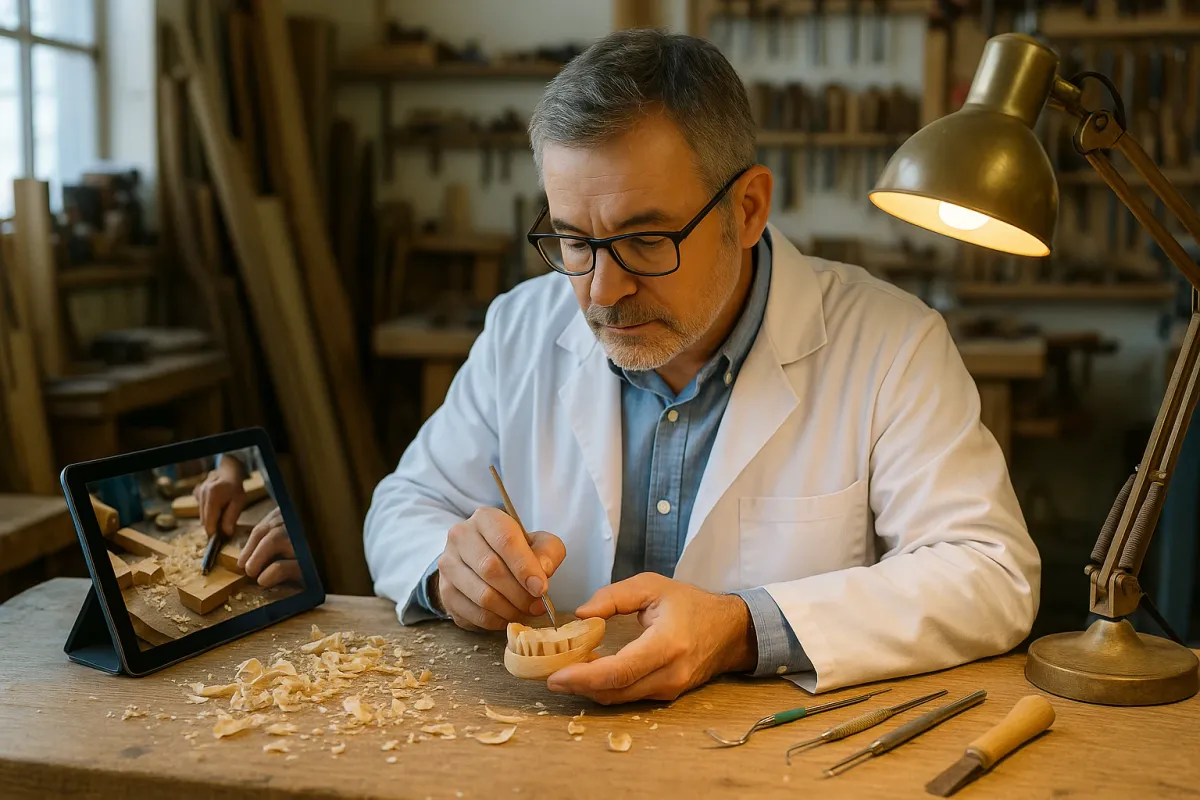
In a week when social media is captivated by artisans turning raw timber into museum‑worthy masterpieces—thanks to viral features like “50 Times People Made Something Amazing Out Of Wood”—there’s a quietly relevant parallel emerging in dentistry. The same values that make handcrafted woodwork so mesmerizing—precision, material mastery, and an almost obsessive devotion to finish—are now defining the new era of sophisticated dentures.
Just as a skilled woodworker can transform a plain block into a bespoke work of art, today’s top dental laboratories are reimagining dentures as highly customized, multi‑layered restorations rather than one‑size‑fits‑all prosthetics. For discerning wearers, this isn’t about “just having teeth” anymore; it’s about curating a smile that is architected, not assembled.
Below, we translate the craftsmanship trend into the world of denture types—with five exclusive, often overlooked insights that elevate your next set from standard to exceptional.
1. Why “Material Layers” Matter More Than the Denture Label
Viral woodworking posts highlight something connoisseurs already know: the most exquisite results aren’t about the object’s name, but the layers and materials you don’t see at first glance. The same is true of dentures.
The conventional labels—full dentures, partials, implant‑supported dentures—only tell part of the story. What truly distinguishes a sophisticated prosthesis is how many material layers are used and how they’re engineered together. Premium modern dentures may combine ultra‑dense PMMA bases, nano‑ceramic or composite teeth, and carefully stained gingival layers that mimic real tissue tone variations. Instead of a single shade of pink acrylic, you might see subtle translucency near the necks of the teeth and deeper hues where the gums would naturally appear thicker.
This layered approach affects not just aesthetics but performance: better wear resistance, more natural light reflection, and less staining over time. When you speak with your clinician or lab, go beyond “What type of denture do I need?” and ask, “How many layers and which materials are you using to create my denture—and why?” That question alone often separates a standard appliance from a truly crafted restoration.
2. Hybrid Dentures: The “Fine Furniture” of Implant Solutions
In the same way high‑end woodworkers combine steel, glass, and multiple species of wood in one piece, leading clinics are increasingly turning to hybrid dentures—fixed or semi‑fixed full‑arch restorations anchored by implants with a precision‑milled framework.
Unlike traditional removable dentures, hybrid options typically use a titanium or cobalt‑chromium bar, layered with high‑impact acrylic or advanced composites, and sometimes zirconia for unparalleled rigidity and gloss. The result is less bulk in the palate, improved speech, and a bite that feels markedly more stable and confident, especially for those who loathe the sensation of “removable” teeth.
What’s important—and rarely discussed—is how dramatically the framework design changes your day‑to‑day experience. A well‑milled bar distributes biting forces more evenly, reduces long‑term stress on implants, and can allow for a more delicate contour along the gum line, avoiding the “oversculpted” look. If you’re exploring implant‑based options, don’t just ask “fixed or removable?” Ask to see the underlying framework design, and request digital previews. The refinement of that inner architecture is where hybrid dentures quietly earn their reputation for feeling “like they’ve always been my own teeth.”
3. Ultra‑Lightweight Partials: The Understated Luxury Few People Know To Request
Viral wooden designs often amaze audiences by looking solid yet feeling surprisingly light in the hand. A similar, understated luxury now exists in partial denture design: flexible bases and ultra‑light metal frameworks crafted with minimal but strategic coverage.
Instead of the traditional “full palate” chrome frameworks, modern partials can use thinner cobalt‑chromium, titanium, or even laser‑sintered designs that hug only what is structurally necessary. Some pair this with precision attachments—tiny, hidden connectors that anchor to crowns instead of visible clasps. The advantage is twofold: better comfort and an aesthetic that is discreet even under close social scrutiny.
For those who are camera‑aware—whether on Zoom calls or in high‑resolution photos—these new partials reduce the risk of flashed metal during speech or laughter. When discussing partial denture types, ask specifically about lightweight frameworks, digital design workflows, and whether precision attachments are appropriate for your case. You’re not just choosing a prosthesis; you’re curating how invisible your solution becomes in real‑world, high‑definition life.
4. Characterized Dentures: From “Uniform Teeth” to Curated Personal Style
The woodworking feature that’s trending right now celebrates the individuality of knots, grains, and small irregularities—details that turn an object from mass‑produced to bespoke. In the world of dentures, the equivalent is “characterization”: intentional, subtle variations that prevent your teeth from looking too perfect, too uniform, or unnaturally white.
Advanced denture types can incorporate micro‑characteristics such as slightly varied tooth lengths, gentle rotation on one lateral incisor, or minimally softened edges that mimic natural wear. Shades are often blended rather than uniform, with slightly more translucency near the incisal edges and delicate internal staining that creates depth instead of a flat, opaque white.
This doesn’t mean compromising on elegance. It means choosing a smile that harmonizes with your face, skin tone, and age, rather than a one‑shade‑fits‑all “studio white.” Ask your provider if their lab offers hand characterization, custom staining appointments, or digital smile design with photographic references. Bring an old photo of your natural teeth—or an aspirational reference from a public figure you admire—and use that as a palette for shaping your own, rather than defaulting to the “stock” arrangement.
5. Digital‑First Denture Design: The New Gold Standard for Precision Fit
The woodworking article trending this week often spotlights CNC routers and laser cutters alongside hand tools—showing that true excellence comes from fusing craftsmanship with technology. Dentures are in the same moment: the most sophisticated types now begin in a fully digital workflow.
Instead of relying solely on messy impressions, clinics can use intraoral scanners, 3D facial scans, and jaw motion recording to design dentures that respect your bite, your facial symmetry, and even the way your lips move when you speak or smile. These data points inform CAD‑designed dentures that are then milled from dense, pre‑polymerized PMMA or printed in high‑precision resins before final layering and characterization.
The hidden advantage is refinement over time. Once your denture exists as a digital file, future remakes or adjustments—after wear, implant placement, or tooth extraction—can be executed far more precisely, without starting from zero. If you’re investing in a new denture, ask directly: “Will my denture be digitally designed and stored as a file? Will my try‑ins be printed or milled before final fabrication?” This level of planning is rapidly becoming the hallmark of premium care.
Conclusion
As audiences celebrate artisans transforming wood into heirloom‑quality objects, it’s an ideal moment to reconsider how we think about denture types. They are no longer mere categories on a clinic brochure; they are curated, layered, technologically informed designs that can be as crafted—and as personal—as any bespoke piece of furniture or art.
When you next sit down with your dentist, elevate the conversation. Ask about layers, frameworks, characterization, weight, and digital design. In a world increasingly attuned to craftsmanship, your denture choice can reflect not just restored function, but a refined standard of taste—quietly luxurious, meticulously considered, and unmistakably your own.
Key Takeaway
The most important thing to remember from this article is that this information can change how you think about Denture Types.