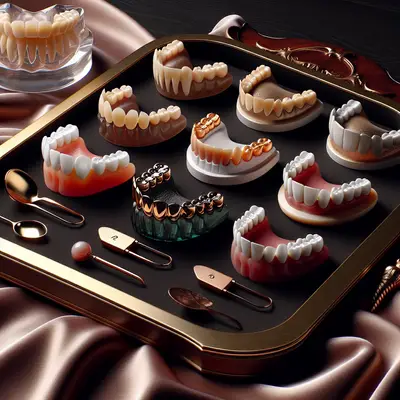
For today’s discerning denture wearer, “what kind of denture should I choose?” is no longer a purely clinical question. It is a lifestyle decision that touches comfort, aesthetics, speech, daily rituals, and long‑term oral health. The contemporary landscape of denture types—conventional, immediate, implant‑supported, partial, flexible, and hybrid—offers a remarkably nuanced palette from which to curate your ideal solution.
This guide explores denture types not as generic categories, but as finely tuned options to be matched with your priorities: appearance, stability, discretion, and ease of care. Along the way, you’ll find five exclusive, often‑overlooked insights that experienced denture wearers quietly rely on, yet are rarely discussed in standard brochures.
Understanding the Denture Landscape: Beyond “Full” and “Partial”
Modern prosthodontics has moved far beyond the simple split between full and partial dentures. Today, your dentist or prosthodontist may guide you through a spectrum of options, each with a distinct personality:
Conventional full dentures are crafted after any remaining teeth are removed and the gums have healed. They remain the most familiar option, relying on a precise fit and, often, a denture adhesive for added security.
Immediate dentures are fabricated in advance and placed the same day teeth are extracted, sparing you the experience of being without teeth. They offer continuity but typically require relining or replacement once the gums reshape during healing.
Partial dentures are designed to integrate with your remaining natural teeth, using metal or tooth‑colored clasps (or precision attachments) to anchor discreetly. They help preserve alignment and prevent adjacent teeth from drifting.
Implant‑supported dentures attach to dental implants anchored in the jawbone, dramatically improving stability, chewing efficiency, and comfort. They are particularly valued by those seeking a “forget it’s there” level of confidence.
Flexible dentures, typically crafted from nylon‑based materials, forgo rigid metal frameworks and can offer a softer, more forgiving fit—especially appealing for those prone to irritation or with irregular gum contours.
The sophistication lies not in choosing “the best” type universally, but in matching the right category—and material composition—to your lifestyle, expectations, and oral health foundation.
Aesthetic Nuance: When Tooth Shade and Gum Tone Become Personal
Denture aesthetics today are capable of far more than a uniform “white smile.” Subtle choices can transform a denture from merely acceptable to indistinguishably natural:
Tooth shade is no longer a simple matter of “light” or “dark.” A skilled clinic can select from dozens of shades, with variations in translucency, gradation, and surface texture. Overly bright shades can look conspicuous; a slightly warmer, nuanced tone often appears more authentic.
Tooth shape and arrangement can echo your original smile or gently refine it. Some patients prefer meticulously aligned, “perfect” teeth, while others ask for slight asymmetries or rounded edges to evoke a naturally lived‑in look.
Gum tone (the denture base) can be customized to match your natural gingiva, including subtle variegation and natural translucency along the margin. High‑end prosthetics may incorporate layered acrylics for exceptional realism.
Facial harmony matters as much as the teeth themselves. The height, angulation, and projection of your dentures influence lip support, nasolabial folds, and the lower third of your face. A well‑designed denture can softly lift and support facial features, restoring a more youthful, balanced profile.
Working with a dentist or prosthodontist who approaches dentures as both medical devices and aesthetic instruments ensures your final result feels authentically “you”—not like a generic set of teeth borrowed from someone else’s smile.
Functional Elegance: Stability, Speech, and Everyday Grace
The most beautiful denture will feel incomplete if its function is compromised. Different denture types deliver different levels of stability and performance:
Conventional and immediate dentures rely on close adaptation to the gums, good saliva balance, and sometimes adhesives. While well‑made conventional dentures can perform admirably, they may feel less secure during vigorous chewing or expressive speech.
Implant‑supported overdentures introduce a new stratum of stability. By connecting to 2–6 implants, they reduce or eliminate movement, offering a more natural biting force and minimizing the need for adhesive. This is particularly valued for lower dentures, where stability can be most challenging.
Partial dentures, when thoughtfully designed, can distribute chewing forces across both natural teeth and artificial segments. This not only improves function but also helps protect your remaining teeth from uneven loading.
Flexible dentures conform closely to soft tissues and can provide a sense of “gentle grip,” particularly useful for patients with bony undercuts or thin, sensitive gums. However, they may not provide the same level of structural support as rigid options for complex bites.
Function also encompasses speech. The way the denture fills the palate (for upper appliances) can subtly change how air flows and how certain sounds (like “s,” “t,” and “d”) are formed. Fine adjustments—thinning the palate slightly, polishing certain surfaces, or adjusting tooth placement—can make the difference between self‑conscious articulation and effortless conversation.
When reviewing denture types with your clinician, ask explicitly about how each option is expected to perform in terms of chewing, speech, and long‑day comfort—not just appearance.
Five Exclusive Insights Experienced Denture Wearers Rarely Share
Beyond the standard advice, there are nuances that long‑time denture wearers quietly rely on. These five insights can help you refine your choices and expectations from the outset.
1. Micro‑Fit Matters More Than Material Hype
While marketing often highlights “cutting‑edge” materials, day‑to‑day comfort is overwhelmingly determined by fit. A precisely crafted acrylic denture will outperform a poorly fitted “advanced” design every time.
Experienced wearers often schedule an adjustment visit within the first week of receiving a new denture, even if nothing feels overtly “wrong.” Tiny pressure points may not yet be painful but can become sore over time. Early, subtle refinements preserve comfort and prevent friction ulcers.
2. The Bite You Choose Today Influences Facial Aging Tomorrow
The vertical dimension (how “tall” your bite is when teeth are together) and the way your jaws meet may not feel dramatically different across options, but they quietly shape your face over years.
A carefully restored vertical dimension can soften deep lines around the mouth and support the lower face, while an overly reduced or imprecise bite can contribute to a collapsed appearance, accelerated wrinkling, or jaw discomfort. Sophisticated denture wearers often prioritize a trial stage—in wax or temporary form—to evaluate facial support before committing to the final design.
3. Partial Dentures Can Be Strategic, Not Merely “Interim”
Many assume partial dentures are a temporary step on the way to full dentures or implants. In reality, they can be intentionally designed as part of a phased, long‑term plan.
With careful planning, a partial can be crafted so it can be modified later if additional teeth are lost, or integrated into a future implant‑supported solution. Choosing a design with future adaptability in mind may slightly increase initial complexity, but it often reduces disruption and cost over the long arc of care.
4. Implant‑Supported Does Not Automatically Mean “Zero Maintenance”
Implant‑supported dentures are often promoted as a near‑permanent solution. Experienced wearers understand that they trade one kind of maintenance for another.
You’ll likely enjoy improved stability and chewing power, but you must commit to impeccable hygiene around the implants themselves—meticulous cleaning of the abutments, regular professional check‑ups, and periodic component replacement (such as locator attachments). The reward for this diligence is a prosthesis that can feel impressively close to natural teeth.
5. Your Saliva and Soft Tissue Health Quietly Shape Your Experience
Two people with the same denture type can have very different experiences based simply on saliva and soft tissue health. Adequate saliva provides natural lubrication and a gentle “seal” under full dentures; dry mouth (often due to medications or medical conditions) can create friction, looseness, and sore spots.
Likewise, thin, delicate gum tissue may be better suited to a more forgiving, carefully relieved or flexible base, while thicker, more resilient tissues can comfortably support a broader range of prostheses. Sophisticated denture planning considers these biological subtleties rather than treating the gums as interchangeable “support surfaces.”
If you struggle with dryness, discuss saliva‑supporting strategies with your dentist or physician—adjusting medications where possible, using saliva substitutes, and avoiding alcohol‑based mouthwashes that can exacerbate the issue.
Choosing a Denture Type That Fits the Life You Actually Live
When evaluating denture types, it can be tempting to focus solely on cost or the number of appointments required. A more refined approach considers how the prosthesis will inhabit your real life:
If you travel frequently or live far from your clinician, durability, ease of minor at‑home maintenance, and fewer adjustment visits may be priorities.
If you regularly attend events, speak publicly, or are highly visible in your work, you may wish to prioritize aesthetics, phonetic precision, and exceptional stability during expressive speech.
If you have a history of dental anxiety or complex medical needs, a phased approach—perhaps starting with immediate or transitional dentures and evolving to a more definitive solution—can preserve comfort and control at every stage.
Discuss not just your teeth, but your routines: how you eat, socialize, sleep, and work. A truly personalized denture plan weaves these elements into the selection of type, materials, retention method, and aesthetic design.
Conclusion
Today’s denture types offer far more than a basic replacement for missing teeth. They represent a refined spectrum of possibilities—each with distinct strengths in appearance, stability, adaptability, and daily ease. By looking beyond simplistic labels like “full” or “partial” and instead considering fit precision, bite design, long‑term facial support, implant maintenance, and the quiet influence of saliva and soft tissue health, you can curate a solution that feels fully aligned with who you are and how you live.
Approached with intention, your dentures become not just prosthetic devices, but a carefully crafted extension of your personal style and well‑being—supporting you in speaking, smiling, and living with quiet confidence every day.
Sources
- American College of Prosthodontists – Dentures Overview – Explains types of dentures, indications, and what to expect from treatment
- Mayo Clinic – Dental Implants – Details how implants work and considerations for implant‑supported dentures
- National Institute of Dental and Craniofacial Research – Oral Health in Older Adults – Provides context on tooth loss, dry mouth, and oral health changes with aging
- Cleveland Clinic – Dentures: Types and Care – Reviews different denture options and foundational care recommendations
- University of Michigan School of Dentistry – Removable Partial Dentures – Offers detailed insight into partial denture design, function, and long‑term planning
Key Takeaway
The most important thing to remember from this article is that this information can change how you think about Denture Types.