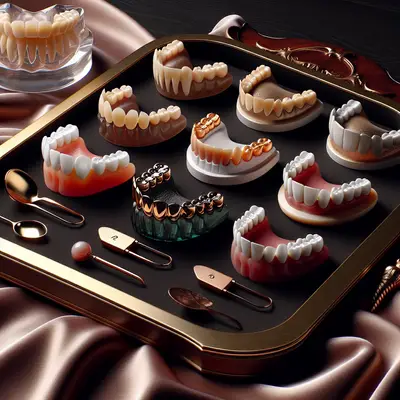
Modern dentures are no longer a one‑style solution; they are refined prosthetic designs that can be curated to suit your facial features, lifestyle, and long‑term oral health. Understanding the nuances between denture types is the key to moving beyond “acceptable” and toward a result that feels intuitive, comfortable, and quietly luxurious in everyday use.
This guide explores the main denture categories—removable, fixed, and implant‑supported—then shares five exclusive, under‑discussed insights that discerning denture wearers can use to elevate both comfort and aesthetics.
Understanding the Three Core Denture Families
Before comparing subtle design features, it helps to organize the landscape into three broad families: traditional removable dentures, fixed prosthetics, and implant‑supported options.
Traditional removable full dentures are designed for those missing all teeth in an arch. They rest on the gums and underlying bone and can be taken out for cleaning. Contemporary materials and fabrication techniques allow for thin, natural‑looking bases and carefully characterized teeth, but these dentures still depend on suction, musculature, and sometimes adhesive for stability.
Removable partial dentures fill in spaces when some natural teeth remain. Metal frameworks or flexible bases clasp onto existing teeth, helping distribute chewing forces. Their success depends on the health and positioning of the remaining dentition, making them highly individualized.
Fixed prosthetics, such as bridges and implant‑supported bridges, are not removed at home. They are either anchored to natural teeth or secured to dental implants. When well‑executed, they can look and feel very close to natural teeth, though they require strong supporting structures and meticulous planning.
Implant‑supported dentures sit at the intersection of stability and versatility. They may be removable by the patient (snap‑on overdentures) or fixed in place by your dentist (often called “hybrid” or “all‑on‑X” prostheses). Implants help preserve bone volume and dramatically improve chewing efficiency and comfort compared to traditional removable dentures.
Appreciating these families allows you to navigate options not just by name—“partial,” “full,” “implant”—but by how they will function in your daily ritual: speaking, dining, and smiling without self‑consciousness.
Full vs. Partial: Matching Design to Your Oral Architecture
Choosing between full and partial dentures is not simply about the number of missing teeth; it is about orchestrating a harmonious relationship between prosthetic and natural structures.
Full dentures are considered when teeth are missing or unrestorable across an entire arch. They allow your dentist to reset the bite, contour the smile line, and support the lips and cheeks with a clean slate. The trade‑off is that the prosthesis must obtain its stability from the gums and bone alone, which can resorb over time, occasionally altering fit.
Partial dentures extend and preserve your existing dental architecture. They use remaining teeth as anchors, which helps maintain bone in those areas and often creates a more compact, stable arrangement. The presence of natural teeth, however, demands exquisite planning: the shade of the prosthetic teeth must complement rather than compete with your real ones, and the design of clasps and connectors must balance support with discreet aesthetics.
One elegant advantage of partials is their adaptability. As your mouth changes—if additional teeth need to be removed or restored—the partial can sometimes be modified, allowing you to evolve your prosthesis gradually rather than embark on a complete redesign.
The most refined outcomes arise when the question is not “full or partial?” but “How can this prosthesis respect my existing bone, teeth, and facial features while anticipating changes over the next decade?”
Acrylic, Metal, and Flexible Bases: The Invisible Luxury of Materials
Material choice may appear to be a technicality, yet it dictates comfort, durability, and even how your denture sounds when you speak.
Acrylic resin bases are the most common. They allow natural‑appearing gum coloration and detailed contouring, and they can be adjusted or relined relatively easily. Higher‑quality acrylics resist staining and fractures better and can be finished to a refined, satin sheen that mimics natural tissue rather than a glossy “false” look.
Cobalt‑chromium metal frameworks are frequently used in partial dentures. They can be made thinner than acrylic, which many wearers describe as feeling less bulky and more “invisible” on the palate. Metal frameworks are also highly durable and can be engineered to distribute bite forces in a way that is kind to both gums and remaining teeth.
Flexible dentures, often made from nylon‑based resins, provide a softer, more adaptable fit and can be particularly comfortable around undercuts and delicate tissues. They tend to be more forgiving in the short term, but adjustments are more complex, and the material may be less dimensionally stable over the very long term compared with metal‑reinforced designs.
For the discerning wearer, a premium result is often a hybrid approach: a carefully designed metal substructure for strength and thinness, seamlessly integrated with high‑quality acrylic or composite for lifelike gums and teeth. The result is a prosthesis that feels light yet secure and ages gracefully with proper maintenance.
Implant‑Supported Options: Stability as a Daily Luxury
While implants are sometimes described as an “upgrade,” they are better thought of as a structural foundation upon which refined prosthetics can be built.
Implant‑retained overdentures usually “snap” onto a set of implants via attachments. The denture remains removable for cleaning, but the implants prevent the slipping, clicking, and adhesive dependence associated with conventional full dentures. This is especially transformative for the lower arch, where traditional dentures are notoriously difficult to stabilize.
Fixed implant bridges or hybrids are secured with screws and removed only by your dentist. They offer exceptional stability and can be crafted with individual teeth and subtly contoured pink components to emulate natural gums. With thoughtful planning, they allow you to speak, laugh, and dine with minimal awareness that you are wearing a prosthesis.
Implants also help stimulate the jawbone, slowing the resorption that otherwise reshapes the face over time. This structural preservation is a quiet but vital luxury: it maintains the lower facial third, the profile, and the supportive contours that keep the lips from collapsing inward.
The most refined implant‑supported restorations result from an integrated approach where your surgical and prosthetic teams communicate closely, placing implants in positions that prioritize not only osseointegration, but also symmetry, phonetics, and long‑term cleanability.
Five Exclusive Insights for Discerning Denture Wearers
Beyond the standard discussions of “types” and “fit,” there are subtler considerations that can transform your experience from merely functional to effortless and elevated.
1. The “Phonetic Fitting” Conversation
Most consultations focus on how dentures look when you smile. Far fewer give equal weight to how you sound when you speak.
Ask your dentist to perform a phonetic assessment during try‑ins—testing “s,” “f,” “v,” “t,” and “d” sounds while you read aloud. Tiny adjustments in tooth position, thickness behind the upper front teeth, or the contour of the palate can correct lisping, whistling, and imprecise consonants. For professionals who speak frequently, this is not an indulgence; it is essential fine‑tuning.
2. Micro‑Customization of Tooth Anatomy
Not all “white, straight” teeth look equally natural. Subtle variations in line angles, translucency, and texture prevent your prosthesis from appearing uniform and artificial.
Discuss micro‑customization: slightly softer edges on lateral incisors, marginally shorter canines if your facial features call for it, or gentle surface texture that catches light like real enamel. High‑end labs can layer shades within each tooth to avoid the flat, opaque look often associated with mass‑produced prosthetic teeth.
3. Planning for Bone Changes, Not Reacting to Them
Bone resorption is predictable after tooth loss, especially with traditional full dentures. Instead of waiting until the denture feels loose, ask your provider about a relined‑by‑design timeline.
Building in planned evaluations—often at 6–12 months post‑extraction, then at regular intervals—allows your denture to be relined or adjusted before discomfort and visible changes occur. This proactive approach protects both your comfort and the refined facial support you achieved initially.
4. Bite Force Distribution as a Comfort Strategy
Many denture wearers accept sore spots and chewing limitations as inevitable. In reality, thoughtful bite design can dramatically influence how comfortable your dentures feel day to day.
Ask about occlusal scheme—the way your upper and lower teeth meet. Balanced contacts across the arch, carefully reduced contact on vulnerable areas, and smooth transitions along the chewing surfaces can decrease pressure points and make it easier to handle a diverse diet. This is especially important in partial dentures, where uneven forces can strain natural teeth and supporting tissues.
5. Lifestyle‑Matching: Social, Culinary, and Aesthetic Profiles
An often‑overlooked layer of decision‑making is how your dentures must perform within your actual lifestyle.
If you frequently attend formal events or public speaking engagements, you may prioritize absolute stability and phonetic precision, perhaps leaning toward implant‑supported options or ultra‑secure partials. If you delight in a broad culinary repertoire, your prosthesis should be engineered for robust chewing efficiency and durability.
Have an explicit conversation about your social, culinary, and aesthetic profile: how often you dine out, whether you consume staining foods and drinks, your expectations for tooth shade over time, and your tolerance for removable vs. fixed solutions. A carefully chosen denture type should feel like an extension of your life, not a limitation imposed upon it.
Conclusion
Choosing a denture is no longer a binary decision between “full” and “partial.” It is an opportunity to curate a prosthetic solution that respects your facial structure, your daily rituals, and your long‑term oral health.
By understanding the distinctions between removable, fixed, and implant‑supported options—and by embracing nuanced considerations like phonetics, material choice, bite design, and lifestyle alignment—you can move beyond basic functionality and into a realm of quiet confidence. The right denture type does more than restore teeth; it restores ease, presence, and the freedom to engage fully with the world around you.
Sources
- American College of Prosthodontists – Types of Dentures – Overview of full, partial, and implant‑supported dentures from a leading professional organization
- Mayo Clinic – Dentures: What to Expect – General guidance on denture types, fit, and adaptation
- National Institute of Dental and Craniofacial Research – Dental Implants – Evidence‑based information on implants and their role in oral rehabilitation
- Columbia University College of Dental Medicine – Prosthodontics Overview – Academic perspective on prosthetic options and treatment planning
- Cleveland Clinic – Dental Implants and Dentures – Patient‑focused explanation of how implants support dentures and improve function
Key Takeaway
The most important thing to remember from this article is that this information can change how you think about Denture Types.