A well-made denture should feel less like a prosthetic and more like a discreet extension of you—unobtrusive, reliable, and quietly refined. Yet the difference between a denture that merely functions and one that ages gracefully lies in the details of its care. Beyond basic cleaning and overnight soaking, there is an art to maintenance that protects the fit, finish, and longevity of your appliance while preserving the health of the tissues beneath it.
This guide explores a more elevated approach to denture maintenance, with five exclusive insights designed for wearers who value precision, comfort, and long-term performance.
The Quiet Power of a “Dry Interval” for Your Dentures
Most wearers focus on the hours dentures are in solution, but what happens in the minutes between wearing, cleaning, and soaking is just as important. A brief “dry interval” can subtly enhance both hygiene and longevity—if done correctly.
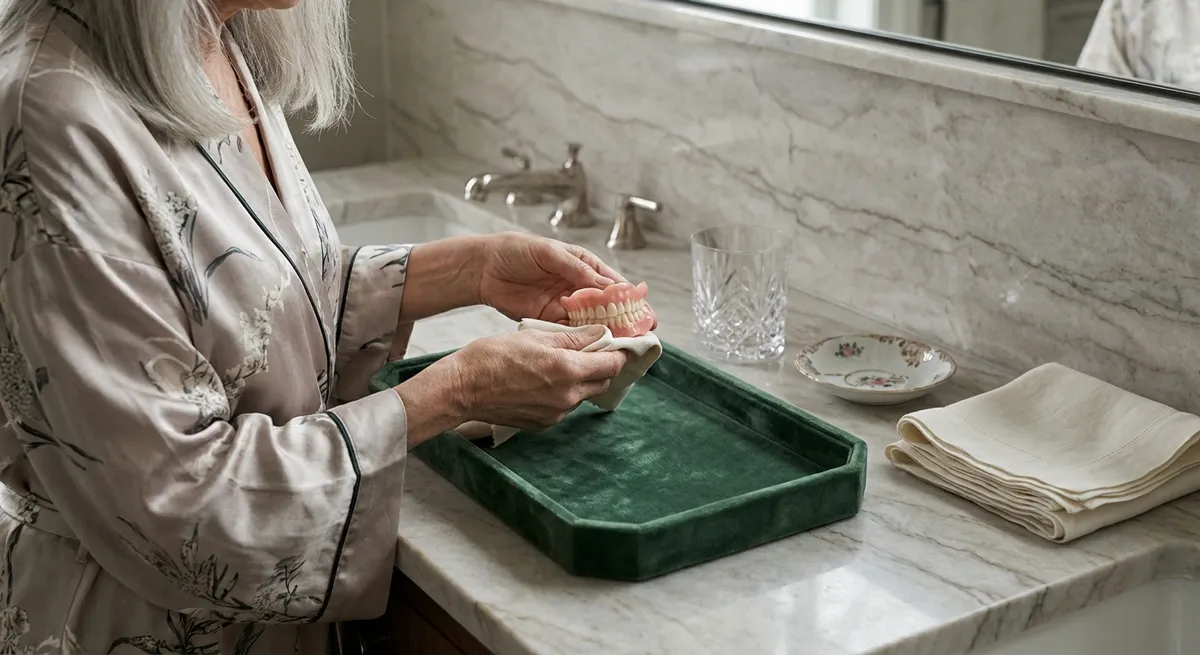
After cleaning your dentures in the evening, allow them to air-dry for 10–15 minutes on a clean, lint-free surface before placing them in their overnight solution. This short pause lets micro-droplets evaporate and reduces dilution of the cleansing solution, allowing it to work at full strength. It also gives you a moment to visually inspect the surface for early signs of wear: faint cracks, opaque patches, or areas where the finish is becoming slightly rough.
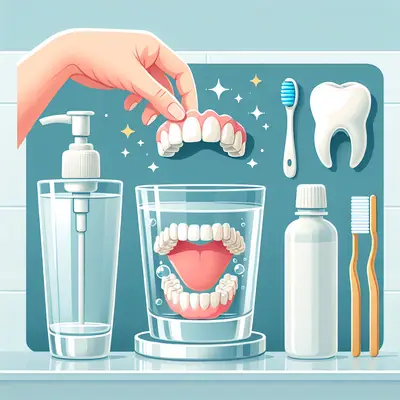
However, this is an interval, not a long-term state. Dentures should not be stored dry for extended periods; acrylic can warp if left dehydrated, compromising the fit. The ideal rhythm: remove → clean → pat dry → brief air-dry → immerse in fresh solution. It’s a quiet refinement to your routine, but over years, it can support both cleanliness and material stability.
Precision Hydration: Matching Soak Solutions to Your Lifestyle
Not all denture cleansers are equal, and not all wearers have the same needs. A more sophisticated approach is to treat the soaking step as “precision hydration” tailored to your mouth, your habits, and your appliance.
For individuals prone to staining from coffee, tea, or red wine, an effervescent tablet with proven stain-removing agents (such as sodium perborate or sodium percarbonate) used consistently each night can preserve clarity and color. Those with a history of oral irritation or sensitivities may benefit from fragrance-free or hypoallergenic formulas, avoiding added dyes and strong flavorings that can provoke subtle but chronic tissue reactions.
If you wear implant-supported overdentures, confirm that your chosen cleanser is compatible with the metal components—some aggressive formulas can contribute to corrosion of attachments over time. When in doubt, alternate a milder daily cleanser with a more intensive stain-removal soak only once or twice weekly, rather than every day.
The premium standard: one dedicated cleanser for daily use, and a second, more intensive product used periodically for aesthetic refinements—always approved by your dental professional and matched to the materials in your specific prosthesis.
The Gum & Bone Ritual: Maintaining the Foundation Beneath the Denture
True maintenance extends beyond the appliance itself; it includes the tissues and bone that support it. The fit you enjoy today depends on the health of the gums and underlying bone tomorrow. A refined maintenance routine acknowledges this with deliberate care for the foundation, not just the prosthetic.
Each evening, once your dentures are removed, gently massage your gums and palate with a soft, moistened toothbrush or a clean, damp gauze pad. This encourages blood flow, helps remove plaque and food debris, and supports the resilience of the tissues. For partial denture wearers, the natural teeth require meticulous attention: flossing, interdental brushes, and fluoride toothpaste are non-negotiable to protect the abutment teeth that stabilize your prosthesis.
If you are edentulous (no natural teeth), don’t overlook the ridge where dentures rest. A daily inspection in a mirror—looking for pale pressure spots, redness, or small ulcers—can alert you to early fit issues long before they become painful. This allows for timely adjustments rather than waiting until discomfort is pronounced.
The underlying principle is simple but powerful: when the foundation is respected and cared for, the denture can remain both comfortable and functional for far longer.
Texture Intelligence: Protecting the Finish Through Gentle Tools
Many denture wearers unintentionally age their prosthesis prematurely by choosing the wrong tools. The goal is not just cleanliness, but preservation of the surface texture—smooth enough to resist plaque, yet untouched by abrasive scrubbing.
A dedicated soft denture brush or an ultra-soft toothbrush is preferable to medium or firm bristles, which can create micro-scratches that trap stains and bacteria. Avoid household cleaning tools entirely—no kitchen sponges, scouring pads, or nail brushes. Even “extra clean” methods can be harsh enough to subtly erode the polished surface.
Pair the right brush with a non-abrasive cleanser. Regular toothpaste, especially those marketed as whitening or tartar-control, is often too abrasive for denture acrylic. Over time, it can dull the finish, roughen the surface, and make stains adhere more quickly. Instead, use a cleanser specifically designed for dentures or a mild, non-whitening, non-abrasive soap recommended by your dental professional.
This attention to texture is not cosmetic fussiness—it directly influences how clean the denture remains throughout the day and how fresh it feels in the mouth. A smooth surface is more hygienic, more comfortable, and more visually refined.
The Annual Refinement: Scheduled Adjustments as Preventive Luxury
Many wearers wait until something is very wrong—soreness, looseness, or difficulty chewing—before seeking a professional adjustment. A more elevated standard treats fit refinement as a planned, preventive luxury rather than an emergency fix.
Bone resorption (the gradual shrinking of jawbone after tooth loss) is a natural, ongoing process. Even when you feel comfortable, the underlying anatomy may be changing in ways that subtly alter how your denture sits and functions. An annual—or even semiannual—visit dedicated solely to evaluating your dentures’ fit and condition can prevent small discrepancies from turning into chronic irritation or accelerated wear.
During these visits, your dentist can:
- Assess pressure points before they become ulcers
- Evaluate the occlusion (bite) for balanced contact
- Determine whether a reline is advisable to refit the denture to the changing jaw contours
- Inspect clasps, attachments, and acrylic for micro-fractures or stress lines
This is maintenance in the truest sense: not simply repairing what has broken, but preserving what is working beautifully. The result is a quieter, more dependable experience day after day.
Conclusion
Exquisite denture maintenance is not about doing more; it’s about doing the right things with intention. A brief dry interval, carefully chosen soak solutions, devoted care to the gums and bone, gentle tools that protect the finish, and scheduled refinement visits—together, these habits create a standard of care that honors both the craftsmanship of your prosthesis and the comfort of the person who wears it.
When your maintenance routine is this considered, your dentures stop feeling like something you manage and start feeling like something you trust—silently, confidently, and every single day.
Sources
- American Dental Association – Dentures – Overview of denture types, cleaning recommendations, and professional care guidance
- Mayo Clinic – Dentures: How to Care for Them – Practical recommendations on daily cleaning, soaking, and handling of dentures
- Cleveland Clinic – Dentures – Detailed information on fit, adjustments, and long-term expectations for denture wearers
- National Institute of Dental and Craniofacial Research (NIDCR) – Explains bone changes after tooth loss and how they affect prosthetic fit over time
- University of Rochester Medical Center – Oral Care for Older Adults – Discusses oral tissue care, hygiene practices, and considerations for denture wearers
Key Takeaway
The most important thing to remember from this article is that this information can change how you think about Maintenance Tips.