A refined smile is never accidental. It is designed—quietly, intelligently, and with an appreciation for nuance that goes beyond “just getting dentures.” Today’s denture landscape offers far more than a binary choice between full and partial sets. Materials, attachment methods, and design philosophies can be curated to reflect how you live, how you dine, and how you present yourself in the most discerning company.
This guide explores denture types through a more elevated lens: not only what exists, but how to choose with intention. Along the way, you’ll find five exclusive, less-discussed insights that sophisticated denture wearers quietly rely on to protect comfort, appearance, and long-term oral health.
Mapping the Modern Denture Landscape
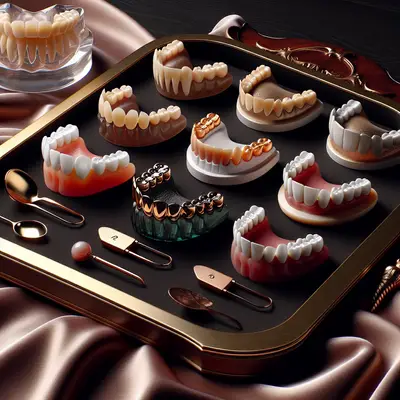
Modern dentures sit on a spectrum—from traditional removable plates to exquisitely engineered, implant-supported designs. Understanding this range is the foundation of a well-informed choice.
Conventional full dentures replace all teeth in an arch (upper, lower, or both). They rest on the gums and rely on suction, fit, and occasionally adhesive. Properly crafted, they can look remarkably natural, but they depend heavily on the underlying bone and soft tissue for stability.
Partial dentures are tailored solutions for those missing some, but not all, teeth. They anchor to remaining natural teeth using clasps or more discreet attachments, preserving facial structure and chewing function while allowing you to retain your own dentition as long as it remains healthy.
Immediate dentures are placed the same day teeth are removed, allowing you to avoid a toothless transition. They offer instant aesthetics but typically require multiple adjustments or replacement once gums and bone reshape after healing.
Implant-supported dentures occupy the luxury end of the spectrum. Titanium implants in the jawbone serve as anchors for fixed or snap-in prosthetics, offering enhanced stability, chewing efficiency, and confidence. While more of an investment, they are often the most seamless and “forgettable” form of tooth replacement in everyday life.
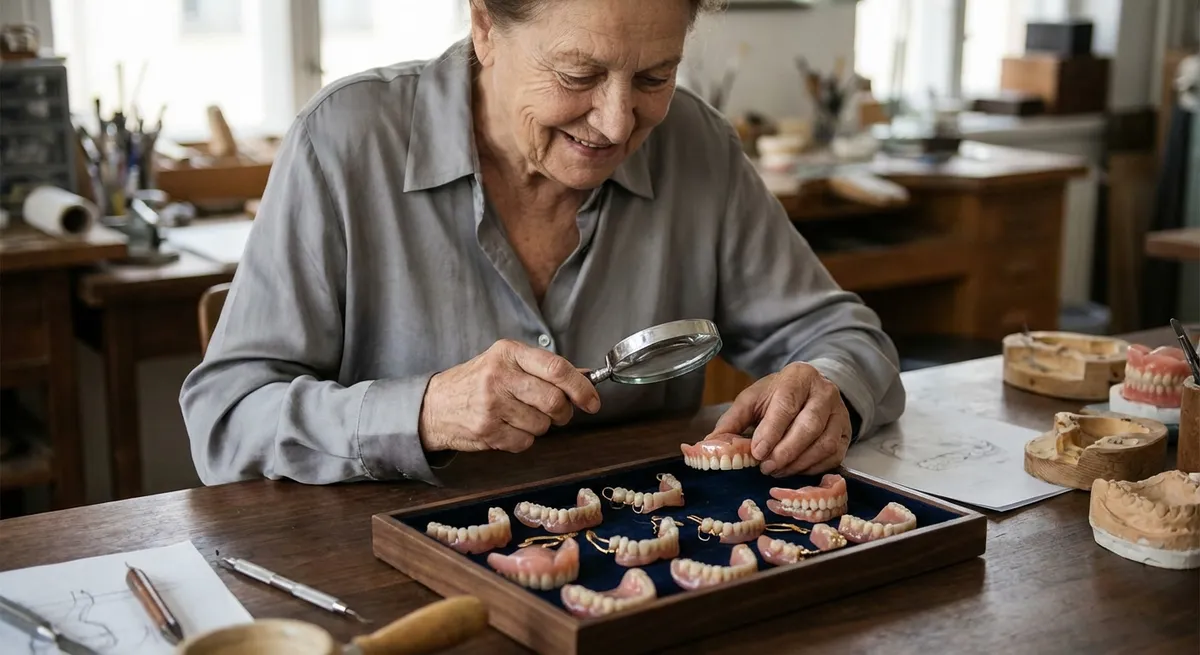
The most refined outcome usually results from collaboration: your prosthodontist, lab technician, and surgeon (if implants are involved) coordinating not just function, but facial harmony, phonetics, and the subtle interplay of tooth shade and gum contour.
Materials, Aesthetics, and the Art of Subtle Realism
Not all dentures are created with the same aesthetic ambition. Material selection and craftsmanship profoundly influence how convincingly your dentures blend into your overall appearance.
Traditional acrylic remains the standard base material: durable, modifiable, and relatively light. High-impact acrylics and advanced resins raise the bar on longevity and crack resistance, particularly for those who clench or grind. Teeth themselves can be made from acrylic or porcelain. Acrylic teeth are gentler on opposing teeth and easier to adjust; porcelain offers superior stain resistance and a glassy translucency that can look remarkably tooth-like—though it can be noisier when chewing and is less forgiving if you grind.
More premium denture work often involves layered shades in the denture teeth and gum base. Rather than a single flat pink color, the gum portion may feature subtle vascular tones, gradations, and contours that mimic natural tissue. Similarly, teeth can be arranged with micro-variations in shape and alignment to avoid the “too perfect” appearance that betrays many standard dentures.
Tooth shade is critical. A discerning choice usually avoids the stark white associated with over-bleached smiles. Instead, a gently warm, lifelike shade—paired with the right translucency—conveys health and refinement without drawing unnecessary attention.
The most elegant dentures are those that never introduce themselves. They simply integrate—into your face, your speech, and your daily life—without announcing their presence.
Functional Precision: Matching Denture Types to Lifestyle
A premium denture is one that reflects how you actually live, not just what shows in a mirror. The right type for you depends on far more than the clinical question of how many teeth you’re missing.
For those who value gastronomic experiences—complex textures, crisp vegetables, thoughtful dining—stability and bite efficiency matter greatly. Implant-supported dentures generally offer superior chewing power and reduce the frustration of food limitations. For others, who prioritize reversibility, less invasive treatment, or travel-friendly simplicity, a meticulously fitted removable denture may be entirely sufficient.
Speech requirements also influence choice. If your work involves frequent presentations, client meetings, or performances, minimizing bulk—especially in the upper palate—can be essential. Certain implant-supported and specialized partial designs allow for a more open palate, which can dramatically refine clarity and natural resonance.
Travelers and those constantly in motion might prefer designs that are straightforward to remove, clean, and maintain without elaborate equipment. Conversely, individuals who want to “set it and forget it” often gravitate toward fixed, implant-supported solutions that integrate into daily life with minimal thought.
The most appropriate denture type is therefore not just a medical decision; it is a lifestyle calibration. A thorough consultation should include a candid discussion about how you entertain, dine, travel, speak, and work—so that your prosthesis supports, rather than constrains, your way of living.
Exclusive Insight #1: Pre-Design “Smile Mapping” Changes Everything
A rarely discussed, high-level strategy is to approach dentures the way a designer approaches a tailored garment: with pre-design planning that goes beyond simply taking impressions.
“Smile mapping” involves carefully studying photographs of you at your best—before tooth loss, if available, as well as aspirational references. Your clinician can analyze tooth display when you speak, the way your lips rest at ease, the curvature of your smile, and how much gum shows when you laugh.
This process often includes using digital smile design tools or physical wax set-ups to preview tooth length, shape, and arrangement. Rather than accepting whatever emerges from a generic mold, you participate in a collaborative design process: approving tooth shade, incisal edge shape, midline position, and even how slightly irregular—or perfectly aligned—you prefer your new smile to appear.
The result is a denture that doesn’t just “fit” technically, but feels familiar to your identity. It respects the way you inhabit your face and preserves, or subtly elevates, your natural expression instead of replacing it with a standard template.
Exclusive Insight #2: Occlusal Design is the Secret to All-Day Comfort
Many denture wearers focus on appearance, yet the true luxury is often invisible: the way the upper and lower teeth meet, known as occlusion. Poor occlusal design can lead to sore spots, denture movement, jaw fatigue, and even headaches.
Premium denture design considers how forces distribute across the arch during chewing. Balanced occlusion helps keep dentures stable, minimizing the frustrating “see-saw” effect where pressure on one side lifts the other. Your clinician may refine the tooth surfaces in a controlled, stepwise manner, asking you to bite, chew, and move side to side while making micro-adjustments.
For implant-supported dentures, occlusal schemes are sometimes tailored to reduce excessive stress on implants and surrounding bone. This level of fine-tuning feels almost indulgent, but it has practical consequences: smoother chewing, quieter joints, and fewer pressure sores.
When evaluating providers, it is worth asking how much attention they give to occlusal adjustment and follow-up refinement. Time spent perfecting your bite is one of the most underappreciated markers of sophisticated denture care.
Exclusive Insight #3: Strategic Use of Flexible and Hybrid Designs
While most people are familiar with standard acrylic or metal-based dentures, flexible and hybrid designs can offer a more nuanced solution in select cases.
Flexible partial dentures, often made from nylon-like materials, can provide a softer interface with the gums and more discreet clasps that blend with gum tissue. They can be particularly appealing in visible areas where metal clasps would be aesthetically distracting. However, they are not ideal for every situation and require an experienced clinician to judge when the benefits outweigh the limitations.
Hybrid designs combine features of different denture types—such as a metal framework for strength with carefully shaded composite or acrylic gum veneers for aesthetics. Implant-retained hybrid bridges can be crafted to look like natural teeth emerging from a beautifully contoured gumline, with the entire structure fixed in place for maximum stability.
These options rarely appear in standard brochures, yet they can offer a tailored balance of flexibility, strength, and visual discretion that many discerning wearers deeply appreciate.
Exclusive Insight #4: Planning for the Future Shape of Your Face
Bone and soft tissue are not static. After tooth loss, the jawbone gradually resorbs, and the contours of the face evolve. Sophisticated denture planning acknowledges this biological reality and anticipates it rather than reacting to it years later.
For conventional dentures, this means recognizing that what fits perfectly shortly after fabrication may require periodic relines or remakes as the underlying bone changes. Choosing a provider who plans for staged adjustments—and schedules regular reassessment—is essential.
Implants offer another layer of foresight: by stimulating the jawbone, they can help slow bone loss, helping maintain facial structure and reducing the “collapsed” look that can appear with long-term edentulism. For some, combining a well-designed removable prosthesis with a few strategically placed implants provides a measured, phased approach—enhancing stability now while also preserving future options.
An experienced prosthodontist will consider not just how you look next month, but how your facial profile and lip support are likely to evolve over the next decade, and will design accordingly.
Exclusive Insight #5: The “Quiet Luxury” of Seamless Transitions
One of the most refined aspects of denture care is how discreetly you move through transitions—whether it’s the initial switch to dentures, an upgrade to implants, or a future remake. This is where planning and communication become forms of quiet luxury.
Immediate dentures, when designed thoughtfully, can ensure you are never without teeth during healing. For those pursuing implant-supported solutions, temporary prostheses can be planned so that your appearance remains consistent as underlying structures are refined.
Subtle continuity in tooth shape, color, and arrangement across each stage matters. A meticulous provider will echo key visual elements in your temporary restorations so that the final prosthesis feels like a natural evolution, not a sudden shift. Even those close to you may simply notice that you look “rested” or “refreshed” without grasping that a major change has occurred.
This level of discretion—planning not just the final destination but the elegance of each step along the way—is an often-overlooked hallmark of truly elevated denture care.
Conclusion
Selecting a denture type is not a mere transaction; it is an act of self-curation. Beyond the clinical labels—full, partial, immediate, implant-supported—lies a more refined conversation about how you wish to live, speak, dine, and be seen.
By embracing advanced planning like smile mapping, insisting on meticulous occlusal design, considering flexible or hybrid options where appropriate, planning for the future architecture of your face, and managing transitions with discretion, you move from simply “having dentures” to owning a thoughtfully designed prosthetic experience.
The result is more than replacement teeth. It is a quiet, enduring statement of how carefully you invest in yourself—where comfort, aesthetics, and longevity are not luxuries, but standards.
Sources
- American College of Prosthodontists – Dentures Overview – Clinical overview of complete and partial dentures, indications, and care considerations.
- Mayo Clinic – Dental Implants – Explains how implants work, benefits, risks, and their role in supporting dentures.
- Cleveland Clinic – Dentures: Types, Care, and Benefits – Details on types of dentures, expected outcomes, and maintenance guidance.
- National Institute of Dental and Craniofacial Research (NIDCR) – Tooth Loss and Oral Health – Discusses consequences of tooth loss, including bone changes that influence denture planning.
- Harvard School of Dental Medicine – Dental Implants and Prosthetics Research – Broad research overview on advanced prosthetic and implant solutions, supporting evidence-based decisions about high-end denture options.
Key Takeaway
The most important thing to remember from this article is that this information can change how you think about Denture Types.