Denture selection is no longer a simple matter of “full” or “partial.” For the discerning wearer, it is an exercise in design, engineering, and self-expression—an intimate collaboration between aesthetics and biomechanics. Understanding the language of modern denture types allows you to participate in that design with confidence, ensuring your prosthesis serves not just as a replacement for teeth, but as a refined extension of your personal style and comfort standards.
Beyond Labels: How Denture Types Are Really Classified
Most brochures divide dentures into simple categories—complete vs. partial, fixed vs. removable—but this tells only part of the story. In practice, clinicians tend to think in layers: foundation, material, anchorage, and lifestyle.
The foundation relates to what is supporting the prosthesis: gums alone, a combination of gums and remaining natural teeth, or dental implants. Complete dentures rest entirely on the gums and underlying bone, relying on precise fit and suction, while partial dentures integrate with remaining teeth, which can provide extra stability and help preserve your bite pattern. Implant-supported dentures introduce a third dimension—anchoring into the jaw for enhanced security.
Material comes next. Acrylic, metal frameworks, high-impact resins, and advanced ceramics each influence thickness, translucency, and longevity. Anchorage describes whether your denture is removable (taken out daily) or fixed (secured by implants or cement). Finally, lifestyle refines the choice: frequent public speaking, gourmet dining, or an athletic routine may call for different engineering decisions even within the same denture type.
Recognizing these layers transforms “Which denture is best?” into a more sophisticated question: “Which combination of foundation, material, anchorage, and lifestyle alignment best serves my daily life and long-term oral health?”
The Aesthetic Spectrum: From Conventional to Couture
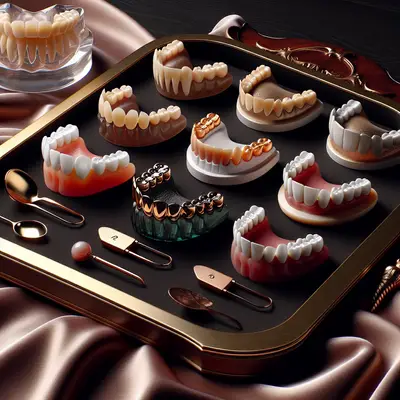
Modern denture design can be as individualized as a bespoke suit. Traditional dentures aim to approximate a generic, healthy smile; advanced options are customized to echo your facial proportions, lip dynamics, and even the personality you wish to project.
Tooth shape, shade, and arrangement no longer follow a rigid formula. Some wearers prefer slightly irregular, character-rich tooth positioning that mimics natural aging, while others favor a meticulously aligned, luminous “editorial” look. High-end tooth materials offer layered translucency, subtle surface texture, and natural light reflection—details that prevent a prosthetic from appearing flat or overly “perfect.”
Gum (gingival) aesthetics are equally sophisticated. Premium prostheses can incorporate delicate color gradients and micro-contours in the pink acrylic or composite, mirroring natural gum anatomy instead of a single, opaque pink band. This refined attention to detail is especially important for those whose smiles reveal more gum tissue.
The insight here is that denture “type” is not solely about function—it is an aesthetic medium. When discussing options with your clinician, it is entirely appropriate to bring reference photos, articulate your desired style (soft and approachable, sharp and polished, youthful, or subtly mature), and ask how different denture types can be tailored to deliver that visual identity.
Stability, Security, and the Psychology of Movement
Not all stability feels the same, even when two denture types are clinically “acceptable.” For many wearers, micro-movement—the barely perceptible shift when speaking or biting—can create a constant, low-level awareness that undermines confidence.
Conventional complete dentures depend on suction, muscle coordination, and saliva quality. When bone has resorbed significantly, or when the lower jaw is narrow and mobile, this can translate into more movement, particularly in the lower denture. Implant-retained or implant-supported options limit that movement by physically locking the prosthesis to the jaw, dramatically changing how secure the denture feels.
Partial dentures also exist along a spectrum: acrylic “flipper” style appliances can be a practical short-term solution but often feel less secure than cast-metal or precision-attachment partials, which hug the teeth and tissues with greater refinement. Flexible partials, made from thermoplastic materials, offer a softer feel and more discreet clasps, but may trade some long-term adjustability.
The key insight is that stability is both mechanical and psychological. The right denture type for you is not just the one that “stays in” but the one that erases the mental preoccupation with whether it will move. If you frequently find yourself altering your speech, avoiding certain foods, or feeling hyper-aware of your prosthesis, that’s a sign to revisit both the type and the anchorage method, not merely the fit.
Five Exclusive Insights for the Discerning Denture Wearer
1. Bone Preservation Should Influence Your Denture Type
Every extraction initiates a gradual remodeling of the jawbone. Conventional complete dentures, while functional, do not prevent this bone loss; in fact, the pressure they exert can accelerate resorption over time. Implant-supported dentures, by contrast, stimulate the bone in a way that more closely resembles natural tooth roots, helping maintain facial contours and fit longevity.
When considering denture types, ask not only “How will this look and feel next year?” but “What will this choice do to my bone structure over the next decade?” For many, integrating even a small number of strategically placed implants (such as two to four in the lower jaw) meaningfully changes the long-term profile of comfort, stability, and facial support.
2. Transitional Denture Types Can Be Strategically Planned
Denture therapy does not have to be a single, permanent decision. Many refined treatment plans deliberately use transitional denture types—such as an interim acrylic partial or immediate complete denture—while extractions heal or implants integrate.
Instead of viewing “temporary” dentures as a compromise, consider them as part of a carefully choreographed sequence. A well-planned transition allows you to maintain appearance and function while your clinician gathers data on your bite, speech patterns, and aesthetic preferences, ultimately informing a more precise final design. This can be especially valuable if you’re moving toward a fixed, implant-supported solution and want to refine tooth position, length, and shade before committing.
3. Occlusal Design Is as Critical as the Denture Type Itself
Two dentures of the same type can behave very differently depending on their occlusal (bite) design. The way the upper and lower teeth meet—angles, contact points, and guidance paths—determines how forces are transmitted to the underlying tissues, teeth, or implants.
Balanced occlusion in full dentures helps distribute forces evenly and reduces tipping during chewing, while precision adjustment in partial dentures protects remaining natural teeth from excessive stress. For implant-supported prostheses, occlusal design becomes even more crucial, as implants lack the shock-absorbing ligament that natural teeth have.
An informed wearer will ask not only about material and style, but also about the occlusal philosophy: How will my bite be designed to protect my joints, muscles, and prosthesis? This level of inquiry signals to your provider that you value both sophistication and biomechanics in your treatment.
4. High-Performance Materials Can Be Targeted, Not Universal
Premium does not always mean “the most expensive option everywhere.” Some of the most refined denture plans use high-performance materials selectively, where they provide the most benefit.
For example, a patient may opt for exceptionally lifelike, multi-layered ceramic or premium composite teeth in the aesthetic zone (the front teeth most visible when smiling), while using durable, high-impact acrylic or resin in less visible posterior areas to better absorb forces. Similarly, a metal framework might be hidden within a partial denture for strength, while the visible clasps are designed in tooth-colored or gum-colored materials for discretion.
The insight is that you can think of your denture as a curated composition of materials, each chosen for a specific purpose—beauty, resilience, comfort—rather than as a single, monolithic product.
5. Lifestyle Mapping Should Precede Final Denture Selection
Many consultations focus on clinical findings; fewer begin with an in-depth exploration of how you actually live. Yet your daily rhythms—travel frequency, professional image requirements, dining habits, athletic interests, and even skincare or cosmetic routines—can and should influence denture type.
A frequent flier who often sleeps on red-eye flights may value the reassurance of a more secure implant-retained prosthesis. A sommelier or chef may prioritize ultra-precise taste and texture perception, requiring subtle adjustments in tooth placement and palatal coverage. An avid public speaker may be exceptionally sensitive to even minor speech interference, influencing choices about palate thickness and tooth arrangement.
Before you settle on a denture type, map out a “day in the life” and a “week in the life” of your future self with the prosthesis. Share this narrative with your clinician. The most elegant denture solutions are those that are silent partners in your lifestyle, not visible compromises.
Aligning Expectations, Investment, and Longevity
Every denture type exists at the intersection of three elements: expectations, investment, and longevity. High-end, implant-supported fixed restorations often deliver the highest stability and most natural feel, but they require a greater upfront investment and a commitment to meticulous maintenance. Conventional complete dentures can be more accessible initially but may need more frequent adjustment and relining as bone resorbs.
The refined approach is not to simply choose the “top” or “entry” option, but to align your choices with your appetite for maintenance, your aesthetic standards, and your long-term horizon. For some, an incremental pathway—starting with an enhanced conventional denture, then moving to a hybrid implant-supported design later—is the most elegant solution, balancing immediate needs with future aspirations.
Whatever path you choose, insist on a collaborative, detail-rich planning process. Denture type is no longer a basic checkbox; it is a design statement about how you intend to speak, smile, dine, and age with quiet confidence.
Conclusion
Today’s denture landscape offers far more than a functional replacement for missing teeth. It offers a spectrum of highly engineered, aesthetically nuanced options that can be calibrated to your biology, your personality, and your lifestyle. By looking beyond simple labels—complete, partial, implant-supported—and engaging with deeper considerations like bone preservation, occlusal design, material composition, and lifestyle mapping, you elevate your denture from a medical device to a precisely tailored companion.
In a world where subtlety, comfort, and authenticity matter, the most sophisticated choice is the one that feels invisible in daily life yet unmistakably elevates your presence whenever you speak or smile. Your denture type should not merely fit; it should belong.
Sources
- American Dental Association – Dentures Overview – General information on types of dentures, care, and what to expect as a wearer.
- Mayo Clinic – Dentures: What to Expect – Explains functional considerations, adaptation, and long-term expectations for denture wearers.
- Cleveland Clinic – Dental Implants and Implant-Supported Dentures – Detailed discussion of how implants support prostheses and help preserve jawbone.
- National Institute of Dental and Craniofacial Research (NIDCR) – Evidence-based information on tooth loss, bone changes, and implications for prosthetic choices.
- Journal of Prosthodontic Research – Implant Overdentures and Bone Preservation – Research review on the impact of implant-retained overdentures on jawbone and prosthesis stability.
Key Takeaway
The most important thing to remember from this article is that this information can change how you think about Denture Types.