In a week when culture sites are celebrating “40 Obsolete Things To Prove How Much The World Has Moved On And Changed,” it’s worth pausing to ask a more intimate question: which parts of our lives truly deserve to be obsolete—and which are simply overdue for an upgrade? Rotary phones and VHS tapes can vanish without sentiment. But dignity, confidence, and the pleasure of a beautiful smile should never be relegated to history.
As conversations about obsolescence trend online, dentistry is quietly undergoing its own transformation. What once passed as standard dentures—chalky, ill‑fitting, and unmistakably “false”—is rapidly being replaced by exquisitely engineered prosthetics, personalized maintenance rituals, and materials designed to age gracefully alongside you. In other words, “old‑fashioned dentures” are joining fax machines on the scrap heap, and that is very good news.
Below, discover five exclusive, timely insights that distinguish yesterday’s dentures from today’s refined, future‑proof approach to denture care.
The New Luxury Standard: Why “Basic Dentures” Are Officially Outdated
As design blogs share nostalgic lists of obsolete objects, traditional one‑size‑fits‑all dentures belong squarely in that same category. Contemporary prosthodontics has moved decisively beyond the thick, monochrome acrylic plates that once defined removable teeth. Premium denture labs now work more like bespoke ateliers than factories, layering multiple shades of porcelain or advanced acrylic resins to mimic natural translucency, micro‑texture, and even slight asymmetry—the hallmarks of a believable, youthful smile.
The shift is driven by the same forces making analog tech feel archaic: people expect precision, personalization, and quiet performance. Just as no one is satisfied with a grainy cathode‑ray television in an age of 4K OLED, discerning patients are no longer willing to accept obvious, aging‑signal dentures when discreet, lifelike alternatives are available. If your current prosthesis was made more than a decade ago, it may be functionally serviceable yet aesthetically obsolete—much like a flip phone that still turns on, but no longer aligns with how you truly want to live and be seen.
Digital Craftsmanship: How High‑Tech Design Protects Your Comfort
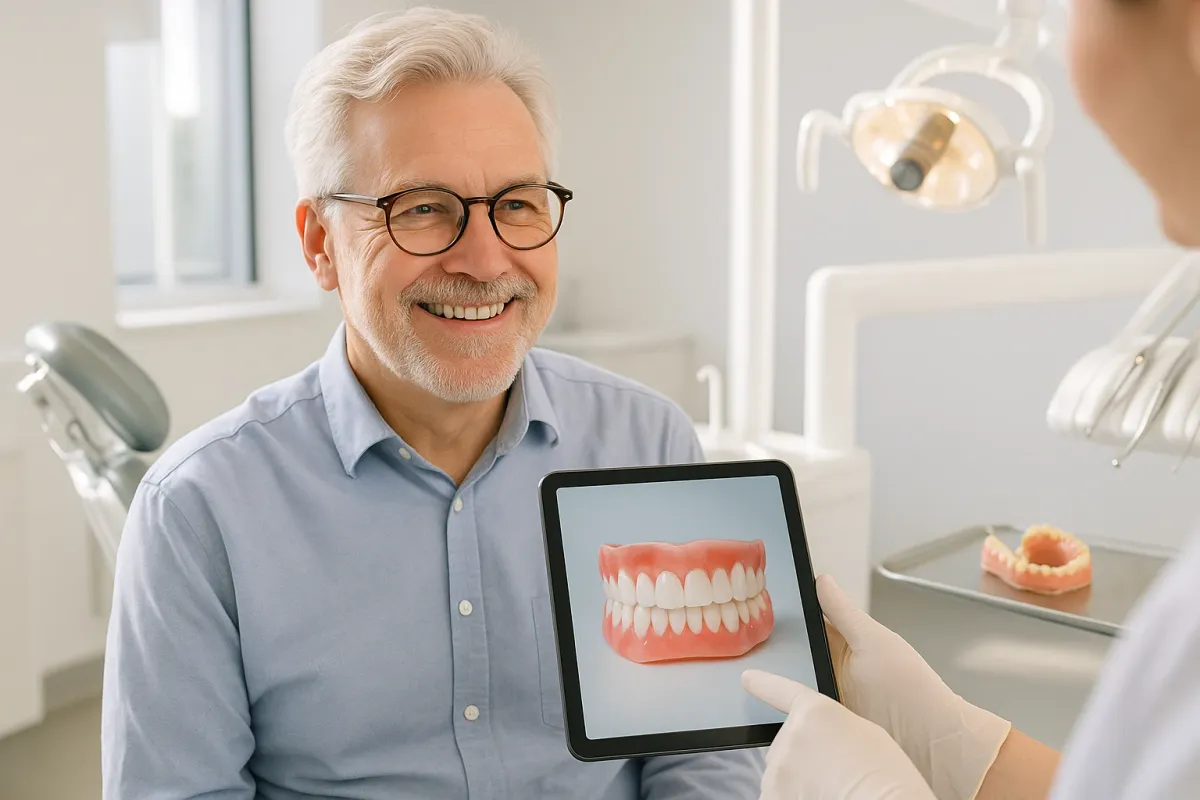
The conversation about obsolescence isn’t only about appearance; it’s also about comfort and performance. While lifestyle sites showcase “before and after” photos of outdated gadgets, a similar revolution is happening in the dental chair, thanks to digital dentistry. Many cutting‑edge practices now employ intraoral scanners, 3D imaging, and CAD/CAM design to craft dentures that fit with a level of precision previous generations could not imagine.
For denture wearers, this means fewer sore spots, more stable chewing, and a bite that harmonizes with your jaw joint rather than fighting against it. Digitally designed dentures can be fine‑tuned virtually before they ever touch your mouth, making micro‑adjustments to the occlusion and contouring in ways that used to require trial and error. The refinement continues after delivery: updates and remakes become easier because your “digital smile file” can be adjusted and re‑milled rather than starting from scratch. In a cultural moment fascinated by AI‑assisted imagery and ultra‑precise design, your dentures can—and should—benefit from the same exacting technology.
Elegance in Routine: Transforming Denture Care Into a Daily Ritual
Lists of obsolete items often include once‑beloved grooming tools—old razors, clunky hairdryers, analog beauty gadgets that feel crude by today’s standards. Traditional denture hygiene, too, often suffers from an outdated, purely utilitarian mindset: soak, scrub, repeat. Modern denture wearers are quietly rewriting that script, turning maintenance into a refined ritual rather than a chore tucked away in the dark of the bathroom cabinet.
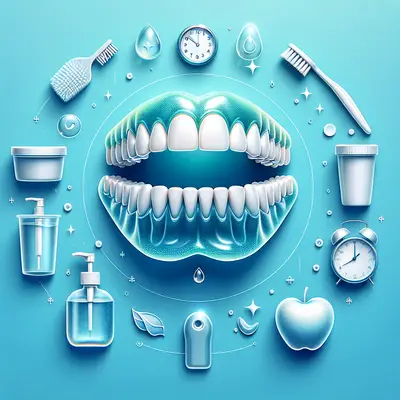
A premium care routine might pair a non‑abrasive, denture‑specific cleanser with a soft‑bristled dedicated brush, followed by a neutral‑pH overnight soak in a high‑quality solution that targets biofilm without stripping the material’s subtle lustre. Lining your vanity with a discreet, well‑designed storage case rather than a stained plastic cup sends a powerful message: this is not a medical embarrassment, but a curated aspect of your grooming, no different from a designer fragrance or a silk sleep mask. When the tools and textures of your nightly routine feel elevated, adherence improves, and so does long‑term comfort and freshness.
Protecting What Still Matters: Natural Tissues in a Changing World
As viral posts look back on “forgotten” objects—film canisters, floppy disks, slide projectors—it’s easy to subconsciously group our own biological structures into that same mental category of “no longer relevant.” Once natural teeth are gone, some people assume the rest of the mouth is no longer particularly important. This misconception is not only outdated; it’s dangerous.
Modern denture care places meticulous focus on the living architecture that supports your prosthesis: gums, oral mucosa, residual bone, and the temporomandibular joint. Even the most sophisticated dentures will underperform if the foundation is neglected. Regular professional evaluations allow your dentist or prosthodontist to monitor bone resorption, adjust the fit, and spot subtle pressure points before they bloom into ulcers or accelerated tissue loss. Gentle daily massage of the gums, strategic “rest” periods without the denture, and careful management of dry mouth (a common side effect of many contemporary medications) all contribute to the longevity of both your prosthesis and your underlying anatomy. In a world where nearly everything feels replaceable, your own oral structures are not—and your care routine should reflect that.
Future‑Proofing Your Smile: Planning Ahead in a Rapidly Evolving Era
The fascination with “obsolete things” ultimately reflects a deeper anxiety: how do we future‑proof our choices in a world that changes quickly? The same question applies elegantly to denture care. Instead of viewing your prosthesis as a static, one‑time solution, consider it part of a long‑term, adaptive strategy. This may mean choosing materials that can be refined and relined over time, leaving open the possibility of transitioning to implant‑supported options if and when your health, bone volume, or preferences allow.
It also means building a relationship with a dental team who thinks beyond the next six months. Are they tracking shifts in your bite that could hint at bone changes? Discussing new materials or digital upgrades that might make your next prosthesis lighter or more lifelike? Advising you on nutrition, night‑time habits, and oral exercises that preserve the structures you still have? A truly modern approach to dentures treats your smile less like a “finished product” and more like a beautifully maintained classic—cared for, updated, and protected so it never slips into the realm of the obsolete.
Conclusion
As media feeds fill with nostalgic slideshows of objects the world has outgrown, it’s tempting to place dentures in that same mental drawer of “old‑people things.” Yet, precisely at this moment, dentures are undergoing their own quiet renaissance, evolving from crude placeholders into meticulously crafted, digitally designed, and elegantly maintained expressions of personal style and self‑respect.
Obsolescence belongs to outdated materials, crude designs, and neglectful routines—not to your smile. By embracing contemporary craftsmanship, sophisticated daily care, and thoughtful long‑term planning, you ensure that your dentures are anything but an artifact of the past. They become, instead, a modern luxury: discreet, dependable, and perfectly attuned to the life you are living right now.
Key Takeaway
The most important thing to remember from this article is that this information can change how you think about Denture Care.