Denture maintenance, at its best, feels less like a chore and more like a curated ritual—one that protects your investment, preserves your comfort, and sustains a poised, polished appearance. Beyond the standard guidance of daily cleaning and overnight soaking lies a more nuanced approach: small, intentional habits that support the long-term elegance and integrity of your dentures.
This guide explores five exclusive, detail-oriented insights that help transform everyday denture care into a refined practice—quietly effective, discreetly luxurious, and deeply protective of both your smile and your overall oral health.
Reframing Cleaning: From “Scrubbing” to Surface Preservation
Most wearers are told to “brush their dentures daily,” but the manner in which you clean them determines how gracefully they age. Acrylic and resin denture materials, while durable, are more delicate than natural enamel and can be microscopically scratched by abrasive pastes or hard-bristle brushes.
Think of your dentures as you would a fine leather bag or a polished stone surface—functional, but deserving of gentle handling. Use a soft-bristled denture brush (never a stiff, worn toothbrush) and a non-abrasive cleanser formulated specifically for dentures. Avoid regular whitening toothpastes; many contain particles and chemicals designed to scour enamel, which can instead create micro-grooves on denture surfaces. These grooves subtly dull the finish and, more importantly, provide footholds for plaque and stains.
Rinse your dentures under cool or lukewarm water before cleaning to remove loose debris. Hot water may warp or distort them over time, altering fit and comfort. During brushing, use small, deliberate strokes and pay special attention to the junctions and inner curves where plaque tends to accumulate. The goal is not vigorous scrubbing, but consistent, gentle surface preservation—maintaining the luster and precision of your prosthesis for years rather than months.
Curating a Nightly Soak: A “Spa” Standard Routine
An overnight soak is not simply a recommendation; it is part of the biological rhythm of your mouth. Your oral tissues need time without constant contact or pressure, and dentures themselves benefit from being rehydrated.
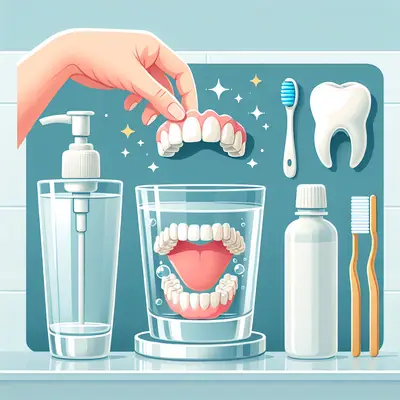
Choose a high-quality effervescent denture cleanser and follow the exact dilution and timing recommended by the manufacturer. Excessively strong or prolonged exposure to harsh chemical solutions can fade color, weaken metal components in partials, or subtly roughen surfaces. A tailored approach here matters: what is restorative at 10–15 minutes can become damaging if left indefinitely.
Always soak dentures out of your mouth at night unless your dentist has given a specific medical reason not to. Store them in fresh, cool water or cleanser solution in a closed, clean container. Avoid improvised containers that can tip, spill, or scratch the appliance. Just as you would never store a tailored suit crumpled on a chair, your dentures deserve a stable, protected resting place that prevents drying, warping, and accidental damage.
As a final refinement, rinse the dentures thoroughly before placing them back in your mouth in the morning. This simple step reduces your exposure to cleanser residue and supports a fresher, more comfortable start to the day.
Protecting the Fit: Gentle Habits that Preserve Precision
A well-fitted denture is a quiet luxury—unnoticed by others, but constantly felt by you. Preserving that level of comfort requires more than occasional adjustments; it calls for conscious daily choices that respect the structure and fit.
First, treat your dentures as inherently breakable, regardless of how robust they appear. When cleaning them, hold them over a folded towel or a basin partially filled with water. A single drop onto a hard porcelain or stone sink can result in a fracture or chip that permanently alters fit and aesthetics.
Second, be discerning about what you bite into. Even if your dentures feel rock-solid, biting directly into very hard foods—like dense nuts, hard candies, or ice—can stress both the denture base and the underlying tissues. Instead, cut such foods into smaller, manageable pieces and chew with a balanced, bilateral motion to distribute pressure more evenly.
Finally, do not “tolerate” a change in fit as inevitable. Subtle looseness, new sore spots, or a shift in how your teeth come together can signal changes in your gums and jawbone or mild warping over time. Scheduling periodic fit checks with your dentist is not indulgent—it is preventative care that helps you avoid major relines, fractures, and chronic irritation later.
Synchronizing Denture Care with Oral Tissue Wellness
Maintaining dentures without caring for the mouth they rest upon is like polishing a frame while ignoring the canvas. Your gums, tongue, palate, and any remaining natural teeth form the foundation on which your dentures perform.
Each evening, after removing your dentures, take a moment to gently massage your gums and palate with a soft toothbrush or a clean, damp gauze pad. This not only removes plaque and residual adhesive but also promotes circulation in the tissues, which supports healing, comfort, and long-term resilience. A clean, well-stimulated oral environment is less prone to irritation, fungal overgrowth (such as denture stomatitis), and chronic soreness.
If you wear partial dentures, be meticulous about cleaning your remaining natural teeth, especially around clasps and abutments where plaque tends to concentrate. High-quality fluoride toothpaste and careful flossing—or interdental brushes for tight spaces—help prevent decay in the teeth that support your partial. Think of these teeth as structural pillars: keeping them strong preserves the integrity, fit, and lifespan of the entire prosthesis.
Finally, incorporate a brief visual inspection of your mouth under good lighting. Look for red patches, white spots, chronic sore areas, or ulcers that do not heal within two weeks. These subtle changes, while often benign, can sometimes signal infection or, rarely, more serious pathology—and early detection allows for discreet, effective interventions.
Precision with Adhesives: Minimalist Use for Maximum Comfort
Denture adhesives can elevate comfort, confidence, and stability—but only when used with discernment. The goal is not to “glue” an ill-fitting denture in place, but to fine-tune an already well-fitted appliance.
Begin with a clean, dry denture and equally clean, dry oral tissues. Apply adhesive in thin, controlled strips or small dots (depending on the product instructions), avoiding the edges of the denture base. Excess product tends to ooze out under pressure, creating an unpleasant feel and making daily cleaning more complicated. A minimalist application usually offers a more refined, controlled hold than a heavy-handed one.
If you find yourself increasingly reliant on large quantities of adhesive to feel secure, treat that as valuable information, not a permanent workaround. It often signals that your denture requires professional adjustment, a reline, or, in some cases, a replacement. Preserving a premium level of comfort and function means respecting adhesives as a finishing touch—not a structural solution.
When removing adhesive at night, be thorough and gentle. Rinse with warm water and use a soft cloth or brush to remove residue from both the denture and your gums. This prevents buildup, improves hygiene, and ensures the adhesive performs optimally the next day.
Conclusion
Elevated denture care is less about elaborate routines and more about intention: choosing products thoughtfully, treating your dentures as refined instruments rather than indestructible tools, and honoring the health of the tissues that support them.
By approaching cleaning as surface preservation, soaking as a nightly spa ritual, fit as a precision asset, oral tissues as a vital foundation, and adhesives as a subtle enhancement, you cultivate a standard of care that feels quietly luxurious—and remarkably effective. Over time, these refined practices help ensure that your dentures not only look sophisticated, but perform with comfort, stability, and confidence day after day.
Sources
- American Dental Association – Dentures – Overview of denture types and fundamental care recommendations
- Mayo Clinic – Dentures: Maintenance and Care – Practical guidance on daily cleaning, fit, and when to seek professional adjustments
- Cleveland Clinic – Dentures – Detailed explanations of denture function, cleaning advice, and oral tissue health considerations
- National Institutes of Health (NIH) – Denture Stomatitis – Clinical discussion of denture-related fungal infections and hygiene strategies
- Colgate Oral Care Center – Caring for Dentures – Consumer-focused instructions on denture cleaning, soaking, and adhesive use
Key Takeaway
The most important thing to remember from this article is that this information can change how you think about Maintenance Tips.