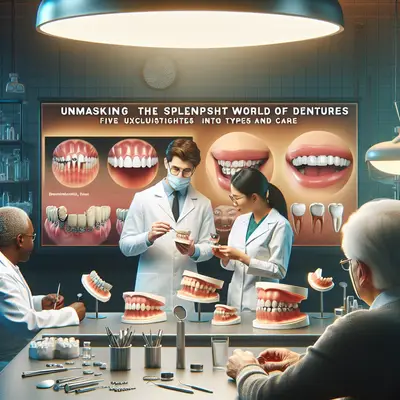
For those who value refinement in every detail, dentures are no longer a blunt, one‑size‑fits‑all solution. Today’s prosthetics are engineered, layered, and customized with the same care you might expect from a bespoke suit or tailored skincare regimen. Understanding the spectrum of denture types is less about “what will work” and more about “what will feel seamless, look natural, and integrate elegantly into your life.”
This guide moves beyond the basic labels of “full” and “partial” to explore how contemporary denture designs, materials, and techniques can be curated to your standards—while revealing five under‑discussed insights that sophisticated denture wearers quietly rely on.
A Modern Portrait of Denture Types
At the foundation, denture types are defined by how much they replace, what they anchor to, and how they meet your aesthetic and functional expectations.
Complete dentures are designed for those missing all teeth in the upper or lower arch. These can be conventional (placed after healing from extractions) or immediate (placed the same day as extractions). While conventional dentures often fit more precisely after tissues have settled, immediate dentures offer the elegance of avoiding a toothless transition, a priority for many image‑conscious patients.
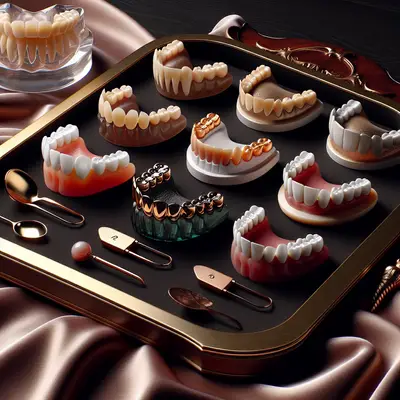
Partial dentures fill in spaces when some natural teeth remain. They are typically crafted with either a metal framework (notably cobalt‑chromium for strength and slimness) or flexible materials that contour to the gums with less visible hardware. The right choice hinges on whether you prioritize minimal bulk, maximum discretion, or future adaptability as your dental situation evolves.
Implant‑supported dentures represent a more anchored experience. These prosthetics are attached to implants placed in the jawbone, reducing movement, improving chewing power, and preserving facial contours. For many, this is the gold standard: a prosthetic that feels integrated rather than simply “worn.”
Overdentures blend the old and the new, using either remaining natural tooth roots or implants as stabilizing pillars beneath a removable denture. This approach can preserve bone, enhance comfort, and deliver an experience that feels quieter and more secure than traditional full plates.
Material Matters: Beyond “Plastic Teeth”
Materials are where the character of a denture truly emerges. The days of uniform, opaque pink acrylic and identical teeth are giving way to subtle layering, translucency, and precise shade matching.
High‑quality acrylic bases remain the standard, but premium options use more refined pigmentation to mimic capillaries, subtle color variations, and natural gum textures. This degree of nuance ensures that the denture doesn’t present as a uniform block of color, which can betray its artificial nature in bright lighting or photographs.
Tooth materials vary from conventional acrylic to high‑wear composite and even porcelain. Composite and advanced acrylic teeth can be crafted with layered translucency that echoes natural enamel, allowing light to pass through rather than bounce harshly off the surface. Porcelain, though beautifully lifelike and durable, can be less forgiving if it chips and may transmit more force to the underlying tissues or implants.
The sophistication lies in the combination: a base tone that flatters your complexion, a tooth shade calibrated to your age and aesthetic preferences (a luminous, not overly bleached tone tends to look more luxurious), and an arrangement that respects the natural asymmetry of real teeth rather than a perfectly uniform, “denture” smile.
Five Exclusive Insights for the Discerning Denture Wearer
Within the world of premium denture care, there are quiet truths that rarely make it into standard brochures. These five insights can help you navigate the finer points of your options with confidence.
1. “Standard” vs. “Signature” Setups Are Worlds Apart
Two dentures can be made from similar materials and yet feel entirely different in your mouth and in photographs. The difference often lies in the artistry of the setup—how each tooth is selected, shaped, and positioned.
A more curated approach may involve:
- Individually choosing tooth shapes to reflect your facial structure, lip support, and even your personality (soft contours vs. more angular lines).
- Slight rotation or spacing of teeth to avoid a “piano key” effect.
- A focus on how your teeth appear when you speak and smile, not just at rest in a dental chair.
This level of customization can transform a competent denture into one that feels as though it always belonged to you.
2. Your Lip Line Quietly Dictates the Right Denture Type
Your lips are a frame—and they quietly determine how forgiving or demanding your prosthetic must be. A low smile line that barely reveals the gums may allow more flexibility in base design and color. A high smile line, where gums are on display, demands a more sophisticated approach to tissue shading, contouring, and the seamless blending of denture base with your natural tissues.
Those with a high smile line often benefit from:
- More lifelike gum characterization and subtle texture.
- Careful selection of denture base shades to match actual gum tones.
- Consideration of implant‑supported or overdenture options to stabilize the base and prevent visible movement during expressive speech or laughter.
Your lip line doesn’t only influence aesthetics; it shapes which denture types and enhancements will appear truly natural.
3. Implant‑Supported Does Not Have to Look “Implant‑Like”
There’s a misconception that implant‑supported dentures will always appear more “fixed” and less natural, as if you’ve traded one obvious solution for another. In reality, modern implant‑supported dentures can be crafted with the same nuance, asymmetry, and softness as the finest removable prosthetics.
The nuance lies in:
- How much of the pink acrylic or ceramic gum is visible; your dentist can design a more conservative flange or a fuller, more supportive one depending on your facial volume.
- Whether the prosthesis is fully fixed (only removed by a dentist) or a refined overdenture that you can remove for care but that locks firmly in place during daily life.
- The sculpting around the implants to avoid an overly rigid, “blocked‑out” gumline, preserving the subtle concavities and convexities that make real tissue look alive.
In understated terms: an implant‑supported smile can be virtually indistinguishable from natural dentition when designed with restraint and attention.
4. Bite Design Influences More Than Chewing
The way your upper and lower dentures meet—your occlusion—is about more than efficiently breaking down food. It influences jaw comfort, facial harmony, and even how you enunciate certain sounds.
A refined bite setup can:
- Reduce pressure points on the gums by distributing forces more evenly.
- Minimize jaw fatigue and help prevent tension headaches.
- Support more natural speech patterns, especially for sounds that rely on precise tongue‑to‑tooth contact.
Sophisticated denture fabrication may include multiple try‑ins, digital bite analysis, or adjustment sessions after delivery to calibrate this bite relationship. It’s not indulgent; it’s foundational to a denture that feels like an extension of you instead of a foreign object.
5. Future‑Proofing Your Denture Type Is an Underestimated Luxury
Choosing a denture type is not only about today—it is also about how gracefully it will adapt to tomorrow. Bone naturally changes over time after tooth loss, and your aesthetic preferences may evolve.
Thoughtful planning might include:
- Selecting a partial denture framework that can be modified if additional teeth are lost.
- Designing overdentures or implant‑supported systems that can be upgraded (for example, starting with fewer implants and allowing for the possibility of more in the future).
- Discussing how easily your denture can be relined, adjusted, or remade while preserving the aesthetic setup you’ve grown attached to.
A future‑proofed treatment plan respects your time, investment, and desire for continuity in your appearance and comfort.
Matching Denture Types to Your Lifestyle and Aesthetic Priorities
Beyond clinical indications, your daily routines and personal standards should shape the denture type you choose. Consider your priorities through three lenses: stability, discretion, and maintenance.
If you value absolute stability—no shifting during a business luncheon, no second thoughts with crisp foods—implant‑supported dentures or overdentures often justify their investment. Their enhanced chewing efficiency and reduced movement provide a quiet confidence that many find transformative.
If your primary focus is discretion, a carefully designed partial denture with minimal metal display or a well‑executed flexible partial may align with your expectations. Likewise, for full dentures, paying close attention to gumline visibility, tooth brightness, and profile support (to avoid a sunken midface) will yield a result that looks graciously natural.
Maintenance is also part of elegance. Fully removable dentures are straightforward to clean thoroughly outside the mouth, which can feel reassuringly meticulous. Implant‑supported options require a slightly different ritual—interdental cleaning around implants, regular professional checks, and, for fixed hybrids, specific techniques to ensure no residue remains under the prosthesis. The right choice is the one that aligns with your appetite for daily care, not just your initial aesthetic ambitions.
When Technology Elevates Traditional Categories
Digital dentistry has refined the familiar categories of full, partial, and implant‑supported dentures into something more precise. Computer‑aided design and manufacturing (CAD/CAM) allow for milled or 3D‑printed bases that fit with remarkable accuracy, potentially reducing sore spots and adjustment visits.
Digital workflows can:
- Capture jaw movements to design a more harmonious bite.
- Store your exact denture design on file, allowing for streamlined remakes or backups in the future.
- Produce prototypes for you to evaluate not just in a mirror, but in real‑world situations—conversations, meals, and photographs—before approving the final version.
Technology doesn’t replace craftsmanship; it underpins it, allowing your clinician and technician to focus more on artistry and less on guesswork.
Conclusion
The landscape of denture types has evolved into something far more sophisticated than a simple choice between “full” and “partial.” Today, you can choose not only how your dentures function, but also how discreetly they integrate with your features, how serenely they sit throughout your day, and how gracefully they adapt as you do.
When you understand the quiet variables—lip line, bite design, material nuance, implant integration, and long‑term adaptability—you can collaborate with your dental team to create a solution that feels bespoke, not generic. In that partnership lies the true luxury: a prosthetic that doesn’t simply replace teeth, but restores presence, poise, and the unspoken ease of a smile that feels entirely your own.
Sources
- American College of Prosthodontists – Types of Dentures – Overview of complete, partial, and implant‑supported dentures and when each is recommended
- Mayo Clinic – Dentures: What to Expect – General guidance on denture options, fit, and adjustment over time
- Cleveland Clinic – Dentures – Detailed explanation of denture materials, care, and different categories of prostheses
- National Institute of Dental and Craniofacial Research (NIDCR) – Tooth Replacement Options – Evidence‑based overview of replacement solutions, including dentures and implants
- Harvard School of Dental Medicine – Implant‑Supported Prostheses – Insight into how implants support various types of prosthetic restorations, including overdentures
Key Takeaway
The most important thing to remember from this article is that this information can change how you think about Denture Types.