Modern dentures are no longer a one-size-fits-all compromise. Today’s options can be tailored with the same level of discernment you bring to other important investments in your life: vision correction, skincare, even your wardrobe. Understanding the different denture types is less about memorizing jargon and more about recognizing which design will quietly support your comfort, confidence, and long-term oral health.
Below, you’ll find a refined overview of the major denture types, followed by five exclusive, often-overlooked insights that experienced denture wearers wish they’d known from the beginning.
The Modern Landscape of Denture Types
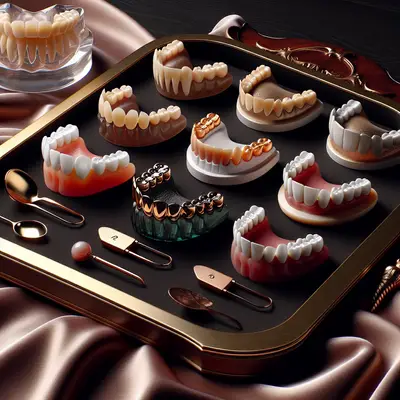
In contemporary prosthetic dentistry, “denture” is a sophisticated umbrella term that covers several distinct solutions, each with its own personality, maintenance profile, and aesthetic outcome.
Complete (full) dentures are designed for those who have lost all teeth in an arch (upper, lower, or both). These prosthetics rest on the gums and are shaped to work with your facial structure, lip line, and bite. When fabricated thoughtfully, they don’t merely replace teeth; they subtly support cheek structure and lower-face contours.
Partial dentures serve when some natural teeth remain. A well-designed partial does more than fill gaps—it helps stabilize your bite, distribute chewing forces, and can slow down shifting of existing teeth. They can be acrylic-based, metal framework-based, or flexible, depending on your needs and the aesthetic discretion you prefer.
Implant-supported dentures (sometimes called overdentures) introduce titanium implants into the jawbone to anchor the denture more firmly. Whether using a snap-on attachment or a bar, this approach enhances stability and chewing power, while also helping preserve bone volume in the jaw. For many, this option offers a more “forget-it’s-there” experience.
Immediate dentures are crafted in advance and placed the same day teeth are removed. Their primary appeal is continuity—you never have to appear without teeth. However, they are often a transitional prosthetic, refined or replaced after the gums and bone have reshaped during healing.
The result is a nuanced menu of options. Selecting between them isn’t about finding the “best” denture in an abstract sense; it’s about aligning the design with your anatomy, lifestyle, and long-term priorities.
Complete vs. Partial: How Structure Shapes Daily Life
The choice between complete and partial dentures extends far beyond how many teeth are missing. It has meaningful implications for your oral function, facial aesthetics, and day-to-day ease.
Complete dentures depend entirely on the gums and underlying bone for support and retention. Upper dentures typically benefit from natural suction, while lowers can be more technically challenging due to tongue movement and a smaller surface area. A carefully crafted lower denture that respects muscle dynamics and tongue space can feel remarkably secure; a poorly designed one can feel like a constant negotiation.
Partial dentures, by contrast, anchor to remaining teeth via precision attachments or clasps. High-quality designs strive to make these connectors discreet while preserving the health of the teeth they rely on. When thoughtfully balanced, partials can maintain a more “natural” feeling bite, particularly if your remaining teeth are stable and healthy.
Aesthetic considerations also differ. With complete dentures, the dentist controls the entire visible smile—teeth shade, shape, orientation, even the way the prosthetics support your lips. With partials, harmony becomes the focus: the replacement teeth must subtly blend with your natural dentition in color, translucency, and proportion.
Long-term adaptation is another dimension. Complete denture wearers often need more frequent adjustments and relines over time as the jawbone reshapes after tooth loss. Partial wearers must safeguard the health of their remaining teeth aggressively, as those teeth are now doing structural duty as both anchors and functional partners.
Implant-Supported and Overdenture Designs: Elevated Stability
For many discerning denture wearers, implant-supported options provide an elevated sense of reassurance—especially in social or professional contexts where discreet confidence is paramount.
Implant-retained overdentures use a small number of dental implants (often 2–4 in the lower jaw, and sometimes more in the upper) to secure a removable denture. The denture “snaps” onto specialized attachments, dramatically reducing movement during speaking and chewing. This approach can be particularly transformative for those who have wrestled with loose lower dentures.
Implant-supported fixed prostheses (often associated with “full-arch” solutions) are designed to be permanently attached to implants and removed only by a dental professional. While still technically prosthetic dentures, they feel more like a series of connected teeth rather than a removable plate.
Beyond comfort, implant-based solutions contribute to bone preservation. After tooth loss, the jawbone tends to resorb over time. Implants transmit functional forces into the bone, helping it maintain volume and shape—an important factor for facial aesthetics as the years pass.
However, this path demands thoughtful planning: evaluation of bone quality, sinus or nerve location, and overall health. The result, when executed with precision, can be a remarkably stable, natural-feeling solution that pairs the practicality of dentures with the reassurance of fixed teeth.
Aesthetic Customization: Subtle Sophistication in Design
Contemporary denture design allows for an astonishing degree of subtle customization—far beyond simply choosing “white teeth.”
Tooth selection now considers multiple dimensions: shade gradients, surface texture, translucency, and even minor irregularities that keep the smile from looking overly uniform or artificial. A refined prosthetic often incorporates small asymmetries or variations that mimic natural enamel and aging patterns.
The base (or “gum”) material also plays a surprisingly important aesthetic role. High-end dentures use layered acrylics in nuanced pink tones to emulate natural gingiva, sometimes including gentle shading, stippling, and natural contouring where the gums meet the teeth. This level of detail becomes especially important in high-smile lines, where more gum tissue is visible when you speak or laugh.
Lip support and facial balance are equally critical. The way the denture is contoured can subtly lift or soften the lips, adjust the fullness around the mouth, and influence how light catches your smile. A premium fitting process involves dynamic assessments: evaluating your speech, expression, and facial posture from multiple angles, rather than just how the occlusion looks on the lab bench.
The most successful dentures don’t call attention to themselves. Instead, they integrate seamlessly into your overall appearance, allowing friends and colleagues to notice that you look “refreshed” without quite knowing why.
Five Exclusive Insights Seasoned Denture Wearers Rarely Learn Early On
Beyond the familiar discussions of fit and cleaning, there are refined, experience-based insights that can meaningfully elevate your relationship with your dentures. These are the nuances long-time wearers often discover slowly—yet they can be transformative if you know them from the start.
1. Micro-Adjustments Matter More Than “Major Overhauls”
Many new wearers assume that once a denture is delivered, only large, infrequent adjustments are worth requesting. In reality, precision comes from micro-adjustments executed over time.
A pressure spot the size of a grain of rice, a slight rocking when you chew on one side, or a faint clicking sound in speech are not trivial annoyances—they’re data points. Every tiny refinement your clinician makes (polishing a high spot, subtly reshaping a flange, or adjusting the bite contacts) can cumulatively transform comfort.
Discerning denture care means scheduling follow-up visits proactively and describing these sensations with detail, rather than waiting until a minor irritation becomes a sore.
2. The “Interface Zone” Is Where Comfort Is Won or Lost
The visible portion of the denture often receives the most attention, but experienced wearers know that the true luxury lies at the interface: where the denture meets gums, cheeks, tongue, and palate.
A well-designed margin respects the movement of your muscles. This is particularly important for the lower denture and upper flanges near the cheeks and lips. When the edges are contoured to move with you—rather than against you—chewing, speaking, and even yawning feel more natural.
Ask your dentist or prosthodontist about how they assess this “border movement.” An investment in careful border molding and edge refinement pays dividends in day-to-day ease.
3. Diet Planning Is an Art, Not a Series of Restrictions
Denture-focused diet advice often sounds purely limiting—avoid this, be careful with that. Experienced wearers often take a more curated approach, discovering which preparations and textures serve both pleasure and practicality.
For instance, many find that thin, crisp foods (like delicate crackers or sliced apples) can be more manageable than dense, chewy items. Meats become infinitely more enjoyable when sliced thinly across the grain or slow-cooked until tender. Raw vegetables might reappear in your diet as finely shredded salads or slaws, rather than large, fibrous chunks.
A premium denture experience includes working with your clinician—and in some cases, a nutritionist—to design a diet that respects both your prosthetics and your palate, rather than treating enjoyment as an afterthought.
4. Speech Training Is a Subtle Investment With Outsized Return
Even with a perfectly crafted denture, your speech muscles need time and guidance to adapt. Those who sound effortlessly natural with dentures often have, quietly, given their speech deliberate attention.
Reading aloud for a few minutes daily—especially text with plenty of “s,” “sh,” “ch,” and “th” sounds—conditions your tongue, lips, and palate to the new contours. Recording yourself, then gently adjusting your pace and enunciation, can refine your articulation further.
If your public or professional life demands polished communication, consider asking your dentist whether a brief collaboration with a speech therapist or vocal coach would be beneficial. This is a level of refinement rarely discussed—but deeply appreciated by those who pursue it.
5. Long-Term Elegance Requires a Proactive Replacement Strategy
Many wearers quietly push their dentures far beyond their ideal lifespan. While a well-maintained prosthetic can last years, the underlying anatomy does not remain static—bone resorbs, gums remodel, and facial structure shifts.
Over time, even if a denture appears visually intact, its fit and function can degrade: more food traps, increased movement, subtle facial collapse, and sore spots that appear more frequently. Experienced wearers learn to think in terms of a replacement and reline strategy, rather than waiting for crisis-level discomfort.
A refined approach might involve scheduled reassessments every few years—evaluating not only fit, but also how well the denture continues to support your lower face, how stable your bite remains, and whether an upgrade in materials or design (for example, moving from traditional to implant-supported) would better serve your evolving needs.
Choosing With Confidence: Aligning Type, Lifestyle, and Expectations
Selecting among denture types is, at its core, an exercise in alignment. Complete, partial, and implant-supported designs each offer distinct advantages—the question is which configuration most gracefully supports the life you lead and the one you envision for the next decade.
For some, a beautifully crafted traditional denture, meticulously maintained and periodically refined, delivers all the reassurance and aesthetics they desire. For others, the additional stability and bone preservation of implant-supported solutions become essential features, particularly if they are younger, highly active, or often in the public eye.
The most satisfying denture journeys share a common theme: a collaborative relationship with a clinician who understands both the technical nuances and your personal standards. When those elements converge, your prosthetics cease to feel like a compromise and instead become a quiet expression of self-care—supporting your smile, your confidence, and your everyday rituals with understated elegance.
Sources
- American College of Prosthodontists – Dentures Overview – Explains different denture categories, indications, and basic care considerations.
- Mayo Clinic – Dentures: What to Expect and Types – Provides a clinically grounded overview of complete, partial, and implant-supported dentures.
- Cleveland Clinic – Dentures Information – Discusses how dentures are made, fitted, and adjusted, including practical considerations for patients.
- National Institute of Dental and Craniofacial Research (NIDCR) – Government resource outlining tooth replacement options, including dentures and implants, with an emphasis on oral health.
- Harvard School of Dental Medicine – Dental Implants and Prosthetics – Explores the role of implants in modern prosthetics, including benefits for stability and bone preservation.
Key Takeaway
The most important thing to remember from this article is that this information can change how you think about Denture Types.