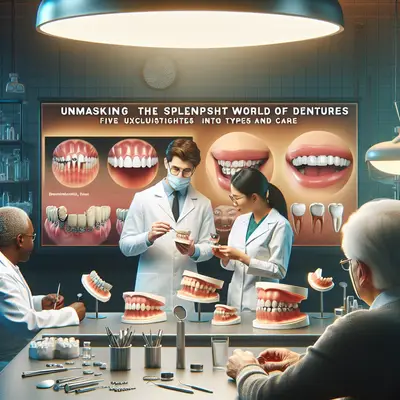
For the discerning denture wearer, “type of denture” is no longer a simple checkbox—it is a design decision with consequences for comfort, aesthetics, longevity, and even the way you experience food and conversation. Today’s prosthetics are a nuanced blend of engineering, biomaterials science, and artistry. Understanding the materials and design philosophies behind them allows you to make choices that feel deliberate rather than default.
This guide explores contemporary denture types through a refined lens, with five exclusive insights that often remain between clinicians and technicians—but can significantly elevate your everyday experience.
Understanding the Modern Denture Landscape
The term “denture types” no longer refers solely to full or partial plates. Instead, it encompasses a spectrum of solutions defined by how they are supported, how they interface with your tissues, and which materials compose their structure.
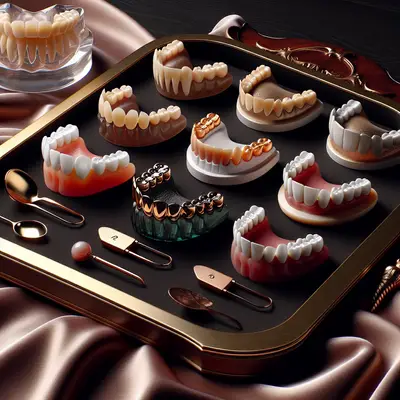
Traditional conventional full dentures rest entirely on the gums and underlying bone. Partial dentures anchor to remaining natural teeth, creating a hybrid between prosthetic and natural dentition. Meanwhile, implant-supported and implant-retained dentures transfer some or most of the functional load to dental implants embedded in the jawbone, improving stability and chewing power.
Within each of these categories, the true differentiation lies in subtler aspects: acrylic versus high-impact resins, metal versus flexible frameworks, monolithic versus layered teeth, and whether the design prioritizes ease of adjustment, maximal realism, or long-term rigidity. A sophisticated approach is less about “which denture is best” and more about “which combination of design and material best suits your lifestyle, tissues, and expectations.”
The Three Foundational Denture Families
While the details can become remarkably technical, most modern dentures can be grouped into three foundational families—each with its own character and ideal wearer profile.
1. Conventional Tissue-Supported Dentures
These rest on the gums without implant support. They are typically made from acrylic bases with acrylic teeth or composite-enhanced teeth. They remain indispensable when implants are not appropriate or desired, particularly when bone volume is reduced or medical history is complex. Their strength lies in their adaptability: they can be relined, reshaped, and adjusted as your mouth changes.
2. Partial Dentures (Cast Metal, Acrylic, and Flexible)
Partial designs include:
- Cast metal frameworks with precision clasps or attachments, prized for durability and thinness.
- Acrylic partials, often used as transitional or interim solutions.
- Flexible partials crafted from nylon-based materials, valued for their gentler engagement with the tissues and absence of metal display.
Each partial denture type negotiates a different balance between rigidity, subtlety, and long-term stability.
3. Implant-Supported and Implant-Retained Dentures
Anchored via titanium or zirconia implants, these dentures can be overdentures (removable, snapping onto locator attachments or bars) or fixed hybrid prostheses (screwed into implants and removed only by the dentist). This family offers unprecedented stability and bite efficiency—often restoring much of the confidence and function associated with natural teeth.
The sophisticated decision is not only whether to choose implants, but which implant-denture configuration best aligns with your expectations for maintenance, removability, and aesthetics.
Material Matters: Acrylic, Metal, Zirconia, and Beyond
Behind every elegant smile is a set of carefully selected materials, each bringing distinct strengths and limitations.
Acrylic Resins
High-quality acrylics are the workhorses of denture bases and many denture teeth. Modern high-impact acrylics offer better fracture resistance and color stability than earlier generations. They allow life-like characterization (subtle translucency, natural gingival tones, slight variations) that contribute to a more believable appearance. However, acrylic bases do gradually adapt to ongoing bone resorption, requiring relines or remakes over time.
Cobalt-Chrome Metal Frameworks
Cast metal partials use cobalt-chrome or similar alloys, allowing thin yet strong frameworks. For the patient, this often translates into a more refined, less bulky sensation in the mouth. Properly polished frameworks can be remarkably smooth and kind to tissues, but their rigidity demands accurate design and periodic review to ensure teeth and tissues are not overstressed.
Flexible Nylon-Based Materials
Flexible partials prioritize comfort and aesthetics—especially when metal clasps would be visually distracting. Their semi-translucent pink clasps blend into the gums, and the flexibility can be gentler on delicate tissues. The trade-off is that adjustments and repairs can be more challenging, and the flexibility may not adequately control forces in complex bite situations.
Zirconia and Advanced Ceramics
In implant-supported fixed prostheses, zirconia has become the premium material of choice for many high-end cases. It offers impressive strength, precision-milling capabilities, and—when layered or stained properly—exquisite aesthetics. Zirconia’s hardness, however, must be harmonized with careful design and occlusion to avoid transmitting excessive stress to implants or opposing teeth.
The premium experience emerges when these materials are not selected in isolation but orchestrated—perhaps a cast metal framework under a carefully contoured acrylic, or a zirconia hybrid with a customized soft-tissue interface—to create a result that feels tailored rather than generic.
Five Exclusive Insights Denture Wearers Rarely Hear
Beyond the usual discussions of “full vs. partial” or “acrylic vs. metal,” there are more nuanced considerations that can dramatically refine your daily experience. These five insights are often understood by top-tier clinicians and technicians—but not always shared in detail with patients.
1. The Denture Type You Choose Influences How Your Face Ages
Different denture types handle support for the lips and cheeks in distinct ways. Conventional acrylic dentures rely entirely on the residual ridge and soft tissues; as the underlying bone resorbs over time, facial support subtly diminishes, often producing a “collapsed” or prematurely aged look.
Implant-supported dentures and carefully designed metal-based partials can better preserve vertical dimension and soft-tissue support. When your dentist speaks about “vertical length” or “occlusal vertical dimension,” they are essentially calibrating how your lower face is framed—determining whether your lips retain fullness and your profile remains harmonious. Choosing a denture type that can be fine-tuned and periodically recalibrated is, in many ways, a decision about how you wish your face to age.
2. Micromovement Is the Hidden Enemy of Long-Term Comfort
Many wearers focus on whether a denture “stays in” when speaking or eating, but the true refinement lies in controlling micromovement—those nearly imperceptible shifts that foster sore spots, friction, and instability over time.
Implant-retained overdentures with well-fitted attachments, precision partials with carefully planned clasp systems, and high-quality base adaptation all minimize these subtle shifts. The outcome is not just fewer ulcers, but a quieter, more predictable feel in the mouth. Ask your dentist not only about retention but about how your chosen denture type manages micro-movements during function.
3. Material Choice Can Shape How Food Actually Tastes and Feels
While dentures cannot restore taste in the strict neurological sense, the way they cover the palate and the materials they use have real sensory consequences. Full upper acrylic dentures that extensively cover the palate can mute temperature sensations and diminish the subtle perception of food textures.
Implant-supported upper dentures—especially those designed with a reduced or open palate—often allow a more authentic sensory experience, with better appreciation of temperature, texture, and even aroma. Flexible partials that avoid overextending onto the palate can feel less intrusive, allowing the tongue to interact more naturally with food. When exploring denture types, consider explicitly discussing palate coverage and how it will alter your sensory world at the table.
4. Denture Teeth Are Not Merely “Teeth”—They Are a Design Language
The artistry of denture teeth selection is often underplayed. Beyond shade and size, there are choices about:
- Tooth material: acrylic vs. composite-reinforced vs. ceramic.
- Tooth anatomy: more youthful rounded edges versus mature, slightly worn contours.
- Surface texture: micro-texturing that subtly influences how light reflects, creating a more convincing natural appearance.
Premium prosthetics may use multi-layered denture teeth that mimic enamel translucency and internal color gradations, or custom-milled teeth for absolute personalization. These subtleties impact how light interacts with your smile in photographs, in evening lighting, and in natural daylight. When evaluating denture types, inquire about the specific tooth lines or materials available, not just the base.
5. The “Flexibility vs. Rigidity” Spectrum Is a Strategic, Not Aesthetic, Decision
Many patients instinctively gravitate toward flexible partial dentures, imagining that flexibility automatically equals comfort. In reality, this is a strategic parameter. Flexible materials can be exceptionally comfortable and discreet in simple cases, but they may lack the precise control over forces that a rigid metal framework provides.
Metal-based partials distribute chewing forces more predictably, which can protect remaining natural teeth and prevent detrimental tilting or overloading. Conversely, flexible designs can be ideal for patients with delicate soft tissues, allergies to certain metals, or aesthetic concerns around visible clasps. A sophisticated conversation about denture types should frame flexibility and rigidity as a biomechanical choice, not just an aesthetic preference.
Tailoring Denture Types to Your Lifestyle and Priorities
Selecting a denture is ultimately a lifestyle decision. The same person who prioritizes absolute stability for public speaking or fine dining might value a different type than someone who prefers maximal simplicity in cleaning and maintenance.
If you travel frequently, implant-supported overdentures with reliable attachment systems can offer a reassuring consistency—while still being removable for thorough hygiene in unfamiliar environments. If your primary priority is discretion in social settings, a carefully planned flexible partial or a cast-metal partial with invisible precision attachments might provide the balance between aesthetics and function you seek.
Budget must be considered, but so should the “longevity cost”: a more sophisticated, durable design may prove more economical over a decade than multiple remakes of a basic solution. The premium approach is to align budget, expectations, and long-term oral health with the most appropriate denture type rather than defaulting to the least costly short-term option.
Conclusion
Modern denture types are less a hierarchy and more a curated palette of possibilities. Acrylic, metal, flexible polymers, and advanced ceramics each bring distinct contributions to the final result, and the way they are combined can profoundly influence not only how your dentures look—but how they feel, function, and age with you.
By understanding how different designs shape facial support, micromovement, sensory experience, tooth aesthetics, and biomechanical stability, you can participate in your treatment at a more sophisticated level. The most satisfying dentures are not simply “fitted”; they are thoughtfully composed—crafted in dialogue between clinician, technician, and wearer to reflect both refined taste and exceptional care.
Sources
- American College of Prosthodontists – Types of Dentures – Overview of major denture categories and indications
- Mayo Clinic – Dentures: What to Expect and How to Care for Them – General guidance on denture use, adaptation, and maintenance
- Cleveland Clinic – Implant-Supported Dentures – Detailed explanation of implant-retained and implant-supported options
- National Institutes of Health (NIH) – Denture Base Materials Review – Research-based discussion of acrylics and alternative denture base materials
- Harvard School of Dental Medicine – Prosthodontics Overview – Background on specialist approaches to complex prosthetic and denture care
Key Takeaway
The most important thing to remember from this article is that this information can change how you think about Denture Types.