Selecting dentures today is less about “making do” and more about curating a prosthetic smile that reflects your standards, lifestyle, and aesthetic preferences. Modern denture types offer a spectrum of customization—from discreet partials to implant-stabilized solutions—allowing you to align function, comfort, and visual harmony with surprising precision. This refined overview walks through the key denture categories while highlighting five exclusive, real‑world insights that discerning wearers often discover only after years of experience.
Understanding the Landscape: A Modern Overview of Denture Types
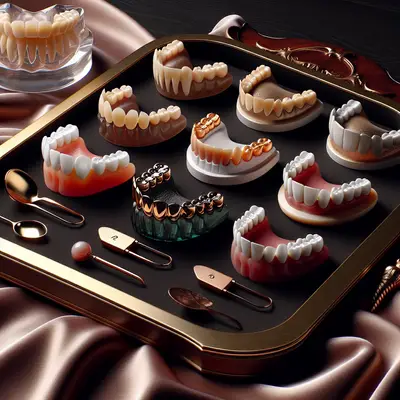
Contemporary prosthetic dentistry offers far more than the classic “full plate” many people imagine. Broadly, dentures fall into full, partial, and implant‑supported categories, with nuanced variations in materials, fit philosophy, and level of permanence.
Conventional full dentures replace all teeth in an arch once any remaining teeth have been removed and the gums have healed. They rest on the gums and underlying bone, relying on suction, anatomical contours, and in some cases adhesive. Partial dentures are designed for those who still have some natural teeth; they fill the gaps while leveraging remaining teeth for stability, often through clasps or precision attachments that can be highly discreet.
Implant‑retained and implant‑supported dentures represent a more anchored solution, using dental implants placed in the jawbone to secure the prosthesis. Within this category, there are removable overdentures that “snap” onto implants and fixed hybrid prostheses that remain in place and are removed only by a clinician. Each of these types entails different trade‑offs in terms of surgical involvement, cost, maintenance, and long‑term bone preservation. The key is to understand that your “denture type” is not a single product but a design decision at the intersection of anatomy, aesthetics, and priorities.
Full, Partial, and Beyond: Matching Denture Types to Your Lifestyle
Choosing between full, partial, and implant‑supported options is as much a lifestyle decision as a clinical one. Full conventional dentures may be well-suited to those prioritizing a non‑surgical, lower‑initial‑cost solution, particularly if bone volume and anatomy are favorable for retention. That said, they can require more careful adaptation during eating and speaking, and often benefit from meticulous adjustment and relining over time.
Partial dentures offer a more conservative path when viable teeth remain. Well‑designed partials can preserve natural tooth structure, maintain chewing efficiency, and help keep the facial profile more stable. Advanced designs can minimize visible clasps, using precision attachments or tooth‑colored components for a more seamless look. For those with higher aesthetic demands, even the positioning and shape of the artificial teeth can be coordinated with existing teeth for a “blended” appearance that does not draw attention.
Implant‑based solutions tend to appeal to individuals who value security, chewing strength, and long‑term bone health. An implant‑retained overdenture can feel substantially more stable than a conventional denture, while still being removable for thorough cleaning. Fixed implant prostheses, meanwhile, can mimic the feel of natural teeth more closely, supporting confident speech and social interaction with minimal day‑to‑day thought about the prosthesis itself. Your daily rhythms—travel, dining, social engagement, and tolerance for appointments and procedures—should all inform where you land in this spectrum.
Material Matters: Acrylic, Metal Frameworks, and High‑End Resins
The material composition of your dentures quietly shapes comfort, durability, and aesthetics. Traditional full dentures are typically made from acrylic resin bases with acrylic or composite teeth. High‑quality acrylics can be carefully tinted to echo the nuanced natural shades of gums, with slight translucency and subtle color variations for realism. Tooth selection ranges from basic stock forms to premium, layered composite teeth that better emulate the light reflection of natural enamel.
Partial dentures often incorporate a cobalt‑chromium metal framework, which allows for a thinner, more rigid base and precisely fitting clasps. When properly designed, these frameworks can distribute biting forces more evenly and feel lighter in the mouth than bulky all‑acrylic designs. Some patients, however, prefer flexible resin partials that use thermoplastic materials to create a softer, gum‑colored base and clasps that can be more visually discreet. These can be particularly appealing in highly visible areas, though they may not be ideal for every bite or long‑term load.
For implant‑supported dentures, the palette expands further: titanium bars, zirconia frameworks, and high‑strength ceramic or hybrid composite teeth can be used to craft solutions that strive for both elegance and endurance. The sophistication here lies in a tailored approach—understanding that “premium” is not a single material, but the precise combination of base, teeth, and attachments that harmonizes with your bite forces, gum contours, and aesthetic expectations.
Five Exclusive Insights Experienced Denture Wearers Rarely Hear at the Start
Beyond the basic descriptions of denture types, seasoned wearers often discover subtleties that can dramatically elevate their experience. These five insights are seldom highlighted in standard brochures but can meaningfully influence your choices and satisfaction.
1. The “Transition Plan” Is as Important as the Final Denture Type
Experienced patients know that the journey into dentures can span months, not days. Immediate dentures—placed the same day teeth are removed—are often a transitional type, not the final masterpiece. As gums and bone remodel, the fit evolves, and temporary relines or even a fully new “definitive” denture may be necessary. Planning this arc from the outset—immediate to interim to final—helps avoid disappointment and ensures your expectations align with biology’s timeline.
For those considering implants, a staged approach may be used: initial healing, placement of implants, a period of osseointegration, and finally conversion to an implant‑retained or fixed prosthesis. Having a clearly articulated transition plan with your clinician, complete with estimated timeframes and interim solutions, transforms the process from disjointed appointments into a curated, intentional progression.
2. Subtle Tooth Anatomy Choices Greatly Influence “Realism”
Many wearers eventually realize that the most “natural” dentures are not always the whitest or most perfectly aligned. Premium denture teeth can incorporate delicate characterizations: micro‑texture on the surface, lightly varied translucency at the edges, and gentle asymmetries tuned to your facial features. Slightly staggering the alignment of teeth, moderating the brightness, and selecting tooth sizes that respect your lip length and smile width can make the difference between a look that is “nice” and one that is nearly undetectable.
Wearers who have undergone multiple sets often become more particular about tooth anatomy—requesting adjustments in incisal length, midline positioning, and cusp shape. Openly discussing these nuances with your dentist or prosthodontist at the wax‑try‑in stage gives you influence over the final aesthetic instead of simply accepting a generic layout.
3. The Palate Design Quietly Shapes Your Sense of Taste, Speech, and Comfort
Full upper dentures traditionally cover the palate, which aids retention but can subtly influence taste perception and speech. Over time, many patients adapt beautifully, but experienced wearers know that even slight refinements—thinning the palatal acrylic, adjusting the contour, or, in implant‑supported designs, freeing the palate altogether—can elevate comfort and enjoyment of food.
Implant‑supported options can sometimes be designed as “horseshoe” prostheses that leave the palate uncovered, restoring a more natural feel of temperature, texture, and taste. For those who cherish gourmet experiences or who are particularly sensitive to oral sensations, discussing palate design at the outset can be transformative.
4. Precision Attachments and Implant Locators Are the Unsung Heroes of Discreet Stability
Many long‑time denture wearers come to appreciate the elegance of hidden engineering. Instead of visible metal clasps on partial dentures, precision attachments can be integrated into crowns on neighboring teeth, allowing the partial to click into place with minimal visual evidence. These systems require meticulous planning and often higher investment, but they reward the wearer with a cleaner smile line and a sense of mechanical sophistication.
Similarly, implant locator attachments—small, low‑profile components that connect dentures to implants—offer a blend of security and removability. For the wearer, the daily ritual becomes a quietly reassuring “press and click” rather than a constant negotiation with adhesive. Over years of use, the ability to replace worn locator inserts also extends the life and performance of the denture without remaking the entire prosthesis.
5. Your Bone and Facial Profile Are Living Elements—Your Denture Strategy Should Be Too
Experienced wearers recognize that the jawbone and facial soft tissues continue to change over time, especially after tooth loss. This is why even a beautifully crafted conventional denture may feel increasingly loose or less flattering after several years. Regular relines, rebasing, or strategic upgrades (such as transitioning a lower full denture to an implant‑retained overdenture) are not failures; they are part of an adaptive, long‑range plan.
Those who prioritize facial aesthetics in later decades often find that implant‑supported solutions help preserve bone volume and support the lower third of the face more predictably. This can subtly maintain lip support and reduce the “sunken” look sometimes associated with long‑term denture use. Thinking of your denture type as part of a 5‑, 10‑, and 15‑year roadmap, rather than a one‑time purchase, positions you to stay ahead of these changes rather than react to them.
Choosing Your Path: Clinician Partnership and Personal Priorities
Selecting among denture types is not a decision to make in isolation. A thoughtful partnership with a dentist or prosthodontist—ideally one who is comfortable with both conventional and implant‑based solutions—allows your anatomy, medical history, and financial realities to be weighed alongside your lifestyle and aesthetic vision. Diagnostic imaging, such as cone‑beam CT scans, may be used to evaluate bone volume for implants, while impressions and bite records help map the way your teeth and jaws should ideally come together.
Equally important is an honest conversation about maintenance and appointments. Are you prepared for implant surgery and follow‑up visits? Would you prefer a removable solution you can clean in your hands, or does a fixed prosthesis better match your desire to “forget” about the denture most of the time? How important is it to you that your palate remain uncovered? These questions guide not only which denture type you choose now, but how flexible your plan is for future refinement.
Ultimately, curating your ideal prosthetic smile involves more than selecting “full” versus “partial.” It is about aligning materials, mechanics, and artistry with the way you live, eat, speak, and present yourself to the world.
Conclusion
Modern denture types offer a level of personalization that would have been difficult to imagine a generation ago. From understated partials and thoughtfully contoured full dentures to meticulously engineered implant‑supported designs, the spectrum of options can be tuned to honor both function and elegance. By understanding the categories, appreciating the influence of materials and design details, and embracing the five exclusive insights that seasoned wearers often learn over time, you position yourself to make choices that feel less like compromise and more like curation.
In collaboration with a skilled clinician, your denture type can become a quiet expression of your standards—a prosthetic smile that not only restores what was lost, but does so with a level of refinement that feels authentically your own.
Sources
- American College of Prosthodontists – Dentures Overview - Clinical explanations of complete, partial, and implant‑supported dentures and when each is indicated
- Mayo Clinic – Dental Implants - Detailed overview of dental implants, benefits, and considerations relevant to implant‑retained dentures
- National Institute of Dental and Craniofacial Research (NIDCR) – Tooth Replacement - Educational resource on tooth replacement options including dentures and implants
- Cleveland Clinic – Dentures: Types & Care - Practical information on different denture types, fit, and care considerations
- Harvard Health Publishing – Replacing Missing Teeth - Discussion of prosthetic options (including dentures and implants) and how they affect function and oral health
Key Takeaway
The most important thing to remember from this article is that this information can change how you think about Denture Types.