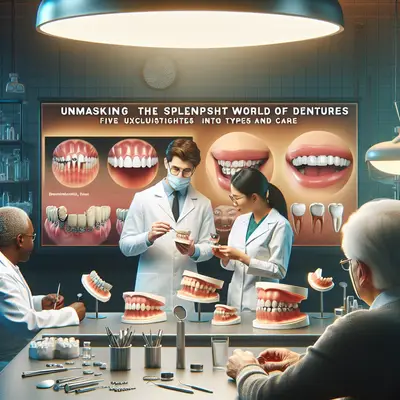
For discerning wearers, dentures are no longer a mere clinical necessity; they are a carefully curated extension of personal style, comfort, and confidence. Today’s options go far beyond “full” or “partial.” Materials, precision design, and personalization have advanced to a point where your prosthetic teeth can be tailored with the same intentionality as a bespoke garment. This guide walks through the major denture types with a refined lens—highlighting nuanced details and five exclusive insights that sophisticated denture wearers consistently value but are rarely told.
The Contemporary Landscape of Denture Types
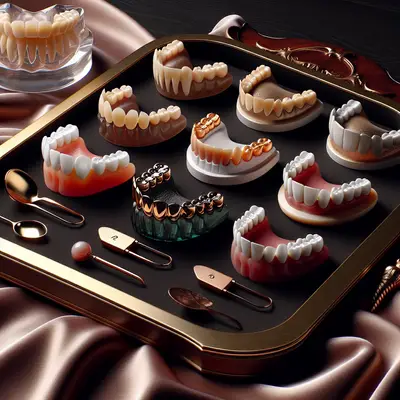
Modern dentures can be grouped into several overarching categories—complete, partial, implant‑supported, and immediate—yet within each category, there is a spectrum of quality, craftsmanship, and customization. Complete dentures replace all teeth in an arch, while partial dentures fill selective spaces and preserve remaining natural teeth. Implant‑supported dentures, whether fixed or removable, anchor to titanium implants in the jaw, offering elevated stability and chewing performance.
Beyond structure, the real differentiators lie in how closely the prosthesis mimics natural teeth and gum tissue, how comfortably it integrates with your oral anatomy, and how well it supports facial aesthetics. High‑end options often use layered, multi‑shade acrylics or composite resins for a lifelike appearance, and premium-quality denture teeth with varied translucency and texture. Rather than a generic “one look fits all,” advanced dentures can be crafted to echo your natural dentition—or to subtly refine it for a more polished, harmonious appearance.
Complete Dentures: From Standard to Bespoke
Complete dentures are often perceived as uniform, but the gap between entry‑level and sophisticated designs is substantial. A standard complete denture typically uses a single shade of acrylic for the gums and uniformly shaped denture teeth. In contrast, a premium complete denture incorporates intricate gingival characterization—subtle color variations, stippling, and contouring—to reproduce the nuances of natural gum tissue.
Tooth selection is equally critical. Higher‑end dentures allow careful curation of tooth shape, size, and shade to complement your facial proportions, lip dynamics, and skin tone. Instead of a perfectly aligned, overly “ideal” Hollywood smile, refined designs introduce micro‑asymmetries—slight variations in tooth length, rotation, or texture—that enhance realism. For many wearers, the most luxurious outcome is not obvious perfection, but a smile that looks naturally “theirs,” both in photos and in close conversation.
Partial Dentures: Precision in Preservation
Partial dentures excel when designed as minimalist, thoughtful additions rather than conspicuous replacements. These prostheses integrate with remaining teeth, so their sophistication depends on how discreetly they blend in. Traditional metal‑framework partials are still widely used for their durability and precise fit, with carefully planned clasps that can be strategically hidden near the back teeth or embedded into tooth‑colored attachments.
Refined partials focus on balance—supporting your bite without overloading individual teeth, maintaining proper spacing for optimal oral hygiene, and preserving your facial profile. For the style‑conscious wearer, the aesthetic integration matters as much as function. Matching tooth translucency, incisal edge detail, and wear patterns to your natural teeth allows the partial to disappear into your existing smile, rather than announcing its presence every time you speak or laugh.
Implant‑Supported Dentures: Stability as a Luxury
Implant‑supported dentures have reshaped expectations of what dentures can feel like. By anchoring to implants placed in the jawbone, they provide a level of stability that conventional dentures cannot match. The result is a more confident bite, reduced movement during speech, and a diminished need for denture adhesives. For many, this stability is the very definition of functional luxury.
There are two main approaches: removable implant‑retained overdentures that “snap” onto attachments, and fixed implant prostheses that remain in place, removed only by the clinician. The removable option allows easier cleaning and lower cost, while fixed solutions feel strikingly close to natural teeth in daily life. The additional advantage—often overlooked—is bone preservation. Implants help maintain the jaw’s volume and facial contours over time, supporting a more youthful profile and minimizing the sunken look that can accompany long‑term tooth loss.
Immediate Dentures: A Transitional Yet Strategic Choice
Immediate dentures are placed on the same day that natural teeth are removed, ensuring you never leave the dental office without teeth. While these are frequently described as “temporary,” they deserve careful planning, particularly if you value seamless aesthetics during the transition. Because the denture must be made before the extractions, it is designed from a projection of your post‑extraction anatomy rather than an exact model.
Sophisticated immediate dentures take this uncertainty into account. Your dentist may coordinate staged adjustments, relines, and possible refinement or replacement as the gums and bone remodel over the following months. When approached thoughtfully, immediate dentures can serve as an elegant bridge—maintaining your appearance and social confidence while you progress toward a final conventional or implant‑supported solution.
Exclusive Insight 1: The Art of Denture Tooth “Characterization”
Most patients are offered a shade guide and asked to “pick a color.” High‑end denture design goes much further. Characterization involves customizing individual teeth with subtle variations in hue, translucency, and surface texture to mimic natural enamel. For example, the edges of front teeth might be slightly more translucent; the canines could be a fraction deeper in color; tiny surface ridges (perikymata) can be added to catch the light naturally.
Wearers who invest in this level of detail notice that their dentures are not “white blocks,” but part of a dynamic, believable smile under different lighting—daylight, restaurant ambience, or flash photography. Ask your clinician whether the lab can incorporate multi‑layered denture teeth, micro‑texture, and nuanced staining; these refinements are the quiet difference between “nice dentures” and an authentically elegant smile.
Exclusive Insight 2: Occlusal Design Shapes Everyday Comfort
“Occlusion” refers to how your upper and lower teeth meet, and it is central to how comfortable your dentures feel. Many standard dentures are set in a fairly generic bite scheme. Elevated designs are customized to your jaw movement, muscle patterns, and historical wear patterns, which can dramatically reduce sore spots, slipping, and fatigue.
Sophisticated occlusal schemes—such as balanced occlusion or lingualized occlusion—are tailored to ensure that your denture remains stable when you chew side‑to‑side, speak, or swallow. An expertly balanced bite distributes forces evenly, protecting both the prosthesis and any remaining teeth or implants. Wearers who have lived with “acceptable” dentures are often surprised at how different a precisely balanced set feels: chewing becomes quieter, more efficient, and less effortful, with a distinct absence of clacking or rocking.
Exclusive Insight 3: Palate Design and the Sensory Experience
For upper dentures, the design of the palate (the portion that covers the roof of your mouth) strongly influences your sensory experience. A standard denture often uses a uniform thickness; elevated approaches adjust thickness and contour to balance strength with subtlety. A thoughtfully thinned or contoured palate can enhance your perception of temperature and texture in foods and make speech feel more natural.
For some implant‑supported designs, the palate can even be partially or fully open, which many wearers describe as transformative—food tastes more vibrant, and the mouth feels less “covered.” While this option is not appropriate for everyone, discussing palate design with your dentist can yield a prosthesis that feels less like an object you are tolerating and more like an integrated extension of your own palate and tongue function.
Exclusive Insight 4: The Hidden Role of Base Materials and Finish
Many discussions of denture types stop at “acrylic vs. metal,” but the refinement of the base material and final finish is equally important. High‑impact acrylics, flexible resins, and advanced metal alloys offer different balances of strength, thinness, and comfort. A premium denture base is precision‑polished in areas that contact the cheeks and tongue to prevent irritation, while the outer surfaces may be more subtly finished to mimic the texture of natural gum tissue.
The transition line—where the denture meets your natural tissue—is especially telling. A well‑executed finish softens this junction, minimizing visible edges and plaque accumulation. For partial dentures, discretely finished clasps and connectors can reduce food trapping and make the prosthesis more comfortable over a long evening, not just for the first hour of wear. In short, base materials and finishing are the invisible craftsmanship that dictate how your dentures feel at 9 p.m., not just how they look at 9 a.m.
Exclusive Insight 5: Long‑Term Adaptability as a Design Priority
While many people choose a denture type based solely on their current situation, sophisticated planning accounts for how your oral anatomy and preferences might evolve. Bone resorption, changes in facial volume, and lifestyle shifts (travel, career, health) all shape how your dentures should perform over time.
Refined treatment plans anticipate these shifts. For example, a well‑designed complete denture might be created with future implant conversion in mind—positioning teeth, bite relationships, and esthetics to be compatible with an implant‑supported upgrade later. Similarly, a partial denture can be designed to accommodate future tooth loss, avoiding the need for a complete remake. When your prosthesis is conceived as part of a long‑term strategy rather than a short‑term fix, it becomes easier to maintain an elegant, consistent smile through the decades.
Conclusion
Selecting the right denture type is no longer a binary, utilitarian choice; it is an opportunity to curate a dental solution that aligns with your aesthetics, comfort expectations, and long‑term wellness. Complete, partial, implant‑supported, and immediate dentures each offer distinct advantages, but the real luxury lies in the details: characterization of the teeth, precision of the bite, design of the palate, refinement of the base, and adaptability over time.
By approaching your dentures with the same discernment you would apply to a tailored suit or fine watch, you can move beyond “good enough” to a solution that feels authentically your own—understated, confident, and quietly impeccable in daily life. A thoughtful conversation with a prosthodontist or experienced restorative dentist is often the first step toward that elevated experience.
Sources
- American College of Prosthodontists – Types of Dentures – Overview of denture categories, indications, and care from a professional organization specializing in prosthetic dentistry
- Mayo Clinic – Dentures: Options, Adjustments and Care – Patient‑focused explanation of denture options, adaptation, and maintenance
- Cleveland Clinic – Implant-Supported Dentures – Detailed discussion of implant‑retained and implant‑supported dentures, benefits, and candidacy
- National Institute of Dental and Craniofacial Research (NIDCR) – Information on tooth loss, oral health implications, and considerations that inform denture planning
- University of Michigan School of Dentistry – Removable Partial Dentures – Educational resource on partial denture design, materials, and functional considerations
Key Takeaway
The most important thing to remember from this article is that this information can change how you think about Denture Types.