Selecting dentures today is less about “making do” and far more about curating a look, feel, and lifestyle that suits you. The right denture type can refine your profile, protect your oral health, and quietly elevate your daily comfort. Rather than a generic replacement, think of your dentures as bespoke prosthetics—crafted to harmonize with your face, your habits, and your long‑term wellness.
This guide explores the major types of dentures through a refined lens—focusing on how each option performs in real life, how it supports your oral structures over time, and which details truly matter if you expect more than a “standard” smile.
Understanding Denture Types as a Long-Term Investment
Denture types are often described in broad, technical terms: full, partial, immediate, implant‑supported. A more elevated approach looks beyond the labels and asks how each option behaves over years, not months.
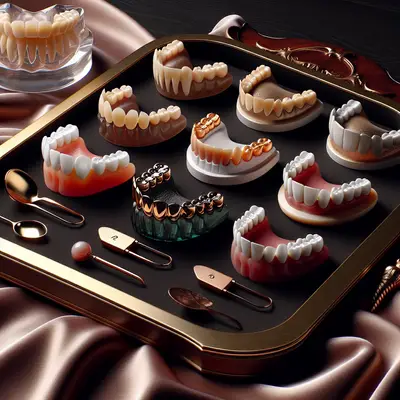
Complete dentures replace all teeth in one or both arches. Partial dentures complement natural teeth, using them as anchors. Implant‑supported dentures integrate with titanium posts placed in the jaw, offering a more stable, long‑wearing foundation. Overdentures can sit over remaining roots or implants, preserving bone volume and supporting facial structure.
The key distinction is not only what they replace, but how they interact with your bone, gums, and muscles over time. For example, implant‑supported and overdenture designs can slow the bone resorption that typically follows tooth loss, helping maintain a defined jawline and avoiding the “collapsed” look some fear. Understanding these structural differences allows you to choose dentures that respect your facial architecture rather than simply filling in a space.
A Refined Look at Key Denture Categories
Each primary denture category offers unique advantages that become clearer when viewed through a lifestyle and aesthetics lens.
Conventional full dentures are fabricated after extractions and healing are complete. Their strength lies in precise fit to a stable gum contour, which can enhance comfort and reduce the need for frequent relining early on. For patients who value a carefully tuned bite and polished appearance, this delay can be worthwhile.
Immediate dentures are placed the same day teeth are removed. They prioritize continuity—you never leave the clinic without teeth. The trade‑off is that your gums and bone will remodel significantly, requiring relines or replacement sooner. For those with a strong preference for social continuity, this can still be an elegant bridge between natural teeth and a more definitive prosthesis.
Partial dentures range from metal‑framework designs with subtle clasps to flexible, gum‑colored materials that blend discreetly with the soft tissues. When executed well, partials can preserve remaining teeth, distribute chewing forces, and avoid the over‑shortened look that can occur when extractions are over‑aggressive.
Implant‑supported dentures and overdentures offer heightened stability and a more secure bite, which can refine speech and chewing confidence. They also tend to feel more “rooted,” giving many wearers a psychological sense of re‑ownership of their smile. This category best suits those who are willing to invest both financially and in surgical treatment for an experience that feels significantly closer to natural teeth.
Material Matters: Acrylic, Porcelain, and Advanced Options
Beyond type, materials define how your dentures look, sound, and wear.
Traditional acrylic teeth are lighter, kinder to opposing natural teeth, and easier to adjust chairside. Modern high‑impact acrylics can be surprisingly durable, and when layered and tinted skillfully, they avoid the flat, “block” appearance that older acrylics sometimes had.
Porcelain teeth are denser, with a glass‑like sheen and excellent color stability. They can mimic the translucency and light reflectivity of natural enamel in a particularly refined way. However, they may transmit more clicking sounds during chewing and can be too abrasive for fragile opposing teeth. For those who value a crisp, lifelike luster and have the right bite dynamics, porcelain can be exceptionally elegant.
Advanced digital workflows now allow CAD/CAM‑milled dentures from pre‑polymerized acrylic discs. This process can produce highly precise, dense bases that resist fracture and absorb less stain and odor. Digitally archived designs also mean future remakes can be produced with less disruption. For a patient who values consistency and refinement over time, this technology can be an understated but meaningful advantage.
Your material choice should harmonize with your bite force, aesthetic priorities, and sensitivity to sound, weight, and tactile feel. In many cases, a thoughtfully selected acrylic system, executed by a skilled lab, can deliver a refined result that feels anything but “standard.”
Five Exclusive Insights for the Detail-Oriented Denture Wearer
These lesser‑discussed details are where a premium denture experience is truly defined.
1. The “White” of Your Teeth Should Echo the White of Your Eyes
An overly bright denture can look conspicuous, especially in casual, daylight settings. A sophisticated rule of thumb is to select a tooth shade that harmonizes with the sclera (the white of your eyes) and your skin undertone rather than chasing the lightest sample on the shade guide.
Subtle translucency at the edges, delicate variation in color from gumline to edge, and tiny imperfections—like faint vertical striations—can create a far more believable, elevated aesthetic than uniformly perfect, high‑gloss white.
2. Gum Contour and Color Are as Important as the Teeth
Many standard dentures are let down not by the teeth, but by the base. Premium gingival characterization—where the “gums” are tinted with layered colors to mimic natural capillaries and slight pigmentation—can transform the overall effect.
Pay attention to how the gumline is sculpted around each tooth. Slight scalloping, gentle papillae between teeth, and subtle texture can avoid the “flat pink plate” look. When you evaluate try‑ins, study the gums in profile and in motion, not just the teeth head‑on.
3. Phonetic Try-Ins Reveal More Than Just Fit
Sophisticated denture fabrication often includes a phonetic evaluation. During a try‑in, pronouncing words with “F,” “V,” “S,” and “Th” sounds reveals whether tooth position and thickness of the denture are supporting or compromising natural speech patterns.
Instead of merely biting down and smiling in the mirror, ask your clinician to guide you through reading a short passage aloud. Subtle repositioning of teeth or thinning in key areas can dramatically refine articulation and reduce any “denture lisp” before your final set is completed.
4. Cheek and Lip Support Can Be Intentionally Sculpted
Well‑designed dentures do more than fill a space; they can gently support the lips and cheeks, softening deep lines and restoring a balanced profile. This is particularly true for patients who have experienced significant bone loss.
During wax try‑ins, assess your side profile and relaxed facial expression, not just your smile. Refined adjustments in the thickness and contour of the flange (the outer edge of the denture) can lift a collapsed upper lip, reduce the “sunken” appearance, and restore facial symmetry—all without looking overfilled or artificial.
5. Long-Term Bone Preservation Should Guide Your Type Choice
While all dentures replace visible teeth, not all options treat the underlying bone the same. Conventional full dentures sit on the gums and transmit chewing pressure directly to the bone surface, which can accelerate natural resorption over time.
Implant‑supported dentures and overdentures, by contrast, redirect forces through implants or preserved roots. This can slow bone loss, help maintain facial shape, and reduce the need for aggressive future adjustments. If you are deciding between multiple denture types, ask explicitly how each option will influence your jawbone over five, ten, or fifteen years—not just how it will feel in the first six months.
Matching Denture Type to Lifestyle and Expectations
Choosing among denture types becomes far more intuitive when you align the option to your actual life rather than an abstract ideal.
If you travel frequently, a robust, low‑maintenance conventional or implant‑retained denture with a digital design file may be invaluable—you can have a replacement fabricated with minimal fuss if needed. If your work relies on public speaking, phonetics and stability may outweigh purely cosmetic priorities, making implant‑supported dentures or meticulously adjusted partials particularly advantageous.
For those who are highly social, immediate dentures can preserve continuity while you transition, with the understanding that refinement and replacement will follow. If you are especially sensitive to even small aesthetic nuances, investing in layered tooth materials, characterized gums, and extended try‑in appointments will likely feel more important than the specific category name assigned to your prosthesis.
Ultimately, an elevated denture experience is a collaboration between you, your clinician, and the dental laboratory. Your willingness to articulate fine‑grained preferences—and your clinician’s skill in translating them into design choices—matters just as much as the type of denture you select.
Conclusion
Modern dentures, when chosen thoughtfully, can feel less like a clinical necessity and more like a tailored accessory that quietly restores ease, confidence, and facial harmony. The distinctions among full, partial, immediate, and implant‑supported options are important, but the true refinement lies in the subtleties: shade selection, gum contour, phonetics, support of the lips and cheeks, and long‑term preservation of your underlying bone.
As you consider your next step—whether a first prosthesis or an upgrade from an older set—approach the process as you would any significant, personal investment. Ask detailed questions, insist on careful try‑ins, and choose a team that understands your desire for both beauty and longevity. A curated smile is not an indulgence; it is a considered expression of how you wish to meet the world each day.
Sources
- American Dental Association – Dentures – Overview of full and partial dentures, care basics, and what to expect
- Mayo Clinic – Dental Implants – Explains implant procedures and how implants support restorations such as dentures
- Cleveland Clinic – Dentures – Describes types of dentures, indications, and practical considerations for patients
- National Institutes of Health (NIH) – Tooth Loss and Jaw Bone Health – Discusses bone resorption after tooth loss and the role of implants in preserving bone
- University of Iowa College of Dentistry – Complete Denture Esthetics – Professional discussion of esthetic principles in denture tooth and gingival design
Key Takeaway
The most important thing to remember from this article is that this information can change how you think about Denture Types.