For those who view oral care as an extension of personal style, dentures are not merely functional devices; they are curated prosthetics that shape how you speak, dine, and present yourself to the world. Choosing between denture types is less about picking from a menu and more about commissioning a bespoke piece of wearable craftsmanship. This guide steps beyond basic definitions to explore how each denture type performs in real life—socially, aesthetically, and functionally—so you can make a choice that aligns with your standards, not just your clinical needs.
Mapping the Landscape: Understanding Core Denture Categories
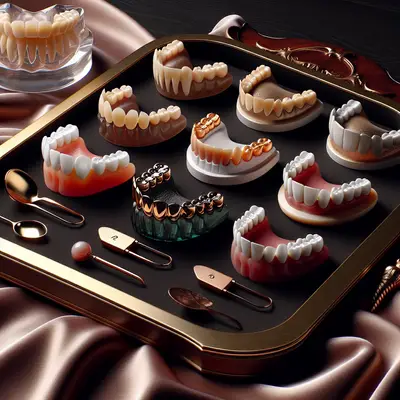
While the language around dentures can sound technical, the underlying concepts are simple when framed around lifestyle. Broadly, prosthetics fall into several categories: complete (full) dentures, partial dentures, implant-supported dentures, and more specialized options such as overdentures and flexible partials.
Complete dentures replace an entire arch (upper, lower, or both). They rest on the gums and rely on suction, musculature, and sometimes adhesive for stability. These are often chosen when most or all teeth are missing or require extraction.
Partial dentures fill in gaps when some natural teeth remain. They are anchored to existing teeth via clasps or precision attachments and can be crafted in metal, acrylic, or flexible materials. When thoughtfully designed, they act as both functional replacements and structural support, helping preserve remaining teeth.
Implant-supported dentures and overdentures combine prosthetics with titanium implants placed in the jaw. They offer superior stability, reduce bone loss, and feel closer to natural teeth. Within this category, you’ll find options that “snap” in and out, as well as more fixed solutions requiring professional removal.
The key is not simply knowing these labels, but understanding how each option might feel in your mouth, function in your daily routine, and align with your expectations of comfort, discretion, and longevity.
Matching Your Lifestyle to the Right Prosthetic Architecture
Denture selection should begin with an honest appraisal of your daily life, not just your dental chart. A retired person who enjoys leisurely meals at home may have very different priorities from a professional who dines out with clients, presents frequently, or travels often.
If your schedule is packed, with frequent public speaking or client-facing work, stability and predictability are paramount. Implant-supported dentures, particularly those with a fixed or semi-fixed design, can provide the kind of confidence that lets you forget you are wearing a prosthesis in high-stakes settings. The reduced risk of shifting or clicking can be invaluable in quiet rooms and on sensitive microphones.
For those who value flexibility—perhaps you anticipate future changes in your oral health, or you’re not ready to commit to surgical implants—conventional complete or partial dentures can be crafted with the expectation of periodic refinement. Acrylic bases are easier to adjust, while metal frameworks on partials offer durability and thinner, more refined profiles.
Travelers may prioritize ease of maintenance and durability. A design that balances fewer components—with well-chosen materials and secure retention—can simplify care routines in hotel rooms or on long flights. In contrast, someone with dexterity challenges may require larger, easier-to-handle components, or designs with minimal small clasps and intricate attachments.
The most refined outcome emerges when your clinician designs around your calendar, habits, and preferences just as carefully as they design around your gums and bone.
Material Matters: Subtle Luxuries in Fit, Finish, and Feel
Beyond type, the material palette of modern dentures can transform the experience from merely acceptable to quietly exceptional. The choices influence not only appearance, but the sound of your speech, the feel of temperature, and the weight in your mouth.
Acrylic remains the standard base material for complete dentures due to its versatility and adjustability. High-quality acrylics can be tinted with nuanced gradations of color and translucency to emulate natural gum tissue instead of a flat, artificial shade. When crafted by a meticulous technician, the result can have a soft, lifelike quality that holds up even in close conversation.
Metal frameworks—typically cobalt-chromium alloys—for partial dentures allow for thinner, more refined designs that reduce bulk and improve comfort. They also tend to be more durable over time, offering a reassuring sense of solidity without overwhelming the palate. For the discerning wearer, a well-executed metal framework feels more like a finely engineered accessory than a medical device.
Flexible partial dentures, often made from nylon-based materials, offer a different kind of luxury: a softer, more forgiving fit that can feel gentler against the tissues. Their translucency helps them blend with natural gums, though they may not be ideal when extensive structural support is needed or future adjustments are anticipated.
Teeth themselves can be chosen with intention. Premium acrylic or porcelain denture teeth now come in subtle shapes and shades designed to mimic not “perfect” teeth, but believable, refined ones—with tiny variations in translucency and surface texture that echo natural enamel. A skilled dentist and technician can collaborate with you to select a tooth library that reflects your age, facial proportions, and personal aesthetic, whether that’s quietly understated or elegantly radiant.
Five Exclusive Insights Discerning Denture Wearers Truly Value
These are the nuances that often separate a basic prosthetic from a thoughtfully curated one—details that seasoned denture wearers learn over time and wish they had known from the beginning.
1. The “Silent Room” Test Is More Revealing Than the Mirror
How your dentures behave in a quiet, echo-prone environment—conference rooms, theaters, small dinner parties—often matters more than how they look under bright restroom lighting. Some denture types and designs are more prone to subtle clicking, air escape, or slight movement when you speak certain sounds.
Before finalizing a prosthetic type or setup, ask your dentist to assess your speech in a quiet room, not just in the operatory with background noise. Implant-supported options and well-balanced partials often fare best in “silent room” scenarios. The goal is a prosthesis that feels reliable not only at rest, but during long conversations, presentations, or toasts.
2. Occlusion (Your Bite) Can Be Tailored to Your Dining Style
Your bite is not simply about closing your teeth together; it determines how confidently you can enjoy everything from crisp salads to artisanal bread. Different denture types allow for different levels of bite force and control.
Implant-supported dentures typically provide stronger, more stable chewing capacity, making them ideal for those who value a diverse, textured diet. Conventional complete dentures may require more strategic food choices and adaptation, though a carefully crafted occlusal scheme can significantly improve comfort and performance.
If you favor refined dining—steak, crusty bread, crunchy vegetables—share that with your dentist. The choice between a conventional full denture, an overdenture, or a more fixed implant configuration can be influenced by how adventurous you want to be at the table. An individualized bite arrangement, incorporating the right tooth shapes and positions, can transform mealtimes from cautious to pleasurable.
3. Gumline Aesthetics Are as Important as Tooth Shade
Many first-time denture wearers focus on tooth color and overlook the gumline. In reality, the border between denture and natural tissue is where authenticity either holds or falls apart, especially when you laugh or smile broadly.
Certain denture types and materials allow more sophisticated gum contouring and coloration. High-end complete dentures and implant-supported prosthetics can incorporate stippling (the natural-looking texture of gums), subtle color variations, and even the suggestion of tiny blood vessels. Partial dentures can be designed with delicate extensions that blend rather than abruptly end.
Ask to review not only tooth shade guides but also examples of gingival aesthetics your lab can deliver. A well-sculpted gumline can make even a full denture appear astonishingly natural, while a flat, uniform pink surface can betray an otherwise beautiful set of teeth.
4. Bone Preservation Should Guide Long-Term Choices
Denture types do more than replace teeth; they influence the future architecture of your jaw. Conventional complete dentures rest on the gums and underlying bone, which can gradually resorb (shrink) over time. This may alter your facial contours and necessitate frequent relines or remakes.
Implant-supported dentures and overdentures help preserve bone by transmitting functional forces through implants into the jaw, more closely mimicking natural tooth roots. For those who value long-term facial structure—cheek support, lip fullness, and jawline definition—this is not a trivial detail; it is a core design consideration.
If you are weighing costs and complexity, consider framing the discussion around bone health over the coming decade, not just immediate appearance. A well-planned implant-assisted solution can be a long-range investment in both aesthetics and comfort.
5. Precision Attachments Offer Stealth Stability
Not all partials rely on visible metal clasps. For the aesthetically exacting wearer, precision attachments—small, carefully engineered connectors that join a partial denture to crowns or implants—can provide discreet retention with a cleaner visual profile.
These attachment systems can be integrated into both tooth-supported and implant-supported partial designs. While they may involve more planning and sometimes higher upfront investment, they reduce or eliminate the need for visible clasps that can catch the eye when you smile or speak.
If you are considering a partial denture and already require crowns or have existing implants, discuss whether precision attachment–based designs are appropriate. The result can be a prosthesis that feels secure yet virtually undetectable, even in close social settings.
Collaborating with Your Dental Team for a Truly Bespoke Outcome
The most satisfying denture experience emerges from a genuine collaboration between you, your dentist, and a skilled dental technician. Rather than approaching the process as a one-time “fitting,” think of it as commissioning a custom piece of functional design, refined through conversation, trial, and adjustment.
Start by articulating your priorities: Do you value absolute stability over all else? Maximum discretion? Minimal maintenance? A near-natural chewing experience? Share examples of your daily life—how often you travel, dine out, speak publicly, or socialize in intimate settings.
Ask to see mock-ups, try-ins, and photos of previous work that resemble your goals. During the try-in phase, evaluate not just appearance but speech, comfort, and confidence in different positions: sitting upright, tilting your head, smiling broadly, sipping water. Subtle adjustments in tooth position, bite, or base contour can make profound differences.
Finally, recognize that refinement continues after delivery. Even the most expertly planned prosthesis may require slight tuning as your tissues adapt. A premium experience is defined not just by the first day you receive your dentures, but by the ongoing support, adjustments, and enhancements that keep them aligned with your evolving needs.
Conclusion
Choosing denture types at a premium level is less about accepting what is standard and more about curating what is truly suited to you. From implant-supported restorations that preserve bone and confidence, to artfully crafted partials with understated attachments and lifelike gum aesthetics, today’s options allow dentures to function as refined extensions of your personal identity.
When you approach the process with discerning questions—about materials, attachments, occlusion, gumline aesthetics, and long-term bone health—you elevate your prosthetics from basic replacements to considered, bespoke instruments of everyday comfort and elegance. In that space, dentures are no longer a compromise; they are a deliberate, high-caliber choice.
Sources
- American Dental Association – Types of Dentures – Overview of common denture types and basic considerations
- Mayo Clinic – Dentures: What to Expect – General guidance on denture function, care, and adaptation
- National Institute of Dental and Craniofacial Research – Tooth Replacement Options – Evidence-based information on dentures and implant-supported options
- Cleveland Clinic – Dental Implants and Implant-Supported Dentures – Detailed discussion of implants and their role in supporting prosthetics
- Harvard School of Dental Medicine – Oral Health and Aging – Explores how oral health, prosthetics, and nutrition intersect, particularly in older adults
Key Takeaway
The most important thing to remember from this article is that this information can change how you think about Denture Types.