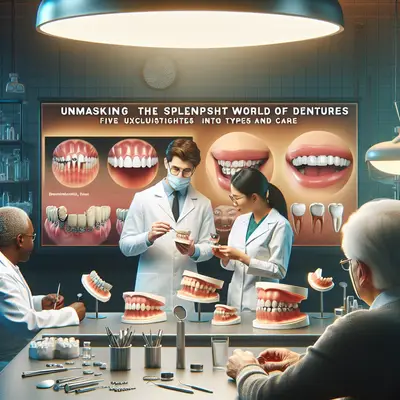
Modern dentures are no longer a one‑note solution—they are a curated ensemble of materials, design philosophies, and technologies that can be tailored to the way you live, work, and socialize. For the discerning wearer, choosing among denture types is less about “full or partial” and more about nuance: how they feel at a business dinner, how they photograph in low lighting, how quietly they move with you throughout the day.
This guide explores denture types through a refined lens, with five exclusive insights that go beyond the standard brochure descriptions—details that matter when you expect your prosthetics to perform effortlessly and discreetly.
Rethinking Denture Types: Beyond “Full vs. Partial”
Traditional classifications divide dentures into broad categories: full (complete) dentures that replace all teeth in an arch, and partial dentures that fill gaps when some natural teeth remain. While this distinction is clinically accurate, it is no longer sufficient for someone seeking a truly elevated outcome.
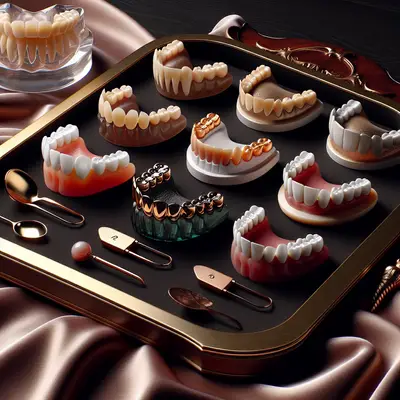
Today, denture types are better understood as a spectrum defined by three primary factors: how they are supported (gums, teeth, or implants), the technology used to design and fabricate them (traditional vs. digital), and the aesthetic philosophy behind their appearance (standardized vs. individualized artistry).
Conventional acrylic full dentures remain common, resting on the gums and held in place by suction and the contours of your mouth. Partial dentures may be crafted with metal frameworks, flexible materials, or discreet clasps anchored to your remaining teeth. Implant‑supported dentures introduce a more secure, stable approach, attaching to titanium implants placed in the jawbone.
When viewed together, these categories create a palette of possibilities rather than a fixed set of boxes. The key is not simply selecting a type, but orchestrating the right combination of support, material, and design for the life you lead.
The Aesthetic Architecture of Denture Design
A refined denture does not merely “look like teeth.” It respects facial architecture, age, personality, and even wardrobe choices. The most sophisticated prosthetics are designed less like medical devices and more like bespoke facial couture.
Tooth shape and proportion play a central role. Slight irregularities in edge length, gentle variations in translucency, and a subtle gradation of color from gumline to incisal edge can transform an artificial smile into one that reads as naturally individual. High‑end prosthetic teeth are layered to mimic enamel and dentin, capturing light with the same quiet complexity as natural teeth.
Equally critical is the appearance of the “gum” or gingival area. Premium dentures allow for nuanced characterization: soft color transitions, tiny capillary‑like details, and delicate texturing that lifts the result out of the “one‑shade‑fits‑all” category.
For many wearers, the overarching aesthetic objective is not perfection, but plausibility. A carefully designed denture will complement the contours of the lips and cheeks, support the lower third of the face to avoid a “collapsed” look, and harmonize with skin tone and eye color. When done well, the effect is not “beautiful dentures,” but simply “you—at your best.”
Functional Sophistication: Comfort, Stability, and Everyday Ease
While aesthetics often receive the spotlight, true luxury in denture wear is functional: a quiet, unremarkable ease that lets you forget you are wearing them. Different denture types provide varying levels of stability, and understanding this can help you choose with intention.
Conventional full dentures rely on suction and careful shaping of the base. When meticulously fabricated, they can be impressively stable, yet they may still move slightly during intense chewing or speaking, particularly in the lower arch where bone resorption is more pronounced. Partial dentures, properly designed, can borrow support from remaining natural teeth, often resulting in a more secure fit.
Implant‑supported dentures, however, redefine stability. Implants provide firm anchorage directly within the jawbone, reducing movement and improving chewing efficiency. Many wearers find that implant‑retained overdentures (which “snap” onto implant attachments) provide a satisfying sense of solidity while remaining removable for hygiene.
Functional sophistication also includes phonetics and comfort. Subtle adjustments to tooth position and bite alignment can dramatically improve speech clarity. Carefully contoured borders, smooth transitions, and thoughtfully placed pressure zones reduce irritation and sore spots. In a premium context, comfort is not negotiable; it is the baseline from which elegance emerges.
Five Exclusive Insights for the Discerning Denture Wearer
Beyond the usual clinical descriptions, there are nuanced considerations that can elevate your experience from acceptable to exceptional. These five insights are rarely emphasized in standard overviews, yet they matter profoundly when you expect more.
1. The “Silent Test” for Social Confidence
One of the most telling measures of a denture’s refinement is not how it looks in the mirror, but how it behaves in a quiet room. If you are attending a board meeting, a concert, or an intimate dinner, even a slight click, shift, or suction noise can be distracting.
Ask your dentist or prosthodontist to assess your dentures specifically for “silent performance”—testing speech sounds (particularly “s,” “t,” and “f”), swallowing, and subtle mouth movements in a calm setting. Fine‑tuning edge thickness, bite contacts, and base extension can significantly reduce micro‑movements and sound. For many patients, this bespoke “soundless optimization” is transformative in social and professional contexts.
2. Micro‑Customization of Tooth Character, Not Just Shade
Shade selection is standard; true luxury goes further. You can request micro‑customization of individual teeth: a tooth slightly rotated to mimic your natural smile, a softer incisal edge to match old photographs, or tiny differences in brightness among front teeth to avoid an overly uniform look.
Some high‑end labs can work from photographs of your pre‑extraction smile to replicate its unique character. Instead of requesting “white and straight,” consider asking for “natural, refined, and in harmony with my features.” A few millimeters or a small change in translucency can make the difference between “those are nice dentures” and “I can’t quite tell what changed, but you look incredible.”
3. Choosing Materials Based on Lifestyle, Not Just Budget
While cost is always a factor, lifestyle often dictates the ideal material more accurately than price alone. For instance, if you frequently present on camera or under bright lighting, a slightly more translucent, layered tooth material may read far more naturally than an opaque, budget option. If you enjoy a diverse diet that includes crunchy or fibrous foods, the greater stability of implant‑supported options may justify the investment in daily ease and confidence.
Similarly, if you travel often, you might value a denture type that is simple to clean and maintain in varied environments, or one with robust, fracture‑resistant materials that tolerate the occasional mishap. Understanding how you live day‑to‑day allows your clinician to recommend not merely the “best” denture, but the best denture for your life.
4. Digital Design as an Insurance Policy for Your Smile
Digitally designed and milled dentures offer a rarely discussed advantage: reproducibility. Once your ideal digital design is created and refined—length, shape, bite, and contours—it can be stored and re‑milled if the denture is lost, damaged, or requires a spare.
For the wearer who values continuity and dislikes the idea of “starting over,” this digital archive becomes an insurance policy for your established look. It also enables more predictable future upgrades, such as converting a well‑loved denture design to an implant‑supported version, maintaining the same familiar smile with greater stability.
5. Planning for the Future: “Phased” Denture Strategies
A sophisticated approach to denture selection considers not only your immediate needs but also the next five to ten years. Bone resorption, changes in health, and evolving aesthetic preferences can all influence how a denture performs over time.
Some patients benefit from a phased approach: beginning with a well‑crafted conventional denture while planning for future implants when circumstances allow, or designing a partial denture that can adapt to additional tooth loss without a full remake. Discussing a multi‑year vision with your clinician—rather than only a one‑time solution—can lead to choices in base design, tooth material, and framework that age more gracefully and integrate smoothly with future treatments.
Matching Denture Types to Your Personal Priorities
The most meaningful question is not “Which denture type is best?” but “Which priorities matter most to you?” For some, absolute stability eclipses all else; for others, subtle aesthetics and a completely natural appearance take precedence. Many will seek a considered balance of comfort, discretion, and longevity.
If aesthetics are paramount, you may lean toward premium materials, individually characterized gum tissue, and digital design for precise symmetry and facial support. If function and chewing efficiency are your focus, implant‑supported options—fixed or removable—often deliver the most transformative improvement. For those navigating complex oral health or medical conditions, the simplicity and adaptability of removable designs may offer welcome flexibility.
A thorough consultation with a dentist or prosthodontist should feel more like a design collaboration than a brief clinical transaction. Bring photographs of yourself at an age and stage you wish to approximate, describe the contexts in which you want your dentures to excel (presentations, dining, travel, photography), and be candid about your comfort thresholds regarding procedures like implants.
When your priorities are clear, “denture type” becomes less a label and more a carefully curated solution—one that quietly supports the way you move through the world.
Conclusion
Today’s denture landscape offers far more than a choice between full and partial. It presents a refined spectrum of options, where aesthetics, comfort, technology, and long‑term planning can be orchestrated into a uniquely personal solution.
By looking beyond basic categories and embracing nuanced considerations—silent performance, micro‑customization, lifestyle‑driven materials, digital reproducibility, and phased planning—you position yourself not merely as a denture wearer, but as the curator of your own restored smile. In that curation lies a particular kind of luxury: the confidence of knowing that your dentures do not simply replace what was lost, but quietly elevate how you live, speak, and smile every day.
Sources
- American College of Prosthodontists – Types of Dentures - Overview of common denture types, indications, and basic care recommendations
- Mayo Clinic – Dentures: Benefits and Considerations - General information on dentures, their uses, and what to expect
- Cleveland Clinic – Implant-Supported Dentures - Detailed explanation of implant-retained dentures, benefits, and candidacy
- National Institute of Dental and Craniofacial Research (NIDCR) - Evidence-based information on tooth replacement options, including dentures and implants
- UCLA School of Dentistry – Digital Dentures - Insights into digital denture workflows and advantages such as precision and reproducibility
Key Takeaway
The most important thing to remember from this article is that this information can change how you think about Denture Types.