The decision to choose a particular type of denture is about far more than filling a gap in your smile. It is a choice about how you will speak, dine, and carry yourself in the quiet, unobserved moments of your day. While dentists often focus on function, discerning denture wearers increasingly seek a more curated understanding of the options available—how each type feels, performs, and integrates with their lifestyle and aesthetic standards. This guide explores modern denture types through a refined lens, with five exclusive, under-discussed insights that sophisticated wearers consistently value.
A Discerning Overview of Modern Denture Types
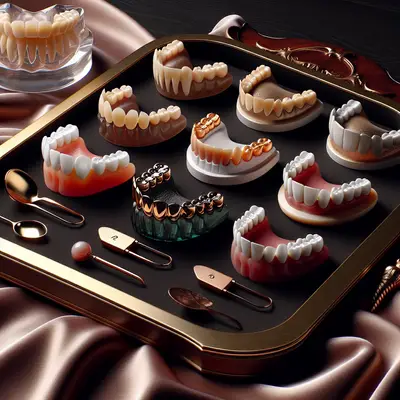
Denture types are typically grouped into four primary categories: complete (full) dentures, partial dentures, implant-supported dentures, and immediate or transitional dentures. Complete dentures replace all teeth in an arch and rest on the gums; they are often crafted from acrylic and can be subtly customized in tooth shape, translucency, and shade. Partial dentures bridge smaller gaps, clipping or attaching to remaining natural teeth with metal or more discreet, flexible connectors, making them a quiet ally when a full prosthesis is not yet warranted.
Implant-supported dentures anchor to titanium posts placed in the jawbone, offering superior stability, especially in the lower arch where traditional dentures are more likely to shift. These can be removable “snap-in” designs or fixed hybrids that only your clinician removes. Immediate dentures, placed the same day teeth are extracted, preserve your appearance during healing, but are inherently transitional; they frequently require relines or replacement as your gums reshape. For the refined wearer, the key is not simply knowing these categories exist, but understanding how each option intersects with one’s priorities: discretion, comfort, longevity, and day-to-night confidence.
Visual Refinement: How Denture Type Influences Aesthetic Subtlety
Not all “natural-looking” dentures are created equal. The type of denture you choose quietly dictates how convincingly it mimics natural enamel, gum tissue, and the subtle asymmetries that keep a smile from appearing artificial. High-end complete or implant-supported dentures often allow for layered, multi-tonal acrylic or porcelain teeth, mimicking the translucency at the edge of natural teeth and the slight color variations seen in real enamel. When thoughtfully selected, these nuances ensure your smile looks “lived in,” not manufactured.
Partial dentures introduce a different aesthetic consideration: how they interface visually with remaining natural teeth. The visibility of metal clasps, the contour of the gum-colored base, and the alignment between old and new teeth all shape the final appearance. Implant-supported dentures, especially fixed designs, can offer the most seamless gumline when crafted with careful attention to gingival color gradation and contours that suit your facial structure. For individuals who value subtlety, the conversation should go beyond shade selection; it should include how light will play on the teeth, how the incisal edges will appear when you laugh, and how the denture will harmonize with your lips and facial proportions.
Functional Sophistication: Comfort, Speech, and Dining in Real Life
Function is often discussed in simple terms—“you’ll be able to eat” or “you’ll adjust to speaking”—but those who live with dentures know there is a spectrum of experience. Traditional full dentures rely on a combination of suction, saliva, muscle control, and sometimes adhesive. For many, this works adequately, but certain foods, extended conversations, or dry-mouth conditions may expose the limitations. Implant-supported dentures, in contrast, offer more confident chewing and less movement, particularly useful for those who host, present, or dine out frequently and wish to avoid micro-adjustments mid-sentence or mid-meal.
Speech clarity varies by denture type and design. Bulkier upper plates can initially alter “s,” “f,” and “th” sounds, while slimmer, well-contoured bases—more common with precision-crafted or implant-supported prostheses—can make adaptation smoother. Partial dentures, when crafted with meticulous attention to occlusion (how your teeth meet) and clasp placement, may have minimal impact on speech once you acclimate. A refined approach involves trial periods, follow-up adjustments, and sometimes minor reshaping of teeth or bases to perfect phonetics for your particular voice and speech patterns.
Longevity and Adaptation: How Different Types Age Over Time
Every denture type changes with time, but not all age in the same way. Traditional complete or partial dentures rest on soft tissues and bone that gradually resorb (shrink) after tooth loss. This natural process alters the fit, often requiring periodic relines or, eventually, replacement. The more the underlying bone changes, the greater the chance of minor shifts during chewing or talking. Those who value a consistently “anchored” feeling often gravitate toward implant-supported dentures, as implants help maintain bone volume and provide a more stable foundation.
Wear and staining also vary by material and type. Acrylic teeth, common in most full and partial dentures, can wear slightly faster than porcelain, potentially softening your bite and subtly altering your appearance over several years. Implant-supported restorations may be fabricated with more durable materials, and because they are often treated as a long-term investment, patients may choose higher-grade teeth with enhanced wear resistance and stain resilience. A future-focused conversation with your clinician should include not only how your dentures will look on day one, but also how they will likely look, feel, and function at year five and beyond—and what refinements will be necessary along the way.
Five Exclusive Insights Sophisticated Denture Wearers Quietly Rely On
These insights rarely appear in basic brochures but are frequently discussed among experienced wearers and high-end clinicians:
- Micro-adjustments matter more than the initial “perfect fit.”
Even the most meticulously crafted denture often requires multiple, subtle refinements once you begin living in it—tiny adjustments to pressure points, bite alignment, or the thickness of the palate. Wearers who achieve exceptional comfort almost always schedule, and insist upon, a series of fine-tuning visits rather than accepting “good enough” at the first fitting.
- *The choice of base design can be as decisive as the choice of denture type.
Within each category (full, partial, implant-supported), variations in base thickness, extension into the palate or under the tongue, and the contours of the edges can significantly affect gag reflex, taste perception, and how your tongue moves. Two people with the same “type” of denture can have dramatically different experiences purely due to these design subtleties.
- Implant-supported does not have to mean a fixed, all-or-nothing commitment.
Many assume implant solutions are either completely fixed or far beyond reach. In reality, “snap-in” overdentures anchored by a modest number of implants can offer a substantial upgrade in stability without the permanence—or cost—of a fully fixed bridge. Discerning wearers often view these as a strategic step: an elevated, yet adaptable, middle ground.
- Partial dentures can be deliberately designed as part of a long-term transition plan.
When a few compromised teeth remain, a partial denture can be crafted with an eye toward future changes, allowing for the seamless addition or removal of teeth as your dental situation evolves. This planned adaptability can spare you the abrupt emotional and aesthetic adjustment of moving from partial to complete dentures all at once.
- The “social confidence factor” can differ more by refinement than by category.*
Many assume implant-supported dentures automatically guarantee social ease, while traditional dentures do not. In practice, a thoughtfully designed, impeccably maintained conventional denture—paired with practiced eating and speaking habits—can inspire as much confidence as an implant solution. Conversely, an implant denture that is too bulky, too uniform in color, or insufficiently refined can still feel conspicuous. Your sense of ease often hinges less on type and more on craftsmanship, detail, and how closely the result aligns with your self-image.
Choosing with Intention: Aligning Denture Type with Your Lifestyle
Choosing a denture type is ultimately about aligning clinical reality with your aspirations for daily life. For some, a beautifully crafted full or partial denture offers an elegant, practical solution without surgery. For others, implant-supported options deliver the quiet assurance they seek, particularly if they travel frequently, entertain often, or simply wish to forget they are wearing a prosthesis at all. Budgets, health conditions, and bone quality all influence what is feasible, but within those boundaries there is ample room for personalization.
The most satisfying outcomes emerge when you approach the decision as a dialogue: you bring your standards, habits, and priorities; your clinician contributes technical expertise and candid guidance on what each type can truly deliver for you. Ask to see examples, inquire about how each option typically feels at three months and at three years, and be transparent about your expectations around appearance and discretion. With a curated, intentional approach, your chosen denture type can do more than restore your smile—it can restore the quiet, effortless confidence that lets you move through the world without second-guessing your next word or your next bite.
Conclusion
The world of denture types is far more nuanced than a choice between “full” or “partial.” Each category offers its own blend of aesthetic possibility, tactile experience, and long-term adaptability. When viewed through a refined lens, the decision becomes less about compromise and more about curation: selecting the option that best harmonizes with your face, your lifestyle, and your standards of comfort and elegance. By paying attention to subtleties—base design, micro-adjustments, transition planning, and the social confidence factor—you can move beyond basic functionality to a smile that feels genuinely your own, in private as much as in public.
Sources
- American College of Prosthodontists – Dentures Overview – Explains types of dentures, indications, and general expectations for wearers.
- Mayo Clinic – Dental Implants – Detailed description of dental implant procedures and their role in supporting dentures.
- Cleveland Clinic – Dentures: Types, Care & What to Expect – Comprehensive overview of traditional and partial dentures, fit, and maintenance.
- National Institute of Dental and Craniofacial Research (NIDCR) – Tooth Loss & Replacement – Government resource on tooth loss, replacement options, and oral health considerations.
- University of Rochester Medical Center – Dentures Patient Education – Educational material on what dentures are, how they function, and adaptation over time.
Key Takeaway
The most important thing to remember from this article is that this information can change how you think about Denture Types.