A well‑crafted denture is more than a way to replace missing teeth; it is a quiet extension of how you move through the world, speak, smile, and share meals with the people who matter. Understanding the nuances between denture types is not simply a clinical exercise—it’s an exercise in self‑presentation, comfort, and confidence. When you choose a denture, you are choosing how your face is framed, how your words are formed, and how naturally you inhabit social moments that unfold at close range.
This guide explores the major denture types with a refined lens, then offers five exclusive, often‑overlooked insights that discerning denture wearers consistently value but rarely see discussed in standard brochures.
The Foundation: Key Denture Types and How They Truly Differ
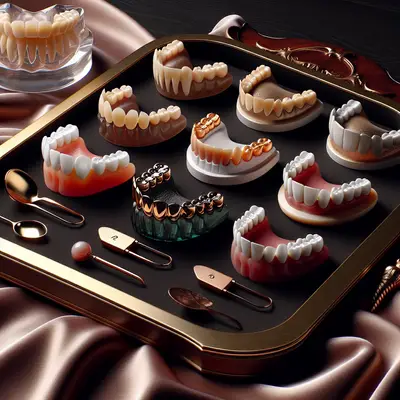
Most people hear “full” or “partial” and stop there, but the landscape of denture types is much more textured. Traditional complete dentures are removable appliances that replace all teeth in an arch and rest on the gums. They’re often crafted from acrylic, sometimes with a metal reinforcement for strength, and rely on the contours of your palate and jaw for retention. When properly designed, they can look strikingly natural, but they do require a period of adaptation and meticulous adjustment.
Partial dentures are designed for those who still have some natural teeth. A framework—often cobalt‑chromium metal or a flexible resin—supports prosthetic teeth that blend with your existing dentition. These frameworks can be surprisingly refined when planned thoughtfully, with clasps that tuck away discreetly and tooth shades that harmonize with your actual enamel rather than aiming for an artificial uniformity.
Implant‑supported dentures elevate the entire experience. Instead of relying solely on suction or clasps, the denture attaches to titanium implants anchored in the jawbone. The result is enhanced stability, less bulk in the palate (especially with upper dentures), and a feel that more closely approximates natural teeth during chewing and speaking. Within this realm, you’ll see variations such as overdentures that “snap” onto attachments or more fixed, screw‑retained options that only your clinician can remove.
There are also transitional and immediate dentures—prostheses placed the same day teeth are removed, so you’re never without a smile. These are invaluable from an aesthetic and emotional standpoint, but they are inherently provisional. As the gums heal and reshape, these dentures will demand relining, reshaping, or eventual replacement. Rather than viewing this as an inconvenience, it’s helpful to see it as a carefully choreographed sequence: an immediate solution followed by a tailored, long‑term design.
The crucial takeaway: denture “type” is not just a category. It is a design philosophy—how your prosthesis will interact with your bone, soft tissue, speech, and day‑to‑day rituals.
The Aesthetic Equation: How Denture Type Shapes Your Face
The right denture type does more than fill a gap; it restores facial architecture. When teeth are lost, the bone underneath naturally resorbs over time, and the cheeks, lips, and lower third of the face can lose support. Well‑planned complete or implant‑supported dentures can discreetly restore this support, softening marionette lines, enhancing lip fullness, and improving facial proportions without looking exaggerated.
Conventional complete dentures often provide additional vertical and horizontal support to the lips and cheeks through the bulk of the acrylic base. When skillfully contoured, this base is invisible in daily life yet gently “tents” the soft tissue in a flattering way, preventing that collapsed appearance that many fear. Implant‑supported dentures can achieve similar or superior support while often using a more streamlined base, especially in the upper jaw where the palate may be partially or completely open.
Tooth selection is another underappreciated dimension. A sophisticated approach goes beyond simply choosing white teeth. It considers translucency, surface texture, and subtle color gradation to mimic natural enamel. Shorter or longer teeth alter the perceived length of the face; slightly softer shades can appear more believable in mature patients, while extremely bright shades can look conspicuously artificial, particularly at conversational distance.
Even the diastemas (tiny spaces), gentle rotations, and micro‑imperfections that your dentist may incorporate into a high‑end prosthesis are intentional. For many patients, a perfectly uniform “string of pearls” smile feels out of character. Choosing a denture type and design that allows for this nuance—often more achievable in custom, high‑end partials and implant‑supported solutions—can create a smile that feels like an upgraded version of you, not a replacement.
Functional Refinement: Eating, Speaking, and Living With Precision
Function is where the distinctions between denture types are most dramatic. Traditional complete dentures rely on intimate adaptation to the gums and the physics of suction and muscular control. Well‑made options can offer impressive stability, but they are inherently more prone to subtle movement, particularly in the lower jaw where the tongue and limited surface area make retention challenging. This is why many sophisticated wearers gravitate toward lower implant‑supported overdentures, even if they opt for a conventional upper denture.
Implant‑supported prostheses stabilize the denture during chewing, allowing more confident enjoyment of crisp fruits, lean meats, and textured vegetables. This stability can also reduce the need for denture adhesives, simplify mealtimes, and lessen the self‑consciousness that comes from worrying about movement while laughing or biting into food in company.
Speech is another point of divergence. Palate coverage in a traditional upper denture can initially alter certain sounds, particularly “s,” “t,” and “d.” A thoughtfully contoured palate and adequate tongue space can minimize this, but implant‑supported or palateless designs often feel more natural more quickly. Over time, the brain adapts, but choosing a denture type that acknowledges how you use your voice—public speaking, performing, or frequent video meetings—can shape your comfort considerably.
For those who prefer removable options, advanced partial designs and flexible frameworks can offer a more forgiving, less intrusive feel, gently distributing bite forces and protecting remaining natural teeth when crafted with precision. The subtlety of these differences—how the clasping feels against your tongue, or how seamlessly the prosthetic teeth occlude with natural ones—often determines whether you forget you’re wearing a denture at all.
Five Exclusive Insights Sophisticated Denture Wearers Quietly Prioritize
Beyond the usual talking points, experienced denture wearers and high‑end prosthodontists tend to focus on a more nuanced set of priorities. These five insights can help you approach your next denture decision with a connoisseur’s eye:
1. Micro‑Fit Matters More Than Material Hype
A premium acrylic or a cutting‑edge flexible material will not rescue a poorly fitting denture. The true luxury is micro‑fit: the tiny adjustments that happen after you receive the prosthesis. Follow‑up appointments for pressure point checks, occlusal refinements (fine‑tuning how the teeth meet), and border molding tweaks are where comfort and confidence are truly crafted.
Be wary of any process that promises “same‑day perfection” without emphasizing follow‑up fine‑tuning. A carefully staged sequence of visits, especially for immediate and implant‑supported dentures, is a hallmark of serious, patient‑centered care.
2. The “Soft Tissue Profile” Is as Important as the Teeth Themselves
Many conversations fixate on tooth color and shape, yet refined outcomes pay equal attention to how the denture base interacts with your gums, lips, and cheeks. The soft tissue profile—how the gums are contoured, how smoothly the denture transitions to your natural tissue, and how it supports your lips—can determine whether your smile looks naturally integrated or conspicuously “done.”
Ask your clinician how different denture types will influence lip support, nasolabial folds, and the overall lower face profile. Photographs from the side, not just from the front, are invaluable here.
3. Implant‑Supported Does Not Need to Mean “All or Nothing”
There is a misconception that implant‑supported dentures always involve a full, fixed bridge and a major investment. In reality, a modest number of implants—sometimes as few as two in the lower jaw—can dramatically improve the retention of a removable overdenture. This hybrid approach combines the security of implants with the flexibility and ease of cleaning associated with removable prostheses.
For many, this “middle path” offers substantial functional and psychological benefits without the more extensive surgery or cost of a fully fixed restoration. Discuss the spectrum of implant‑assisted options rather than treating it as a binary choice.
4. Cheek, Lip, and Tongue Training Is a Quiet Superpower
Adaptation is not purely mechanical; it is neuromuscular. Subtle exercises—such as controlled swallowing with the tongue placed in specific positions, deliberate reading aloud to polish diction, and slow practice chewing on both sides—can accelerate your adjustment curve with any denture type.
Clinicians who coach you through this adaptation, or who collaborate with speech or myofunctional therapists when needed, are often the ones delivering consistently elevated results. The most elegant dentures are the ones your muscles learn to partner with, not resist.
5. Long‑Term Bone Preservation Should Guide Today’s Choices
Despite its discreet nature, bone loss beneath dentures is an ongoing biological reality. Traditional dentures, particularly lower ones, do not prevent bone resorption; over time, they may even accelerate it due to pressure on the ridge. Implant‑supported solutions, by contrast, help maintain bone volume where the implants are placed by transmitting functional forces into the jaw.
When comparing denture types, consider the decade‑long view, not just the immediate expenditure. A solution that seems economical today but leads to pronounced bone loss, repeated relines, and difficulties with future treatment can become more costly in every sense—financially, aesthetically, and functionally.
Elevating the Consultation: Questions That Change the Conversation
Armed with an understanding of denture types and these refined considerations, your consultation can become a strategic conversation rather than a passive selection from a menu of options. Instead of asking simply, “Which denture should I get?”, you might explore:
- How will each denture type affect my facial support and profile from the front and side?
- What is your approach to follow‑up adjustments and long‑term fit refinement?
- Can we discuss implant‑assisted options that improve stability without committing to a fully fixed bridge?
- How do you select tooth shapes and shades to match my age, features, and existing teeth?
- What is your plan for preserving bone and preparing for my likely needs 10–15 years from now?
These questions invite a higher level of planning and clarify whether your provider is prepared to deliver care that aligns with a premium, detail‑oriented standard.
Conclusion
Choosing between denture types is not merely a technical decision about materials and categories; it is a curated choice about how you wish to be seen, heard, and felt in the world. Complete, partial, and implant‑supported options each carry their own aesthetic, functional, and long‑term implications. When examined through a sophisticated lens—one that values micro‑fit, soft tissue harmony, neuromuscular adaptation, and bone preservation—the conversation shifts from “What can I live with?” to “What allows me to live fully, confidently, and comfortably?”
A truly elevated denture is the product of meticulous planning, thoughtful follow‑up, and a willingness to invest not just in teeth, but in the finer details of how you inhabit your smile every day. With the right type, refined design, and attentive care, your prosthesis becomes less an appliance and more an invisible ally in a life lived beautifully in close‑up.
Sources
- American College of Prosthodontists – Dentures Overview – Clear explanation of complete, partial, and implant‑supported dentures, along with indications and benefits
- Mayo Clinic – Dental Implants – Covers how implants work, risks, and advantages relevant to implant‑supported dentures
- National Institute of Dental and Craniofacial Research – Tooth Replacement Options – Government resource outlining dentures, bridges, and implants as tooth replacement solutions
- Cleveland Clinic – Dentures: Types, Care & Complications – Practical overview of different denture types, fit considerations, and adaptation
- University of Michigan School of Dentistry – Complete Dentures Patient Guide – Educational institution guide on expectations, fit, and long‑term considerations with complete dentures
Key Takeaway
The most important thing to remember from this article is that this information can change how you think about Denture Types.