Subtle, well-crafted dentures do more than restore a smile—they restore quiet confidence. For discerning wearers, selecting the right denture type is less about a basic “fix” and more about curating an understated, natural presence that feels as effortless as it looks. This guide explores the major denture types through a more refined lens, with exclusive insights that go beyond the standard clinic brochure.
Understanding the Landscape: Core Denture Types Explained
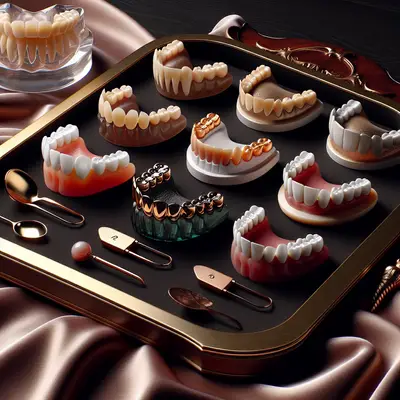
Modern prosthetic dentistry offers a nuanced spectrum of denture options, each with its own balance of aesthetics, function, and maintenance demands. At the most familiar end are conventional full dentures, designed for those who have no remaining natural teeth in an arch. These rest on the gums and rely on careful fit and muscle coordination for stability.
Partial dentures are ideal when several natural teeth remain. Anchored around existing teeth, they help preserve facial structure and the precise contours of your bite. For those seeking an even more secure and discreet solution, implant-supported dentures (sometimes called overdentures) attach to titanium implants placed in the jaw, offering superior stability, chewing efficiency, and a more “non-denture” experience.
There are also immediate dentures, placed on the same day teeth are extracted, and interim or temporary dentures, designed as short-term solutions while the mouth heals or while a more definitive prosthesis is fabricated. The key is understanding that each type is not just a category, but a strategic choice tailored to your lifestyle, facial structure, and long-term expectations.
Reading the Fine Print: How Denture Types Shape Your Day-to-Day Life
The decision between full, partial, or implant-supported dentures quietly influences nearly every moment of your day—how you speak, what you order at dinner, and even how relaxed you feel in close conversation. Full conventional dentures can provide beautifully uniform aesthetics, but they may require more adaptation with speech and chewing, especially in the lower jaw where stability is naturally more challenging.
Partial dentures, when thoughtfully designed, can preserve more of your natural chewing pattern. They rely on a delicate interplay between metal frameworks or highly polished resin bases and your existing teeth, enhancing both visual harmony and functional balance. Meanwhile, implant-supported dentures often feel more anchored and predictable, particularly useful for those who value dining without second-guessing their bite.
Discreet considerations—such as how easily a denture dislodges with laughter, or how confident you feel biting into crusty bread—are where type selection becomes deeply personal. Aligning your denture choice with your social life, culinary preferences, and tolerance for maintenance rituals ensures your prosthesis supports, rather than constrains, your daily rhythm.
Exclusive Insight #1: “Natural” Is About Proportions, Not Just Shade
One of the most underrated advantages of choosing the right denture type is the ability to fine-tune proportions, not just color. Many people initially focus on tooth shade—often aiming too white—when, in reality, the most natural results come from harmony between:
- Tooth length and lip line
- Tooth width and facial width
- Gum contour and smile curvature
- Tooth translucency and skin tone
Full and implant-supported dentures offer a larger canvas for this level of artistry, as the entire arch can be shaped and proportioned in relation to your facial features. The right type gives your clinician more control over tooth position, angulation, and gradations of shade across the arch—details that distinguish an “obviously false” smile from one that simply appears quietly well cared for.
A sophisticated approach favors a subtly varied shade within the same arch (as natural teeth often have), slightly softened edges, and tooth shapes that echo your age and personality rather than chase a generic, ultra-white uniformity.
Exclusive Insight #2: Jawbone Preservation – The Invisible Benefit of Certain Types
While all denture types restore appearance, not all protect the foundations beneath. After tooth loss, the jawbone naturally shrinks over time, especially in the lower arch. Conventional full dentures rest on this diminishing foundation, which can lead to gradual changes in facial profile and repeated needs for relining or remaking.
Implant-supported dentures introduce a powerful, often overlooked benefit: they help stimulate the jawbone through the implants themselves, slowing the process of bone loss. Over the years, this can help preserve a more youthful facial structure, reduce the depth of facial lines around the mouth, and maintain a more stable fit.
Even if you’re not ready for a fully fixed implant bridge, a modest number of implants to support a removable overdenture can significantly improve both stability and long-term facial aesthetics—particularly in the lower jaw, where conventional dentures are most prone to movement and bone resorption.
Exclusive Insight #3: The Art of Speech – Why Type Matters for Your Voice
Many denture wearers are surprised by how closely denture design influences speech. Certain consonant sounds—such as “s,” “t,” “d,” and “f”—depend on extremely precise contact between the tongue, teeth, and palate. The wrong thickness, contour, or positioning can subtly alter your articulation.
- Full upper dentures introduce an artificial palate; if it is too thick or improperly contoured, it can affect clarity.
- Implant-supported designs, especially those with a reduced or open palate, can feel more natural, allowing your tongue more room and restoring a speech pattern closer to your pre-denture norm.
- Partial dentures that are well-contoured can blend into your existing oral landscape with minimal speech adaptation.
If you speak frequently in professional or social contexts—public speaking, client meetings, teaching, or performance—consider raising speech as a priority when discussing denture types. This is not vanity; it is central to how you present yourself. A meticulous dentist or prosthodontist can adjust tooth position and palatal thickness to support speech as intentionally as appearance.
Exclusive Insight #4: Travel, Dining, and Lifestyle – Matching Denture Type to Your World
Different denture types carry distinct implications for travel, dining, and how you navigate social occasions. Conventional full dentures may require you to discreetly carry adhesive or a small care kit when away from home, especially early in your adaptation. If your life involves frequent business dinners, extended travel, or long days without the privacy of a home bathroom, these practicalities become important.
Implant-supported dentures can feel more predictably secure, reducing anxiety around a denture slipping at inopportune moments. If you tend to favor diverse cuisines—steak, crusty bread, or crisp vegetables—this added stability can elevate not just function but your entire dining experience.
For some, the sweet spot is a high-quality partial denture that preserves comfortably functioning natural teeth while elegantly filling in the gaps. The lifestyle question is not “Which type is best?” but “Which type best aligns with how and where I live my life?” A thoughtful, premium denture plan should address not only what happens in the dental chair, but what happens in the restaurant, the boardroom, and on the flight.
Exclusive Insight #5: Future-Proofing – Planning a Denture Journey, Not a Single Device
A refined denture strategy is rarely a one-time decision; it is a planned progression that anticipates how your mouth and preferences may change over the years. For example, you might begin with:
- A partial denture preserving existing teeth
- Transition to an immediate full denture after planned extractions
- Then upgrade to an implant-supported overdenture once healing is complete and your bite stabilizes
This staged approach allows you to maintain appearance and function continuously, while incrementally moving toward more advanced, stable solutions. It also spreads investment over time.
Discussing this “dentures over a decade” perspective with your clinician can help you avoid compromises that are convenient today but limiting tomorrow. Certain tooth positions, bone preservation strategies, and even extraction timing can be orchestrated with future implant support or upgraded designs in mind, ensuring that each step supports the next rather than forcing a costly reset later.
Choosing Your Clinical Partner: Why Type Is Only Part of the Equation
Even the most sophisticated denture type will underperform if not orchestrated by a skilled, detail-oriented clinician—ideally one with advanced training in prosthodontics or a strong track record in complex restorative work. The artistry lies in the subtleties: how your lips rest at repose, how your jaw feels at the end of a meal, how naturally your smile appears in candid photographs.
When evaluating providers, you might discreetly ask to see before-and-after cases, inquire about experience with implant-supported dentures, or discuss how they handle nuanced details such as midline positioning, vertical dimension (the “height” of your bite), and phonetic testing. A premium result comes from the partnership between the right denture type and a practitioner who treats your prosthesis less like a generic appliance and more like bespoke craftsmanship.
Conclusion
The world of denture types is far more nuanced than a menu of “full versus partial.” Each option carries its own aesthetic possibilities, functional strengths, and long-term implications for bone health, speech, and lifestyle. By looking beyond surface-level comparisons and considering bone preservation, speech clarity, travel and dining habits, and future-proof planning, you can select a denture type that doesn’t simply replace teeth—but supports a composed, natural presence in every setting.
A truly elevated denture is the one no one notices, yet you feel in every confident word, every effortless meal, and every quiet moment you meet your own gaze in the mirror.
Sources
- American College of Prosthodontists – Complete Dentures – Overview of complete denture indications, benefits, and considerations
- American College of Prosthodontists – Removable Partial Dentures – Detailed information on partial dentures and how they integrate with remaining teeth
- Mayo Clinic – Dental Implants – Explanation of implant procedures and their role in supporting prosthetic teeth
- National Institute of Dental and Craniofacial Research – Tooth Loss – Background on tooth loss, bone changes, and oral health implications
- Cleveland Clinic – Dentures: Types, Care & What to Expect – Comprehensive overview of denture types, adaptation, and everyday impact
Key Takeaway
The most important thing to remember from this article is that this information can change how you think about Denture Types.