For those who view their smile as an essential element of personal presence—not a mere afterthought—selecting the right denture is less about “replacement” and more about restoration of identity. Today’s prosthetics are a world away from the bulky, one‑size‑fits‑all plates of the past. Materials, design philosophies, and customization techniques have evolved quietly but dramatically, allowing discerning wearers to choose dentures that support both aesthetics and a cultivated lifestyle.
This guide explores contemporary denture types through a refined lens, with five exclusive insights that often go unmentioned in standard patient brochures—but matter profoundly to those who value comfort, discretion, and impeccable presentation.
Understanding the Modern Denture Landscape
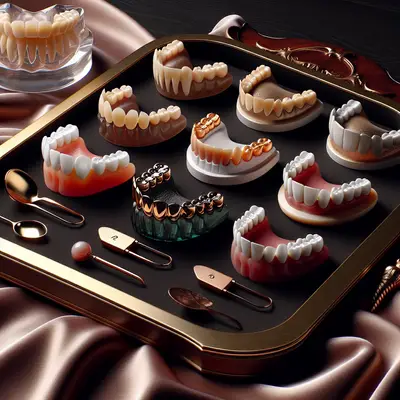
The term “denture” now covers a sophisticated spectrum of prosthetic options, from temporary transition pieces to meticulously engineered implant‑supported designs. At its most traditional, a complete denture is a removable prosthesis that replaces all teeth in an arch; a partial denture fills selective gaps while preserving remaining natural teeth. Yet the real story lies in how these baseline concepts have been reimagined.
Digital scanning and 3D design allow your dentist and dental technician to shape dentures that mirror your original tooth contours and facial structure with remarkable precision. Implant‑retained dentures, meanwhile, redefine stability by anchoring to titanium posts fused with the jawbone. Even within “standard” removable dentures, material choices—from lightweight resins to flexible bases—can be calibrated to your sensitivity, speech patterns, and daily routine.
In effect, your denture type is less a generic category and more a curated configuration: base design (full, partial, or implant‑supported), material composition, and aesthetic detailing, all orchestrated to align with how you live, speak, and present yourself.
Aesthetic Architecture: How Denture Types Shape the Face
The right denture does more than fill space; it quietly re‑establishes the architecture of the lower face. When natural teeth are lost, the lips may collapse inward, fine lines deepen, and the lower third of the face can appear shortened. Different denture types address this in distinct ways.
Conventional full dentures rely on their base and the contour of the acrylic to support the lips and cheeks. Well‑designed complete dentures can subtly restore lip fullness and soften perioral lines, creating a rejuvenated but natural profile. Implant‑supported dentures can go further, as they allow a more compact base (especially in the lower jaw), reducing bulk while maintaining vertical support for the face.
Partial dentures, particularly those that replace key support teeth (like canines and premolars), can dramatically influence facial expression. When crafted thoughtfully, they maintain symmetry, preserve bite height, and prevent the “sunken” look that sometimes accompanies selective tooth loss.
For those attentive to facial aesthetics, it is worth explicitly discussing shadings, translucency of teeth, and gingival contours with your provider. Some high‑end laboratories can mimic subtle irregularities—like slight rotation or graduated translucency at the edges of teeth—that avoid the overly uniform “denture” look and instead convey the natural character of an unhurriedly kept smile.
Exclusive Insight #1: “Aesthetic mapping” matters. Before committing to a denture type, request that your dentist evaluate not just your mouth, but your full face at rest and in motion—smiling, speaking, laughing. This holistic aesthetic mapping often determines whether a complete or implant‑supported design will best maintain your natural facial proportions and expressions.
Comfort, Stability, and the Quiet Confidence Factor
For those who move easily between social, professional, and intimate settings, silent confidence in one’s prosthetics is non‑negotiable. The primary differentiator between denture types in this regard is stability—how securely they remain in place during speaking, chewing, and expressive movement.
Traditional complete dentures achieve retention mainly through suction (in the upper arch) and muscular coordination (in the lower arch). With expert fabrication and an accurate fit, these can be surprisingly secure; however, bone resorption over time can gradually reduce support and require periodic relining or remaking.
Implant‑retained overdentures, on the other hand, anchor to two or more implants via snaps, bars, or precision attachments. This design dramatically reduces movement, particularly in the lower jaw where conventional dentures are most prone to slipping. For many wearers, this shift alone transforms daily life—from carefully curated food choices and guarded laughter to relaxed dining and effortless conversation.
Partial dentures also vary in stability. Rigid metal frameworks, when well‑designed, distribute chewing forces more evenly than all‑acrylic “temporary” partials, often resulting in greater comfort and longevity. Flexible partials trade some structural rigidity for a softer, more adaptable feel—but are not ideal for every bite pattern.
Exclusive Insight #2: Stability is deeply personal. Two people with nearly identical mouths may perceive the “same” denture type very differently. It is often worth trialing a conventional design first, then upgrading to implant support if you find yourself modifying your behavior—declining certain invitations, avoiding complex foods, or speaking more cautiously—because of subconscious insecurity.
Material Matters: Subtle Choices with Significant Consequences
Not all dentures are crafted from the same canvas. While acrylic resins remain the standard foundation, the nuances of material selection can profoundly affect comfort, durability, and even the way light plays off your smile.
High‑quality denture teeth, for instance, can be made from layered acrylics or specialized composite resins that better mimic enamel’s natural translucency and refractive index. These materials resist staining and wear more gracefully, which matters if you frequently drink tea, coffee, or red wine.
For partial dentures, cobalt‑chromium frameworks offer exceptional strength in a delicate profile, allowing thinner, less intrusive designs that feel less obtrusive on the tongue. Flexible nylon or thermoplastic bases, while appealingly gentle on soft tissues, may be more challenging to adjust or repair and can be less suitable when precise bite control is required.
Implant‑supported hybrid dentures (often called “fixed dentures” or “full‑arch prostheses”) may incorporate acrylic, composite, or high‑strength ceramics over a metal substructure. Ceramic offers unparalleled stain resistance and lifelike translucency but requires careful bite design to protect both the prosthesis and the implants.
Exclusive Insight #3: Material choices should reflect your lifestyle, not just your mouth. A frequent traveler may appreciate a robust, easily repairable acrylic‑based denture; a wine enthusiast may prioritize stain‑resistant composite or ceramic teeth; someone with a very strong bite might benefit from a metal‑framework partial rather than a fully flexible design. Share how you live—not just how you chew—with your provider.
Adaptation, Speech, and the Subtle Art of Sound
A refined smile is as much about sound as it is about appearance. The type and thickness of your denture can influence speech articulation, especially for “s,” “f,” and “v” sounds. This dimension is rarely discussed in depth, yet it is crucial for those whose voices are integral to their professional or social lives.
Full upper dentures that extend to the palate can temporarily alter tongue placement. Over time, most wearers adapt remarkably well, but excessive thickness or poor contouring can prolong lisping or slight changes in resonance. Conversely, implant‑supported solutions that allow for a reduced or open palate often feel more natural for frequent speakers or performers.
Partial dentures must be designed to harmonize with tongue movement. Overextended flanges or poorly contoured clasps can create the sense of “speaking around” the appliance. With meticulous planning and fine‑tuning, these issues can usually be minimized or eliminated.
Exclusive Insight #4: Schedule a “speech rehearsal” visit. When trying in a new denture type—especially an upper denture or implant‑supported design—bring a short set of phrases, a favorite passage, or even work‑related speaking material. Reading aloud in the dental chair allows your clinician to detect and adjust subtle interferences in real time, rather than waiting for you to struggle at a crucial meeting or social engagement.
Longevity, Maintenance, and Strategic Planning for the Future
Every denture type exists within a longer‑term narrative: how your bone structure will change, how your remaining natural teeth will age, and how your expectations may evolve. Planning with this horizon in mind can save both time and investment.
Traditional complete dentures typically need to be relined periodically as the jawbone resorbs, particularly in the years immediately following extractions. Implant‑supported dentures mitigate this resorption to some degree by transferring functional forces to the bone; over time, that may help preserve facial contours and maintain a more stable fit.
Partial dentures can be designed with “future edits” in mind. A thoughtfully constructed metal framework, for example, can sometimes be modified to accommodate additional tooth loss without fully remaking the appliance. Likewise, some patients choose a staged approach: starting with a removable solution and gradually transitioning to a fixed, implant‑supported arch as circumstances and priorities permit.
Maintenance expectations vary as well. Removable dentures, regardless of type, must be cleaned daily outside the mouth, allowed to rest in water or a soaking solution, and professionally inspected for wear or micro‑fractures. Implant‑supported dentures require both prosthetic care and diligent hygiene around implants to prevent peri‑implant disease—a critical, but often understated, responsibility.
Exclusive Insight #5: Think of your denture type as a chapter, not the entire book. Ask your provider to outline a 5‑ to 10‑year plan: how your chosen design will age, what adjustments are typically needed, and what pathways exist should you wish to upgrade to implant support or more fixed solutions down the line. A truly premium experience is one that anticipates change rather than merely reacting to it.
Conclusion
Choosing a denture type is ultimately an act of self‑curation. Beyond the clinical labels—full, partial, implant‑supported—lies a series of nuanced decisions about aesthetics, stability, sound, materials, and long‑term adaptability. When approached thoughtfully, your dentures do more than restore function; they preserve the intangible qualities of presence, expression, and quiet confidence that define you.
By engaging in detailed conversations about how you live, speak, and present yourself—not just about how you chew—you and your dental team can shape a prosthetic solution that feels less like an appliance and more like an elegantly tailored extension of you.
Sources
- American College of Prosthodontists – Dentures Overview – Clinical overview of complete, partial, and implant‑supported dentures and their indications
- Mayo Clinic – Dentures: Options, Adjustments and Care – General guidance on denture types, adaptation, and maintenance
- National Institute of Dental and Craniofacial Research (NIDCR) – Evidence‑based information on tooth replacement options, including dentures and implants
- Cleveland Clinic – Dental Implants and Implant-Supported Dentures – Detailed explanation of implant‑supported solutions and their advantages
- Harvard School of Dental Medicine – Innovations in Prosthodontics – Discussion of digital design and modern materials shaping today’s prosthetic dentistry
Key Takeaway
The most important thing to remember from this article is that this information can change how you think about Denture Types.