For those who view their smile as an extension of personal style and self‑possession, “getting dentures” is no longer a single, generic destination. It is a spectrum of finely tuned options—each with its own aesthetics, feel, and long‑term implications for facial structure and daily comfort. Understanding these distinctions allows you to move from merely accepting a prosthetic to intentionally curating one that suits your lifestyle, habits, and standards.
This guide explores contemporary denture types with a focus on nuance: how they look, how they behave over time, and how they interact with your bone, soft tissues, and routines. Woven throughout are five exclusive, rarely discussed insights that discerning denture wearers consistently appreciate once they discover them.
The Modern Landscape of Denture Types
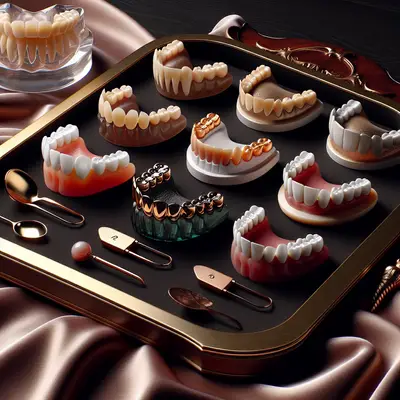
When most people hear “dentures,” they picture a traditional full acrylic plate. In reality, the spectrum is far richer and more customizable:
Conventional full dentures remain the classic solution when all teeth in an arch are missing. Crafted from acrylic, they rest on the gums and are removable. Their success hinges on precise fit, saliva quality, and the anatomy of your jaw and palate.
Partial dentures are designed for those who still have some natural teeth. They can be made from metal frameworks, flexible resins, or a combination of materials. A well‑designed partial protects remaining teeth from excessive forces while completing your smile.
Implant‑supported dentures marry prosthetics with modern implantology. Small titanium posts placed in the jaw anchor a denture, improving stability and reducing the day‑to‑day anxiety around slipping, pinching, or clicking. These can be removable “snap‑on” overdentures or more fixed solutions.
Immediate dentures are placed on the same day natural teeth are removed. They offer the psychological comfort of never being without teeth, though they usually require significant post‑healing adjustments and relines as your tissues remodel.
These broad categories are only the starting point. Within each, there are material options, design philosophies, and subtle enhancements that distinguish a merely functional appliance from a truly refined one.
Aesthetic Nuance: How Different Denture Types Shape Your Face
Dentures do more than fill space; they sculpt the lower third of your face. The type and design have a quiet yet powerful impact on how you present yourself.
Full dentures can be contoured to restore lip support, soften deep lines around the mouth, and subtly lift the lower face. Tooth shape, translucency, and arrangement can be tailored to look naturally “imperfect,” avoiding the overly uniform appearance that can betray an artificial prosthesis. The arrangement of posterior teeth also influences how much cheek fullness you regain.
Partial dentures allow your remaining natural teeth to set the visual tone. The framework should be designed to maximize symmetry and balance, with tooth shades and shapes coordinated so that the prosthetic teeth disappear into the ensemble rather than dominate it. A high‑end lab will often layer multiple shades within each tooth to mimic the complexity of natural enamel.
Implant‑supported dentures hold a unique advantage: because they do not rely as heavily on bulk for suction and stability, the base can often be more streamlined. This can translate into a less bulky feel in the mouth, a more precise lip profile, and a more youthful, uncompressed appearance of the soft tissues.
Exclusive Insight #1: “Denture Vertical Dimension” Is a Design Lever, Not a Fixed Measurement.
The vertical dimension (the height between your upper and lower jaws when your teeth meet) is sometimes treated as a number to be “hit.” In premium care, it is treated as a design tool—subtly adjusted to refine lip posture, minimize wrinkles at the corners of the mouth, and even influence how clearly you speak. Asking your dentist how your denture type will affect vertical dimension—and requesting a trial evaluation of speech and facial expression at different settings—can significantly elevate your final result.
Function and Feel: Stability, Chewing Power, and Daily Ease
Beyond appearance, each denture type has a distinct functional personality, especially in how it feels while chewing, speaking, and living your everyday life.
Conventional full dentures, when well‑fitted, can provide reliable function. However, the lower denture is notoriously challenging: because it sits on a smaller, mobile base, it often feels less secure. Patients with prominent bone and favorable anatomy tend to adapt more easily; those with resorbed ridges may find retention and stability more elusive.
Partial dentures distribute chewing forces across both prosthetic and natural teeth. A thoughtfully designed partial avoids overloading the remaining teeth and takes into account the direction of forces on each tooth. For some, a partial can restore nearly natural chewing efficiency, provided the fit is meticulous and the clasps are carefully positioned.
Implant‑supported dentures are generally the gold standard for stability. By anchoring into bone, they convert more of your bite force into productive chewing. This often expands the range of foods you can enjoy—crisp vegetables, crusty bread, and fibrous meats may become more accessible, depending on the number and placement of implants.
Exclusive Insight #2: Micro‑Movements Matter More Than You Think.
Most conversations focus on whether a denture “stays in.” Yet the small, almost imperceptible micro‑movements during chewing and speaking are what your tongue and cheeks notice most. High‑precision impressions, a skilled bite registration, and thoughtful adjustment of contact points between the upper and lower dentures can dramatically reduce these subtle shifts. This is where implant‑supported options often excel: they reduce micro‑movement, not just gross slipping, creating a quieter, more “forgettable” experience in daily wear.
Bone, Gums, and the Long View: How Different Types Age With You
Every denture type interacts differently with your jawbone and gums over time—a crucial consideration if you think in terms of decades rather than months.
Conventional full dentures sit on the soft tissue and underlying bone. Without natural tooth roots or implants to stimulate the jaw, the bone gradually resorbs (shrinks). This means that even a beautifully made denture will require periodic relines or remakes as your anatomy changes. The lower jaw, in particular, is prone to more dramatic resorption, which can eventually reduce denture stability.
Partial dentures, when well‑balanced, can actually help preserve the remaining teeth by distributing forces and preventing shifting. However, poorly designed partials can traumatize abutment teeth and accelerate their loss. The choice of clasp design, where forces are directed, and how the framework rests on the gums are all critical.
Implant‑supported dentures help preserve bone around the implants by providing functional stimulation, in a way that more closely mimics natural tooth roots. This can slow or mitigate the sunken, collapsed appearance that sometimes develops with long‑term tooth loss. However, implants also require scrupulous hygiene and maintenance to protect the surrounding tissues.
Exclusive Insight #3: Your First Denture Sets the Trajectory for Your Jaw.
The initial decisions about denture type, how aggressively teeth are removed, and whether implants are placed early have a profound long‑term impact. An early implant‑supported overdenture, for example, may preserve jawbone and facial contours more effectively over time than cycling through multiple conventional dentures on a resorbing ridge. Thinking of your denture as part of a “30‑year plan” rather than a single appliance can transform which option is truly best for you.
Materials, Palate Coverage, and Sensory Experience
Not all dentures feel the same in the mouth, and much of that has to do with material choices and how much of the palate or soft tissue they cover.
Acrylic full dentures are standard, but today’s premium acrylics can be more stain‑resistant, more fracture‑resistant, and better at holding a high‑polish surface that’s kinder to soft tissues. For partials, cobalt‑chromium frameworks are often considered the benchmark for strength and thinness, whereas flexible resin partials trade some rigidity for comfort and aesthetics around the gum line.
Palate coverage is a subtle yet important factor. A traditional upper full denture covers much of the palate, which is essential for suction but can slightly blunt taste and alter temperature perception. Some implant‑supported upper dentures can be designed with a reduced or open palate, enhancing the sensory experience of food and drink while still maintaining stability.
Exclusive Insight #4: “Palate Freedom” Changes How You Enjoy Food and Speech.
Many long‑time denture wearers don’t realize how much their palate coverage is influencing their daily pleasures. Reduced palate coverage—often possible with implant support—can restore a greater sense of taste, improve appreciation of temperature contrast (cold water, hot tea), and make certain speech sounds feel more effortless. When comparing denture types, specifically ask how much palate will be covered and whether future upgrades could allow for a more open design.
Lifestyle, Confidence, and the Subtleties of Daily Use
Choosing among denture types is not purely clinical; it is deeply connected to your routines, social life, and personal priorities.
If your schedule is demanding and you travel frequently, you may prioritize durability, simplicity of cleaning, and predictable comfort over complex removable components. Those who enjoy a wide variety of cuisines—or who host and entertain regularly—often value the enhanced chewing power and security of implant‑supported options.
Partial denture wearers with a focus on discretion may appreciate tooth‑colored clasps or designs that minimize visible metal. For some, a “trial smile” with a wax try‑in or digital mock‑up can be invaluable in visualizing their prosthetic in real‑world lighting and expression.
Exclusive Insight #5: The “Off‑Camera” Smile Test Is Often More Important Than the Mirror.
How your dentures behave when you’re caught off‑guard—laughing, speaking quickly, turning your head—is often more relevant than how they look in a perfectly posed mirror check. During try‑ins, ask to test your dentures while reading aloud, laughing, and sipping water. Have someone take short candid video clips. This off‑camera evaluation often reveals subtle clicking, lip support issues, or phonetic difficulties that can be corrected before the final prosthesis is made.
Conclusion
Denture types are no longer a binary choice between “a plate” and “no plate.” They are a continuum of solutions—from conventional full and partial dentures to precisely engineered implant‑supported designs—that can be tailored to your bone, your bite, and your personal standards for comfort and elegance.
By looking beyond the obvious questions and considering aesthetics, micro‑movement, long‑term bone health, palate freedom, and real‑world behavior, you move from accepting whatever is offered to actively commissioning a prosthetic that suits your life. The most satisfying denture is not simply the one that fits—it is the one that quietly supports your confidence, restores your enjoyment of food and conversation, and feels seamlessly integrated into who you are.
Sources
- American College of Prosthodontists – Dentures Overview – Explains different denture types, including complete, partial, and implant‑supported options.
- Mayo Clinic – Dental Implants – Provides an in‑depth overview of dental implants and how they support prosthetic teeth.
- Cleveland Clinic – Dentures – Covers indications, types of dentures, and care considerations for long‑term wear.
- National Institute of Dental and Craniofacial Research (NIDCR) – Tooth Loss – Discusses the impact of tooth loss on oral structures, including jawbone changes relevant to denture planning.
- Harvard School of Dental Medicine – Prosthodontics Overview – Outlines the role of prosthodontists in designing and restoring complex prosthetic smiles.
Key Takeaway
The most important thing to remember from this article is that this information can change how you think about Denture Types.